Computer systems, whether traditional or cutting-edge augmented reality (AR) devices, fundamentally rely on two interconnected components: hardware and software. Hardware refers to the physical elements of a system, such as processors, displays, sensors, and batteries, which you can touch and see. Software, on the other hand, consists of the instructions, programs, and data that tell the hardware what to do, enabling it to perform tasks and interact with users. In the context of AR, hardware encompasses the smart glasses, processing units, and input devices, while software includes the operating systems and applications that bring digital information into the real world.
The Physical and Digital Foundations of Augmented Reality
Augmented reality technology is rapidly evolving, pushing the boundaries of how digital information integrates with our physical surroundings. This evolution is driven by advancements in specialized hardware components and the sophisticated software that orchestrates their functions. From compact clip-on devices to full-fledged screenless computing concepts, the industry is exploring diverse form factors and interaction methods, aiming to make AR as ubiquitous as the smartphone.
Key hardware elements in AR include micro-displays, optical systems, sensors for tracking and environmental understanding, and compact processing units. These physical components are brought to life by software that renders digital content, overlays it onto the real world, interprets user input, and manages connectivity. The interplay between these elements determines the user experience, dictating factors like visual clarity, field of view, and responsiveness.
Innovations in AR Display and Optics
The core challenge in AR hardware lies in creating displays that are both immersive and unobtrusive. Optical systems are particularly complex, responsible for projecting digital images into the user’s field of view while allowing them to see the real world clearly.
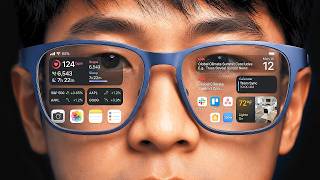
One widely adopted and cost-effective approach is birdbath optics. This system typically uses a tiny micro OLED display panel placed perpendicular to the user’s viewing plane, often at the top or bottom of the device. Through a series of lenses, the image from this display is then reflected into the user’s peripheral vision. This creates a small, overlaid digital rectangle that appears transparently over the real world. An example of this is the Monocle from Brilliant Labs, a clip-on optical device roughly 1 centimeter thick, which incorporates a 640 by 400 pixel OLED display, battery, camera, microphone, Bluetooth, and touch sensor. It connects to a smartphone to display text, such as output from generative AI applications. XREAL (formerly Nreal) also utilizes birdbath-style optics in its AR glasses, aiming for a sunglasses-like form factor. While effective for displaying text or small notifications, birdbath optics often present a limited field of view.
More advanced systems are exploring mixed waveguide optics, which channel the display source through a single plastic panel. This approach can offer different trade-offs between device thickness and the field of view (FOV). For instance, one company demonstrated modules where a 9-millimeter thick unit could provide an 85-degree FOV, while a thinner 6-millimeter module offered a narrower 56-degree FOV. A “Crossfire” module, at 13 millimeters thick, achieved a wide 120-degree FOV by using two 2K display sources, one on each side, which combined to create an effective 3K resolution image. These waveguide systems can also incorporate polarizing elements or mechanical shutters to switch between AR and VR modes by making the displays opaque. A significant advantage of some of these newer optical modules is their relatively affordable component cost, potentially in the tens of dollars per unit, which could help bring down the overall price of consumer AR headsets.
Despite these innovations, display clarity and field of view remain critical considerations. Devices like the XREAL Light glasses, with 1080p per eye displays, offer readable text, but the experience is not as sharp or clear as a high-resolution monitor. The limited 52-degree FOV in these glasses means that users often perceive a “letterbox window” into a larger virtual desktop, requiring head movements to reveal other portions.
Redefining Interaction: Input Methods for AR
Interacting with digital content in AR without traditional screens requires novel input methods that feel natural and intuitive. While some AR systems use dedicated hand-tracking controllers, the industry is exploring ways to leverage simpler, more ubiquitous devices.
One promising area involves repurposing off-the-shelf smartwatches as hand-controlled input devices. A Finnish startup has developed software that trains AI models to infer hand positions and gestures, such as raycasting and finger tapping, using the basic accelerometers and IMUs found in standard smartwatches. This allows users to interact with AR environments without needing specialized controllers. However, this approach faces challenges, including potential latency in noisy environments due to Bluetooth connections and occasional failed gesture detections, which can limit precision.
The integration of artificial intelligence is also improving traditional controller tracking. Newer VR/AR controllers are designed with fewer physical tracking lights, relying more heavily on AI models to enhance tracking accuracy over time. This suggests a future where AI plays a significant role in refining input, whether through dedicated controllers or by enabling simpler devices to perform complex interactions. Another accessory, the XREAL Beam, priced at 110 dollars, acts as a pass-through device. It processes video input from sources like a Nintendo Switch or Steam Deck and locks the image in place, providing head tracking for existing AR glasses without requiring a dedicated application on the source device. It includes a built-in battery and two USBC input ports for charging and connectivity.
Screenless Computing and Productivity Concepts
The vision for AR extends beyond simply overlaying digital information; it aims to create entirely new computing paradigms, often referred to as “screenless computing.” The dream of “infinite desktops,” where users can arrange multiple virtual screens in their physical space, is a driving force behind many AR productivity concepts.
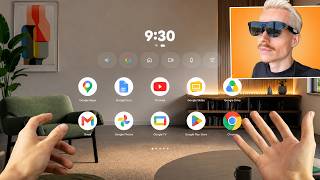
One such exploration is the Spacetop AR laptop. This device features the internal components of a high-end smartphone, specifically a Qualcomm Snapdragon 865 processor, running a custom operating system. Crucially, it lacks a traditional physical display panel. Instead, it comes with XREAL Light glasses hardwired directly into the unit, meaning the user wears the glasses to see the operating system. The Spacetop OS mimics a traditional desktop environment with windowed browsers and web-based productivity applications, controlled via a touchpad and gestures on the keyboard unit. While offering benefits like privacy and the potential for a scalable workspace, it is currently limited by the 52-degree field of view of the tethered AR headset, which means users still need to move their heads to view different parts of the virtual desktop. The hardwired nature of the glasses also makes the device somewhat bulky and unwieldy, working against the ideal of a thin, portable laptop.
Beyond full desktop replacements, screenless computing also manifests in more focused applications. The Monocle, for example, aims to pipe generative AI outputs directly into a user’s peripheral vision, offering a discreet way to receive information. These explorations highlight the industry’s push to move beyond traditional screens, offering new ways to consume and interact with digital content that are more integrated with daily life.
Hurdles and the Road to Widespread Consumer Adoption
Despite the rapid pace of innovation, widespread consumer adoption of AR hardware faces several significant hurdles.
Form Factor and Design: For AR glasses to become a daily accessory, they must be socially acceptable, comfortable to wear for extended periods, and aesthetically pleasing. Current designs range from clip-on devices like the Monocle, which requires some fiddling for optimal alignment, to bulkier AR laptop concepts. Issues like heat dissipation, battery life, and the overall physical volume of the device need to be addressed to ensure comfort and practicality. The ideal of modularity, where AR glasses can be easily separated from processing units, is often sought to improve portability and reduce bulk.
Price and Accessibility: The cost of AR hardware remains a barrier for many consumers. While some optics modules are becoming more affordable, potentially enabling headsets in the couple hundred dollar range, high-end AR systems can still be expensive. Making AR technology accessible requires continued efforts to reduce manufacturing costs and develop consumer-friendly pricing models. The 350-dollar Monocle and 110-dollar XREAL Beam accessory indicate a trend towards more affordable, specialized AR components.
Practical Utility and Field of View: For AR to move beyond niche applications, it needs to offer compelling practical utility that justifies its adoption. The “infinite desktop” concept, while appealing, is currently constrained by the limited field of view of many AR headsets, which can make the experience less immersive and require constant head movement. Improving display clarity and expanding the field of view without adding excessive bulk or cost are ongoing challenges. The ability to deliver a truly immersive and useful digital overlay, without distortion or chromatic aberration, is paramount for consumer satisfaction.
The AR industry is at a pivotal moment, with ongoing advancements in optics, display technology, input methods, and screenless computing concepts. Overcoming the remaining challenges in price, design, and practical utility will determine how quickly AR transforms from a promising technology into an everyday tool.