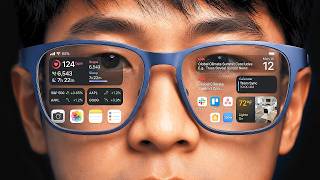
Augmented Reality Demystified: How Digital Overlays are Revolutionizing Our World – And Your Business

Augmented Reality (AR) is transforming how we interact with digital content by seamlessly overlaying virtual information onto our real-world view via devices like smartphones. This technology, powered by advanced computer vision and real-time rendering, recognizes objects and their 3D positions to place digital models accurately. While requiring immense processing speed, AR offers unparalleled interactive experiences, especially for industries like retail, by blending the physical and virtual into a single, enhanced reality.
Annonce

Augmented Reality Demystified: How Digital Overlays are Revolutionizing Our World – And Your Business

For decades, science fiction writers have painted vivid pictures of a future where technology seamlessly blends with our perception of reality, enhancing or transforming it at will. While the holodecks and neural implants remain largely in the realm of fiction, the foundational technology for a blended reality is already here and rapidly maturing: Augmented Reality (AR). Far from a mere novelty, AR is proving to be a critical interface, powered by sophisticated AI, poised to redefine how businesses operate and how consumers interact with the digital and physical worlds.

The Invisible Engine: Computer Vision and Real-time Processing

At its core, AR is an intricate ballet between raw visual data, advanced computation, and precise graphical rendering. Forget the simple filters of social media apps; true AR is about understanding the world. When you point your smartphone camera, or increasingly, a wearable device, at an environment, the first and most crucial step is executed by computer vision—a branch of artificial intelligence. This isn’t just about recognizing a face; it’s about deeply processing the raw image, identifying objects (like a hand, a room, or even a specific product) and understanding their context.

This recognition triggers a sophisticated rendering module. Here’s where the magic of overlay happens: the chosen digital content—a 3D model of a ring, a virtual piece of furniture, or perhaps a data visualization—is generated and precisely mapped onto the live camera feed. This isn’t a static image; for the illusion to hold, the digital object must appear to occupy the same 3D space as the physical one. This requires continuous tracking of the physical object’s position and orientation, updating with every frame. Given that most mobile devices process around 30 frames per second, the entire recognition, tracking, and rendering pipeline must complete within approximately 30 milliseconds. While a slight delay (around 50 milliseconds) often occurs to ensure smooth processing, our brains seamlessly bridge this gap, creating a fluid, believable experience. This relentless, real-time demand on processing power underscores AR’s reliance on cutting-edge mobile and edge computing capabilities, an often-overlooked aspect of its technological prowess.

Building the Blended Reality: Semantics, Geometry, and Logic

The efficacy and realism of an AR experience hinge on two fundamental pillars of computer vision: semantics and 3D geometry. Semantics addresses the “what” – recognizing that there’s a hand in the frame, identifying an object as a specific product, or understanding the type of environment. Geometry, on the other hand, answers the “where” and “how” – inferring the precise 3D position of that hand in space, its orientation, and even the curvature of its surface. Without accurate geometric understanding, a virtual ring would merely float clumsily around your finger, rather than appearing to adorn it.

Developing these capabilities is far from a one-size-fits-all solution. The computer vision algorithms designed to interpret the complex geometry of an apartment and identify specific furniture types are vastly different from those used to meticulously track the subtle movements and contours of a human hand. Each AR application requires predefined logic, dictating which digital content is triggered upon the recognition of specific real-world elements. This intelligent mapping between physical context and digital overlay is what transforms a static image into an interactive, dynamic experience. Furthermore, the fidelity of the 3D models themselves—especially for materials like reflective metals or sparkling diamonds—is paramount. A poorly rendered diamond, no matter how perfectly placed, shatters the illusion.

Strategic Imperative: Transforming Industries Beyond Retail

While the retail industry, particularly fashion and home goods, has been an early adopter, leveraging AR for virtual try-ons and realistic product visualization, its transformative potential stretches far wider.

In fintech, imagine AR interfaces overlaying complex market data onto a physical trading desk, visualizing portfolio performance in 3D, or even exploring digital assets like NFTs within a tangible environment. The ability to interact with abstract financial information in a spatially intuitive way could revolutionize data analysis and decision-making. For crypto, AR provides a crucial interface for the burgeoning metaverse, allowing digital assets, NFTs, and virtual real estate to extend beyond flat screens and into our physical world, blurring the lines between digital ownership and perceived presence.

Beyond these, AR holds immense promise in sectors like healthcare (surgical overlays, medical training), manufacturing (assembly instructions, quality control), and education (interactive learning models). It’s not just about entertainment; it’s about enhancing productivity, reducing errors, and creating deeply engaging, intuitive experiences that leverage our natural spatial reasoning.

The Road Ahead: AI, Edge, and the Seamless Metaverse

The future of AR is inextricably linked to advancements in AI, particularly in computer vision and machine learning. As AI models become more sophisticated at understanding complex environments, predicting user intent, and processing data at the edge, AR experiences will become exponentially more immersive and seamless. The push towards dedicated AR hardware—lightweight glasses rather than smartphones—will further reduce friction, allowing for truly ubiquitous digital overlays that become an extension of our perception.

This evolution will be a cornerstone for the broader vision of the metaverse, offering a direct, personal gateway to persistent digital worlds that seamlessly blend with our physical surroundings. AR is not just a technology; it’s a paradigm shift in human-computer interaction, enabling a richer, more context-aware digital existence.

Key Takeaways

  • AI-Powered Core: Augmented Reality relies heavily on advanced computer vision and AI for real-time object recognition, 3D geometry understanding, and precise digital content overlay.
  • Real-time Processing Demands: The demanding 30-50 millisecond frame processing window highlights AR’s need for powerful edge computing and optimized algorithms.
  • Semantics & Geometry are Key: Accurate semantic (what) and geometric (where/how) understanding of the physical world is critical for creating realistic and immersive AR experiences.
  • Cross-Industry Revolution: While prominent in retail, AR’s potential to transform fintech, crypto (metaverse integration), healthcare, manufacturing, and education is immense.
  • Gateway to the Metaverse: AR is a fundamental interface for experiencing and interacting with the evolving metaverse, seamlessly blending digital assets and environments with the physical world.

Editorial Perspective

Augmented Reality, often dismissed as a niche gimmick, is quietly becoming one of the most significant technological shifts of our era. It represents the logical next step in our interaction with digital information, moving beyond flat screens to context-aware, spatial computing. Businesses that fail to grasp the underlying AI sophistication and the strategic implications of AR will risk falling behind in an increasingly blended physical-digital economy. The future isn’t just digital; it’s augmented.

Ofte Stillede Spørgsmål

What is the primary technology enabling Augmented Reality (AR)?

Augmented Reality is primarily enabled by advanced computer vision and artificial intelligence, which process real-time camera feeds to understand objects and their 3D positions in the physical world. This allows digital content to be precisely overlaid and rendered.

How does AR create a realistic experience despite the digital nature of the overlays?

Realism in AR is achieved through precise 3D geometry understanding of the physical environment and objects, coupled with high-quality 3D digital models. The technology must also process and render content quickly enough (within milliseconds) for the human brain to perceive it as seamless.

Beyond virtual try-ons, what are some key business applications of AR?

Beyond retail, AR is revolutionizing fields like fintech (data visualization, digital asset interaction), healthcare (surgical overlays, training), manufacturing (assembly instructions), and education (interactive learning). It fundamentally enhances human interaction with digital information in a physical context.

How does AR relate to the concept of the metaverse?

AR serves as a crucial interface for the metaverse, allowing digital assets, virtual environments, and interactions to extend into our physical surroundings. It facilitates the seamless blending of the digital and physical worlds, which is a core tenet of the metaverse vision.