Technical training involves teaching specific skills and knowledge required for practical tasks in various industries. Augmented Reality (AR) is transforming this field by providing immersive, interactive 3D visualizations of complex systems, moving beyond traditional two-dimensional learning materials. This approach allows professionals and students to engage with engineering concepts in a profoundly new way.
Understanding Augmented Reality in Technical Training
Augmented reality technical training uses digital overlays to enhance real-world environments. Learners interact with virtual 3D models projected onto their physical surroundings. This moves beyond static pictures or schematics. This technology addresses a long-standing challenge in education and industry. It helps with the difficulty of visualizing intricate machinery and engineering systems from flat diagrams.
The core idea emerged from an observation. Many complex subjects, like aerospace engineering, are taught using large books. These books are filled with text and 2D images. While these materials provide foundational knowledge, they often lack the interactive depth needed for true comprehension of three-dimensional objects and their operational mechanics. AR bridges this gap by making content more engaging and visual. It allows users to “go inside” models, manipulate components, and observe systems in action. This fosters a deeper understanding that traditional methods cannot easily replicate. This method is particularly beneficial for organizations that train many people annually. It standardizes and enhances the learning experience across large groups.
How AR Enhances Learning and Development
AR much improves how people learn and develop technical skills. It transforms passive learning into an active, exploratory process. For instance, a student can examine the intricate stages of a SpaceX Falcon 9 rocket. They can also compare the aerodynamic differences between a 2001 and a 2020 Formula 1 car. These detailed 3D models allow for a level of inspection and interaction impossible with physical models or flat images. Users can scale models, walk around them, and even virtually enter them to see internal components.
This immersive experience is not just about novelty; it drives genuine utility. By presenting complex information visually and interactively, AR helps learners grasp difficult concepts faster. It supports collaborative learning. Multiple users can view and discuss the same virtual project simultaneously, even when in different physical locations. This shared perspective is invaluable for team-based problem-solving and remote instruction. The technology also allows for the optimization of 3D models. It converts heavy engineering drawings into lightweight, interactive versions suitable for AR environments. This ensures smooth performance and accessibility on AR devices.
Key Technologies Driving AR Training
The effectiveness of AR technical training relies on advanced hardware and sophisticated software. Headsets are central to the experience, offering different approaches to augmented reality. Devices like the Microsoft HoloLens 2 are known for their transparent displays. They allow users to see their real environment directly while digital holograms appear to float within it. This design ensures users maintain full awareness of their surroundings, which is important in many professional settings. The HoloLens also benefits from a well-developed ecosystem. This includes support for Windows software and developer tools like Unity.
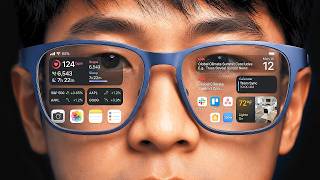
Other AR devices, such as the HTC XR Elite, Meta Quest 3, and the upcoming Apple Vision Pro, use a different method. These headsets feature high-resolution screens that display the real world captured by external cameras. Digital content is then overlaid. This “pass-through” approach can offer extremely high visual fidelity. The Apple Vision Pro, for example, features a 4K screen for each eye. Regardless of the display method, these devices often incorporate lidar scanners and advanced cameras to track the user’s hands and map the environment. This enables intuitive interaction through gestures. Users can point, grab, and manipulate virtual objects naturally. The computational power behind these systems is large. It ensures that virtual content integrates smoothly and realistically with the physical world.
Applications Across Industries
Augmented reality is finding practical applications in various professional sectors. This is particularly true where complex machinery and detailed procedures are common. Aerospace companies and airlines use AR for training maintenance personnel and engineers. They can visualize engine components, aircraft systems, and repair procedures in a highly interactive format. This reduces the need for expensive physical mock-ups. It also allows for training in diverse scenarios.
Training centers also use AR to prepare workers for industrial roles. For example, the technology can simulate the operation of heavy equipment or the assembly of intricate parts. Beyond direct operational training, AR also serves marketing purposes. A project for McLaren showcased Formula 1 cars in 3D. While initially for marketing, such models also provide educational value. They allow students to study vehicle design and aerodynamics. The ability to project full-scale models, like a Formula 1 car, into a large physical space provides an unparalleled sense of scale and detail for learning.
Adoption and Future Outlook
The adoption of AR in technical training is progressing, though at different speeds across sectors. Businesses, particularly in the B2B sector, are quicker to embrace AR. They see a clear return on investment. This includes improved training efficiency, reduced errors, and faster skill acquisition. Training centers and large corporations, such as those in aerospace, are already using this technology to their advantage.
The education system, however, moves more slowly. Universities have expressed interest in integrating AR content into their curricula. Yet, established educational infrastructures, built on tested curriculums and ministry programs, require patience for new methods to be fully adopted. This difference in adoption speed highlights the varying priorities and regulatory environments between corporate and academic settings. Despite these challenges, the increasing availability of powerful AR devices and the continuous refinement of software suggest a bright future. The ongoing competition among major tech companies, including Apple, HTC, and Meta, is driving innovation in hardware and software. This will make AR technology more accessible and capable for a wider range of technical training applications. The technology is moving beyond consumer novelties to become a powerful enterprise tool.