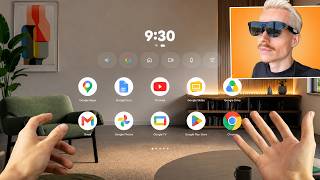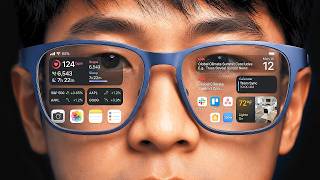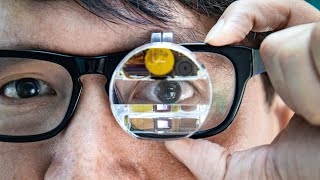
Augmented reality (AR) glasses represent a significant frontier in personal computing, aiming to integrate digital information directly into our perception of the real world. This technology promises a future where screens are no longer confined to physical devices but appear as interactive overlays visible only to the wearer. However, achieving this vision requires overcoming substantial engineering and design challenges, as demonstrated by early prototypes from major tech companies. These devices showcase innovative solutions while also revealing the fundamental compromises necessary at this stage of development.
The Vision for Augmented Reality Glasses
The concept of AR glasses occupies a unique space between virtual reality (VR) headsets and existing smartglasses. VR headsets offer deep immersion and advanced technology, but their bulk makes them impractical for everyday public use. Smartglasses, conversely, prioritize a conventional glasses form factor, limiting them to basic functions like cameras, speakers, and minimal onboard computing. AR glasses aim for a “Goldilocks zone,” combining the sophisticated digital overlays of VR with the discreet, wearable design of smartglasses. This means packing powerful processors, advanced optics, and long-lasting batteries into a frame that resembles ordinary eyewear. The goal is to create a device that can project digital content directly into a user’s field of view, tracking it to real-world objects and spaces, without isolating the user from their surroundings.
Meta Orion: A Tethered Path to Refinement
Meta’s Orion project exemplifies a highly refined, if tethered, approach to AR. This system consists of three main components: the glasses themselves, a wireless compute puck that must remain within about 15 feet of the glasses, and an electromyography (EMG) wristband. The wristband is a standout innovation, measuring electrical impulses from the brain as they travel to the fingers. This allows for subtle, intuitive gestures to control the AR interface, even if the hand is out of sight. The prototype achieved about 80% accuracy with haptic feedback, suggesting a high potential for future development, possibly even enabling mid-air handwriting for text input.
The Orion glasses, weighing around 100 grams, offer a transparent view of the world with digital overlays. They feature a 70-degree field of view, allowing graphics to remain largely within the user’s line of sight as they look around. Demos included navigating multi-window interfaces like Instagram and video calls floating in space, and an AI feature that could label real-world objects, such as ingredients on a table, with tracking blue dots. A shared 3D Pong game, anchored to a QR code, demonstrated multi-user AR experiences.
The engineering behind Orion is complex. The frames are made of magnesium, chosen for its rigidity to maintain lens alignment and its effectiveness as a heat sink for the internal components. The glasses contain 7 custom-designed small sensors and cameras for eye and environment tracking, along with custom silicon to process data. Despite these advancements, thermal constraints mean the transparent plastic version overheats faster, and the battery life is limited to about two to three hours. The compute puck offloads significant processing, enabling the glasses to remain relatively light. Meta views Orion as a strategic prototype, not a consumer product, designed to push the boundaries of AR technology for future iterations.
Snapchat AR Spectacles: An Untethered, Developer-Focused Approach
In contrast to Meta’s tethered system, Snapchat’s AR Spectacles adopt an untethered, all-in-one design, integrating all computing hardware directly into the glasses. This design choice results in a significantly bulkier and heavier device, weighing 228 grams. The frames are primarily black plastic, with metal bands on each side acting as heat sinks to dissipate warmth from internal components. While heavier, the untethered nature offers greater freedom of movement without reliance on a separate compute unit.
The display experience on the Snapchat Spectacles presents a different set of trade-offs. They boast a dramatically higher resolution, making menus and digital content appear much sharper than on the Meta Orion. However, this comes at the cost of a smaller 46-degree field of view. This narrower view means digital elements can be clipped or disappear if the user turns their head even slightly, making the edges of the AR experience more noticeable. For instance, playing a golf game required constant head movement to keep both the club and the hole in view.
A unique feature of the Snapchat Spectacles is their electrochromic tint, similar to technology used in some car sunroofs. This allows the lenses to transition from clear to tinted, enhancing the contrast and readability of overlaid digital content. This tint can create a more immersive, VR-like experience by fading out the real-world background when desired, such as for watching videos. Snapchat’s approach is largely aimed at developers, encouraging experimentation with AR experiences on a self-contained device.
Core Engineering Challenges and Trade-offs
The development of AR glasses highlights several fundamental engineering challenges that current prototypes are grappling with.
Weight and Form Factor: Miniaturizing powerful components while maintaining a comfortable, wearable design is a primary hurdle. Meta’s Orion achieves a lighter 100-gram form factor by offloading processing to an external puck. Snapchat’s Spectacles integrate everything, leading to a heavier 228-gram design that is noticeably larger on the face. The choice between tethered and untethered systems directly impacts both weight and user freedom.
Thermal Management: Powerful processors generate heat, which must be efficiently dissipated to prevent overheating and maintain performance. Meta uses magnesium frames as a heat sink, while Snapchat employs metal bands on its plastic frames. The challenge is to manage heat without making the device uncomfortable or compromising its aesthetic.
Power Management: Sustaining complex AR experiences requires significant battery power. Both prototypes demonstrate limited battery life, with Meta’s Orion offering two to three hours. Integrating larger batteries or relying on external power sources are current compromises, but long-term viability requires substantial improvements in battery density and power efficiency.
Display Optics: Achieving high-resolution, wide field-of-view displays in a transparent lens is technically demanding. Meta’s 70-degree field of view offers broader immersion but with a lower resolution. Snapchat prioritizes sharper resolution but with a more restrictive 46-degree field of view. Technologies like micro-LED projectors and waveguides, made from materials like silicon carbide, are essential for refracting light at extreme angles without distortion.
Input Methods: Interacting with AR content without physical controllers is another area of innovation. Eye tracking allows users to select items by looking at them, while hand tracking recognizes gestures. Meta’s EMG wristband represents a leap towards more subtle, brain-to-muscle impulse-based control, offering a glimpse into future human-computer interaction.
The Road Ahead for Mainstream AR
These early AR glasses are not consumer products but rather important experimental platforms. They serve to demonstrate the immense potential of augmented reality while exposing the significant engineering hurdles that remain. The differing strategies—Meta’s focus on a highly refined, tethered experience versus Snapchat’s untethered, developer-centric approach—reflect the industry’s experimental stage.
True mainstream AR glasses will require advancements across multiple fronts: brighter, higher-resolution displays with wider fields of view, significantly longer battery life, and more compact, lighter designs. The cost of manufacturing these advanced components also needs to decrease substantially. While the prototypes are not yet ready for public sale, they provide invaluable insights into the fundamental design compromises and technological breakthroughs needed to bring augmented reality from science fiction into everyday reality.