The Ultimate Guide to Fintech
What 67 videos from thirty finance channels actually agree on — why the rulebook decides everything, what AI really changed, and what the sales decks leave out.
Last updated · by Jacob S. Olsen
“Fintech” covers a banking app, a payments network, a lending algorithm and a digital dollar. Which is a polite way of saying the word tells you almost nothing.
So this guide does something different. Tech Feed Watch has covered 67 videos about money and technology, from around thirty channels — Yahoo Finance, a16z, Coin Bureau, TED, and a pile of independent analysts who actually work in this stuff. Below is what they agree on, where they argue, and what the sales decks quietly leave out.
One number shaped the whole thing. Out of those 67 videos, 58 talk about regulation. Not as a boring footnote. As the thing that decides what gets built at all.
If you remember one idea from this guide, make it that one.
What 67 videos agree on
Read all of them and the field gets a lot clearer than any single video makes it look.
The rulebook is not a speed bump. It is the road. 58 of 67. What a company may sell, how quickly it can let you open an account, which countries it can work in, how much money it must keep in reserve — all decided by licensing. Two apps can look identical on your phone and stand on completely different legal ground. You cannot see the difference from the outside. You find out when something breaks.
Digital banks and lending are tied for second, 29 videos each. That is not a coincidence. Most consumer fintech is a lending business wearing a nice app.
Fraud shows up in 27 — more than stablecoins, more than open banking. It is the least exciting subject in finance and one of the most discussed by people who actually work in it. That gap tells you where the real problems are.
Stablecoins get 15, open banking 11. Both are talked about as if they had already changed everything. Measured against the rest, they are still getting started.
The five parts of fintech, in plain language
Payments. The biggest and the most invisible. Moving money between two accounts sounds like it should be instant, and mostly it is not. Here is why: the money and the message about the money travel separately, along networks built in different decades. Most payment innovation is about closing that gap, or at least making the wait less obvious.
Lending. Where most consumer fintech actually earns its money, including plenty of companies that would never call themselves lenders. Buy now, pay later is lending. A card with an interest-free period is lending. When a money app is free and very polished, it is worth asking where the lending is.
Neobanks. Banking without branches. More on what they are and are not in a moment, because this is where most people get a surprise.
Wealth and investing. Commission-free trading, robo-advisers, buying a sliver of a share instead of a whole one. The fee did not vanish — it moved. It now hides in the spread, in who gets paid for your order, or in a monthly subscription.
Infrastructure. The engine room: core banking systems, ledgers, compliance software. Nobody advertises it, and it is where an enormous amount of the money is, because everyone else is renting it.
Whose bank is it anyway?
This is the part most fintech explainers skip, and it makes everything else make sense.
A real bank has a licence. The licence is what lets it hold your money. It comes with rules, inspections, capital it must keep in reserve, and deposit protection if things go wrong. Getting one takes years and a mountain of money.
So most fintechs do not bother. They rent one.
A partner bank holds the deposits and carries the licence. The fintech builds the app, the brand, the nice onboarding, the card that looks good on a table. You are behind the wheel. The registration is in somebody else’s name.
That arrangement is why a startup can launch a card in three months instead of five years. It also has three consequences that never make it into the marketing.
Your deposit protection comes from the partner bank, not the app. If you keep money in two different apps that happen to sit on the same partner bank, your protection may not double the way you assumed. Same bank underneath, same limit.
The fintech can lose its ride. If the partner bank leaves the business or a regulator says no, the product stops. This has happened more than once, and customers usually hear about it late.
All that identity checking is not bad design. Every account needs KYC — proving who you are, and being watched afterwards for anything odd. It is required by law, not chosen by the product team. It is also the biggest single cost of getting a customer and the point where most people give up halfway. The difference between an app that opens an account in four minutes and a bank that takes four days is mostly how they do the same legally required checks, not whether they do them.
And one more thing worth knowing: rules do not travel. Open banking in the UK, PSD2 in Europe and Section 1033 in the United States are three answers to roughly the same question, and they are not compatible. A European product does not simply sail across the Atlantic. It gets rebuilt.
What AI actually changed
Twelve of the 67 videos talk about AI in finance, and the promises are running well ahead of what is actually switched on.
Three things genuinely changed.
Spotting fraud got better. Finding one weird transaction among millions is exactly the kind of needle-in-a-haystack job these systems are good at.
Deciding who gets a loan uses more than a credit file now. That lets more people borrow. It also creates fresh ways to be unfair, and harder ones to spot, because “the model said no” is not an explanation anyone can argue with.
Support handles the boring questions. Real money saved. Rarely the revolution it gets called.
What did not change is who is on the hook. A model can make the call, but a licensed institution answers for it. Which is why most of the serious AI work in finance is happening in compliance departments rather than in the app you see.
Be sceptical when someone shows you an AI agent that moves money for you. The demo will be impressive. The question nobody has answered is who pays when it gets it wrong. Until that has a clear answer, these stay demos.
Stablecoins: brilliant at one job, oversold at another
Fifteen videos cover stablecoins, and they split along a line that is worth getting straight.
Between big institutions, they already work. Sending dollars across a border on a Sunday, settled in minutes instead of days, without a chain of banks each taking a cut. That is not a pitch — it is in daily use.
The reason is dull and important. Normally, moving money internationally is slow because several banks each keep their own separate books, and they all have to agree afterwards. A shared ledger means there is nothing to agree about. The slowness was never the technology. It was the paperwork between institutions.
For buying a sandwich, they do not work. The last step still goes through banks and card networks. Paying a shop with a stablecoin means somebody converts it back to normal money, and that somebody charges for the favour. The friction did not disappear. It moved one step to the left and got quieter.
Short version: stablecoins solved a real problem between institutions, and are being marketed as if they had solved a different one for consumers.
Fraud: the part nobody puts on a billboard
Twenty-seven videos. More than any other risk in the archive.
Think about what that means. The people who work in finance talk about fraud constantly. The people who sell financial products almost never mention it. When there is a gap that size between what practitioners discuss and what customers hear, the gap itself is the useful information.
Three things come up again and again.
Fast means final. Instant payments are irreversible payments. The same feature that makes them good makes them the favourite tool of anyone taking your money, because it is gone before you have finished reading the message.
The attack aims at you, not the bank. Bank security is genuinely strong now. So the attack is not a break-in. It is a convincing message that persuades you to move the money yourself. No amount of encryption stops that, because from the system’s point of view nothing went wrong — you authorised it. Phishing explains how that works in more detail.
Who pays is still being argued over. If you were tricked into approving a payment, whether the bank refunds you depends on where you live and is being fought over right now. In much of the world, the answer is still: you do.
So here is the one instruction worth taking from this whole guide.
Treat any unexpected message about money as false until you have checked it through a number you looked up yourself. Not a number in the message. Not a link in the message. A number you found on your own. It costs you two minutes when the message was real, and it costs a criminal everything when it was not.
Five things you can actually do
Find out whose licence you are standing on. Open your banking app, look for the small print that names the bank holding your deposits. Two minutes. If you have money in two apps, check whether it is the same bank underneath — because your protection does not double if it is.
Follow the rules, not the funding rounds. Regulation predicts what gets built roughly a year before the press releases do. If you want to know what your bank will offer next year, read what the regulator published this year.
Assume there is lending somewhere. When a money app is free, polished and generous, the question is not “how nice of them” but “where is the loan?” It is usually not hidden. It is just not on the front page.
Do the maths yourself before believing a number. The compound growth calculator covers savings and interest, and the crypto profit calculator covers the other kind. Both run inside your browser — nothing you type is sent anywhere.
And the fraud rule again, because it is the one that matters. Unexpected message about money? Check it through a number you looked up yourself.
Want the raw material?
Every article behind this guide links to the original video, with the creator credited. The Fintech tag has all 67 of them, and the glossary explains the words that keep showing up.
This guide draws on 67 videos covered on Tech Feed Watch, from around thirty channels including Yahoo Finance, a16z, Coin Bureau and TED. The counts quoted — 58 mentioning regulation, 29 on lending, 27 on fraud — come from the archive itself, not from an industry report. Written and maintained by Jacob S. Olsen. If something here is wrong, the corrections policy explains how to tell me.
The numbers in this guide are a snapshot of the archive as of July 2026; the archive itself keeps growing.
Articles in this guide

How Will AI Change Banking Alongside Instant Payments?

PMI Crossing Threshold Signals Altcoin Bull Market Onset

FIT21 Vote Defines US Crypto Regulator Roles

How to Invest in SpaceX Pre IPO Opportunities
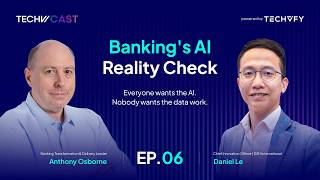
AI in Banking Sector Requires Holistic Transformation
Agile Core Banking Platforms Drive Finance Innovation
Open Banking: Data and Trust Drive Personalized Finance

How Are ETFs and Index Funds Different for Tax Purposes
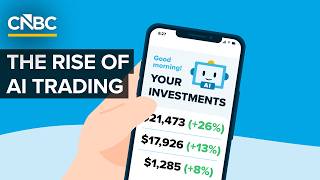
AI Trading Agents Power Autonomous Retail Finance Trading

How Will PSD3 Reshape Data Exchange for Europe's Open Banking?
Section 1033 Compels US Open Banking Data Access Regulation
Is Crypto Regulated in the US for DeFi?

Why Agentic AI Is Important for Financial Transformation

What Are Index Funds and How Do They Work

Institutional Tokenized Assets Drive 24/7 Trading
What Are Debt Management Strategies in Personal Finance?

What Is Agentic AI in Financial Services
How US CLARITY Act Dictates Altcoin Classification and Value
FinTech AI: Redefining Finance Through Fraud Detection and Data Ethics
What Is Institutional Adoption of Crypto? Wall Street's Pivot
SEC Eyes Crypto Exemption to Trade Wall Street Tokens
What Is Tokenization of Financial Assets?

What Is the Bitcoin Bull Market Support Band?

How Robinhood Blockchain's 24/7 DeFi Assets Change Markets
What Is Crypto Tokenization and Its Financial Impact?

Reproducible NFTs Threaten Digital Scarcity and Long-Term Value
How Do AI Agents Pay Each Other with Crypto?

Blockchain Explained Its Importance and Evolution

What Is Individual Sovereignty, and What Does Bitcoin Add?

Blockchain Builds Trust in Finance and Supply Chains Beyond Crypto

How Does Blockchain Technology Address Trust Issues with Current Technology?

What Is Python Used for in Finance, Trading, Risk?

How Do Open Banking APIs Work for Payments and Finance Firms?
DeFi Leveraging Blockchain Bypasses Traditional Banks

What Is Crypto Market Volatility and Its Impact

Why Cryptocurrency Blockchain Creates Immutable Digital Value
Crypto Utility Reshapes Finance with Smart Contracts DApps DeFi

Why DCG Gemini Debt Could Force Bitcoin Holdings Sales

Stablecoins, AI: Powering Autonomous Finance, Decentralizing Banking

How Does Ethereum Gas Work in Accounts and Wallets?
How Fintech Web3 XR Reshape Financial Services with Super Apps

What Kaspa Smart Contracts User Engagement Means for DeFi
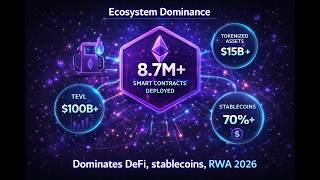
Ethereum Explained: How the Blockchain Processes Smart Contracts

Fintech Transformation Emphasizes Sustainable Business

FIX Protocol Standardizes Trading Data Using Key-Value Pairs
What Is AI Algorithmic Trading
How Alternative Data APIs Drive Algo Trading and Quant Finance

Zand Bank UAE Redefines Digital Finance
How Digital Payment Systems Process Transactions

Fintech Business Models Define Value and Revenue Strategies
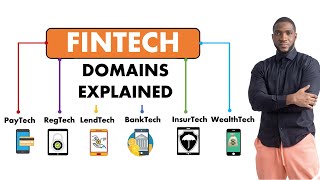
Fintech Evolution Reshaping Financial Services

What Is the Blockchain Oracle Problem
Ethereum Blockchain: What Is It and What Is It Used For?

Fintech Innovations 2026 Transform Digital Finance with AI Blockchain
What Is Digital Identity Verification and Its Evolution

What Is a Fintech Regulatory Sandbox for Innovation?

Why Doesn't Bitcoin Have Smart Contracts?

What Is the Purpose of Stablecoins in the Digital Money War?

Stablecoin Infrastructure Becomes Essential for Modern Finance
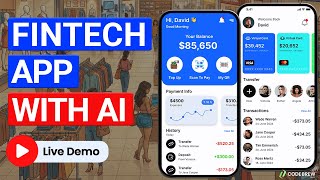
How AI Is Changing Fintech and Redefining Success

Can Fintech Applications Effectively Generate Passive Income?

Smart Contracts: Trust, Efficiency, Security, and Scalability Issues
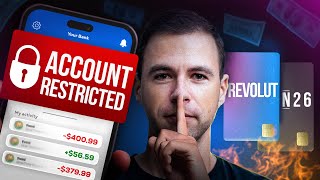
N26 Revolut Accounts Freeze From Aggressive AML Automation

How Smart Contracts Use Blockchain for Benefits and Trade-offs

How AI Is Used in Finance for Transformation

S and P 500 Diversification Risk Is Higher Than You Think
Frequently Asked Questions
What is fintech, in one sentence?
Companies using software to do things banks do — payments, lending, accounts, investing — usually faster and cheaper, and usually built on top of a real bank's licence rather than their own.
Are neobanks actually banks?
Some are, most are not. Many run on a partner bank's licence, which means your deposit protection comes from that bank, not from the app on your phone. It is worth knowing which one you are really a customer of.
Why does regulation come up in every fintech discussion?
Because it decides what can be built at all. What a company may offer, how fast it can open an account for you, and which countries it can launch in are settled by licensing long before anyone writes a line of code.
Are stablecoins a real payment technology or a crypto story?
Both, and the split matters. For moving dollars between big institutions they are already in daily use. For buying a coffee they are not, because the last step still runs through banks and card networks.
What should I be most careful about?
Fraud. It is the most discussed risk in the whole archive, and the loss lands on the individual far more often than the marketing suggests.