Augmented reality (AR) overlays digital information onto the physical world, creating an enhanced view of reality through visual elements, sound, or other sensory stimuli. This technology is poised to integrate into numerous aspects of daily life and professional fields, offering practical applications that range from improving learning experiences to transforming how we shop, navigate, and interact with information.
Augmented Reality in Education and Training
AR holds significant potential to revolutionize learning by making complex concepts more tangible and interactive. For visual learners, AR allows for the inspection of 3D holograms from multiple angles, enabling a deeper understanding of subjects like biology, anatomy, cosmology, and geometry. Students can manipulate virtual objects, rotating them to examine every detail, which can make abstract ideas more concrete.
Beyond static models, AR facilitates at-home experimental learning through scientific and mathematical simulations in 3D space. For instance, students could observe the effects of various medications on virtual human organs or adjust conditions on a simulated planet to understand its capacity to support life. This hands-on, visual approach tends to be more memorable and comprehensible than traditional learning methods.
The application of AR extends to practical instruction as well. Virtual user manuals and assembly instructions can display 3D holograms and animated visual guides for products ranging from vehicles and refrigerators to furniture like desks and cabinets. These overlays can show construction phases or operational steps directly within the user’s environment, simplifying complex tasks.
Transforming Retail and Consumer Shopping
AR is already changing how consumers visualize and purchase products, bridging the gap between online browsing and in-person experience. For tangible goods like appliances and furniture, numerous smartphone applications allow customers to overlay virtual versions of products into their homes. This enables them to see how items fit, match colors, and arrange rooms before making a purchase, ensuring a better fit for their intended purpose. Tools like Shop Savvy AR exemplify this existing capability.
In clothing and fashion, AR simulates virtual fitting rooms, allowing customers to see how virtual jackets, footwear, jewelry, makeup, and sunglasses appear on them without physically trying them on. This technology is projected to drive the global virtual fitting room market by 2027, leveraging smartphones, smart glasses, and smart mirrors. Major retail chains such as Ralph Lauren and H&M are already incorporating smart mirrors into their stores to offer these experiences.
The automotive industry also uses AR for marketing. Companies like BMW and Accenture have developed AR applications that let customers experience a new car in their driveway, viewing it in different colors and configurations, all without needing to visit a dealership.
Enhanced Navigation and Personal Digital Assistance
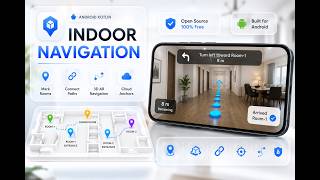
Navigating both outdoor and indoor environments can become significantly easier with augmented reality. Indoors, AR can project guiding lines onto the ground in large spaces like airports, parking lots, malls, office buildings, or college campuses, leading users directly to their destinations. Outdoors, instead of typing an address, users could simply point to a location, and directions would appear as an AR-created trail on the ground, potentially even accounting for physical obstacles. Furthermore, pointing a device at an unknown building or object could instantly provide information about it.
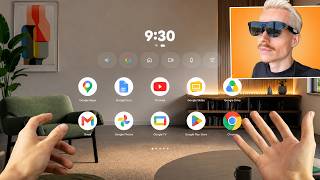
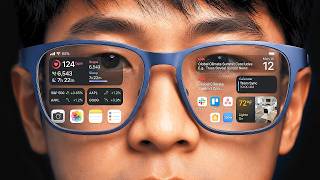
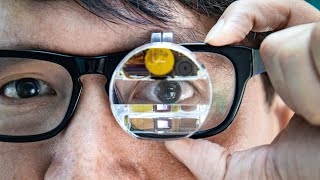
The concept of a “Jarvis-like” virtual assistant is also being developed through AR. Companies like Mojo are working on AR lenses with microLED displays that project information directly into the wearer’s field of vision. Initially, these lenses aim to assist individuals with poor vision by improving contrast or enabling zooming. Eventually, they could display health tracking statistics, text messages, weather reports, and even enhance sight in low-light conditions or serve as a teleprompter.
With the integration of sophisticated AI, these AR lenses and smart glasses could facilitate virtual assistants capable of learning user preferences and anticipating needs. Depending on granted permissions, such software could monitor conversations, emails, and even blood chemistry, enabling it to shop, monitor health, and help users work towards their goals.
AR’s Impact on Professional Sectors
Augmented reality offers transformative applications across various professional fields, from healthcare to sports.
In healthcare, AR plays three significant roles:
- Consumer Education: Patients can better understand the benefits and risks of medications and procedures through visual demonstrations and simulations.
- Assisting Doctors: AR can create simulations for complex procedures, aiding doctors in preparation, and offer intuitive 3D representations of the human body for medical students.
- Medication Sales: Pharmaceutical salespersons can use virtual simulations to demonstrate the positive effects of new drugs to doctors, providing a competitive edge in a crowded market.
The automotive industry benefits from AR beyond marketing. AR heads-up displays can enhance a driver’s view of the road, making them aware of potential hazards ahead and offering navigation visuals tailored to the terrain, which can be more intuitive than traditional map software. Car manufacturers like Nissan, Audi, and and Volvo are already incorporating this type of technology.
In sporting events, AR can enrich the fan experience and provide new ways to analyze performance. Major League Baseball, for example, is exploring using analytics data from its Hawk-Eye Baseball Tracking System to create highly accurate and realistic AR experiences for fans, showing player and ball positions in virtual space. Similar strategies could be applied to other sports such as soccer, American football, and golf.
The Immersive Future: Unlocking the Metaverse
Augmented reality is a foundational component in the vision of the metaverse, which represents the next evolutionary step for the internet. The metaverse is conceived as a convergence of physical, augmented, and virtual reality within a shared online space. It can be thought of as a “4D version” of the current internet, where users are inside the digital environment rather than merely observing it on a screen.
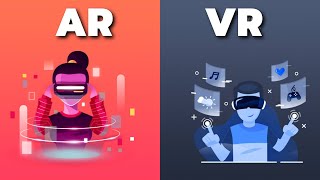
This immersive internet will be made possible by combining AR with virtual reality (VR), artificial intelligence (AI), 5G networks, and other advanced technologies. The metaverse is expected to impact every existing industry, fundamentally altering how people work, socialize, learn, and entertain themselves by creating persistent, interconnected digital worlds that blend with our physical reality.