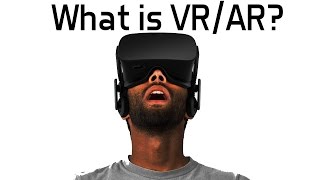
Augmented Reality (AR) is rapidly moving beyond niche applications, poised to integrate deeply into the fabric of daily life by 2030. This evolution centers on sophisticated wearables that overlay digital information directly onto our perception of the physical world, fundamentally changing how we interact with data, communicate, and learn.
The Evolution of AR Wearables
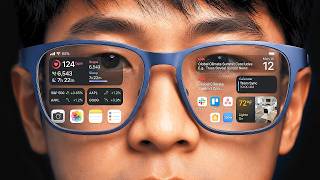
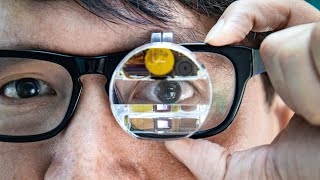
The widespread adoption of AR glasses marks a significant shift, with devices designed to be indistinguishable from conventional eyewear. These glasses are expected to be a common sight in major cities, worn by a diverse population. Their core functionality extends to accessing a range of applications for phone calls, emails, music, maps, and games, often controlled through intuitive hand gestures or speech commands. Users can view movies and video games on 2D screens that appear to float within their environment, and conduct video calls without the need for a separate smartphone. A key feature of these devices is their discretion; from the outside, it is not apparent which applications are active. Equipped with lidar sensors, these wearables are capable of generating 3D interpretations of the surrounding environment, enabling precise digital overlays. Looking further ahead, AR contact lenses are gaining traction and are projected to largely supersede AR glasses within the next 10 to 30 years, offering an even more integrated and less obtrusive AR experience.
Information Overlay and Communication
The integration of AR-generated text into daily interactions represents a major advancement. AI assistants operating through AR lenses can provide real-time guidance in various situations. For instance, when engaging with someone speaking a different language, translated text can instantly appear on the lenses, facilitating cross-cultural communication. Similarly, individuals with hearing loss can benefit from automatic text displays of spoken conversations. Beyond personal communication, AR offers powerful tools for public speaking and performance. Presenters, actors, and musicians can have their scripts or lyrics displayed directly on their lenses, eliminating the need to memorize extensive material. This capability also extends to high-stakes personal interactions, such as job interviews or dates, where precise phrasing can be suggested to help achieve desired outcomes. Furthermore, when traveling abroad, AR lenses can visually translate foreign text on signs and billboards into the user’s native language. The ability to use speech to display AI-generated images and videos directly onto the AR lenses adds another layer of dynamic communication.
Transforming Commerce and Daily Tasks
AR is set to redefine how people shop and navigate their surroundings. In retail environments like grocery stores and malls, AR devices and applications can display detailed product information, including prices, grams of protein, and sugar content, directly as a user views an item. An AI assistant can guide users through meal preparation by directing them to all necessary food items for a specific recipe. The technology also extends to real estate, where AR lenses can display the prices and amenities of houses or apartments for sale as one drives or walks past them. Navigation, both outdoors and indoors, becomes significantly augmented. AR glasses can show estimated arrival times and a togglable minimap on the corner of a lens. In complex indoor spaces, such as large airports, a line overlay on the ground can guide individuals directly to their destination. For outdoor enthusiasts like hikers and campers, AR glasses can display destinations as symbols, along with their distance in miles or kilometers. The technology can even provide environmental awareness, showing approaching thunderstorms on the horizon. Additionally, simply looking at animals and plants can trigger the display of their names, with an option to access Wikipedia pages for more information.
Immersive Learning and Simulation
The education system stands to be profoundly transformed by AR, particularly for students in middle and high schools. AR enables the use of 3D animated holograms to teach complex subjects such as biology, anatomy, cosmology, and geometry. Students can interact with these holograms, rotating them in any direction and changing their sizes, which provides previously unattainable perspectives on intricate concepts. Beyond static models, AR facilitates scientific and mathematical simulations in 3D space. Students can run experiments and view the results from every conceivable angle. For example, they can observe how medications affect various human body organs at cellular and molecular levels, or adjust multiple physical conditions on virtual planets to understand their impact on the ability to support life. This hands-on, interactive approach promises to deepen comprehension and engagement with challenging academic material.
Societal Considerations and Future Trajectories
As AR technology becomes ubiquitous, its integration into daily life brings forth important societal considerations. The ability of AR wearables to discreetly overlay information, from personal reminders to real-time translations and AI-generated prompts, highlights questions around privacy and authenticity in interactions. While the “no one can tell” feature of active applications offers personal discretion, the broader implications of constant digital augmentation of reality warrant discussion. The use of AI assistants to suggest “precise phrases” in social situations, for example, introduces a new dynamic to human connection, potentially blurring lines between genuine interaction and technologically mediated performance. Furthermore, the vast amounts of data collected by lidar sensors and other components to create 3D interpretations of environments will necessitate strong frameworks for data security and ethical use. The projected shift from AR glasses to more integrated AR contact lenses within 10 to 30 years suggests a future where digital overlays are even more intimate and ever-present, demanding ongoing dialogue about the balance between technological advancement and human experience. The transformative potential of AR is clear, but navigating its widespread adoption will require careful consideration of its impact on individual behavior, societal norms, and the very nature of reality perception.