The Ultimate Guide to Crypto
What 50 videos from Coin Bureau, a16z, Lex Fridman and Yahoo Finance actually cover — institutions and rules far more than price, and what that shift means.
Last updated · by Jacob S. Olsen
Most crypto coverage is about the price. This archive is not, and that is the most interesting thing about it.
Tech Feed Watch has covered 50 videos on crypto, from Coin Bureau, a16z, Lex Fridman, Yahoo Finance and a range of independent analysts. Counting what they actually discuss:
Institutional money and ETFs: 38 videos. Bitcoin: 26. Speculation and price: 20.
Read that again. The professional conversation about crypto now spends more time on pension funds and regulators than on whether the price is going up. Add regulation at 35 videos and decentralised finance at 35, and the picture is clear: this stopped being a story about getting rich and became a story about plumbing.
That does not make it safe or certain. It does mean the loudest coverage elsewhere is describing a version of this field that the people who work in it have largely moved on from.
What the thing actually is
Strip away the vocabulary and crypto is one idea: a shared record that nobody owns, which everyone can check and no single party can quietly rewrite.
Normally, when you send money, a bank updates its own book and tells the other bank, which updates its own. It works because the banks are supervised and you trust the supervision. A blockchain replaces that trust with verification: every participant holds the same record, and changing it means convincing the majority rather than persuading one institution.
That is genuinely useful when trust is the problem. It is expensive and slow when it is not, which is why it works far better between institutions in different countries than it does when you are buying a coffee.
Two ways of agreeing on that record come up constantly. Proof of work makes rewriting history expensive by requiring enormous computing effort — that is Bitcoin, and the energy use is the security rather than a side effect. Proof of stake replaces the energy with money at risk, which is why Ethereum moved to it. Which is better is a genuine disagreement about where security should come from, not a settled technical question.
Bitcoin and Ethereum are not competitors
They are answers to different questions, and treating them as rivals is the fastest way to misunderstand both.
Bitcoin does one thing on purpose. It moves and stores value, and it resists change. That rigidity is criticised as a limitation and defended as the point: a system meant to be a store of value should not be easy to alter.
Ethereum runs programs. A smart contract is code that executes when its conditions are met, without anyone administering it. That is why almost everything built on top of crypto is built there — it appears in 41 of the 50 videos, more than Bitcoin does.
The trade is the one you would expect. More capability means more surface for things to go wrong, and most of the large losses in this field have been in contract code rather than in the chains themselves.
Because Ethereum is slow and expensive when busy, most activity now happens on layer 2 networks that batch transactions and write a summary back. Cheaper and faster, with a security model that is genuinely not the same — worth understanding before moving anything substantial.
The part that actually changed: institutions
Thirty-eight of the 50 videos discuss institutional money. That is more than any other subject in the archive, and it is the shift that matters.
For most of crypto’s history, the money came from individuals. Now it comes from funds, treasuries and pensions, mostly through exchange-traded products that let an institution hold exposure without holding the asset directly. A pension fund cannot look after private keys; a regulated fund structure solves that.
Three consequences follow, and none of them are what the enthusiasts predicted.
The volatility changed shape. Institutional flows are larger and slower than retail ones. That has damped some of the wild swings and tied crypto more closely to the same interest-rate and risk conditions that move everything else — which is the opposite of the independence it was supposed to offer.
Regulation became the gate. 35 of 50 videos discuss rules. Institutions cannot buy something their compliance department will not clear, so what is permitted decides what gets bought, and by whom, and in which country.
The original argument got quieter. Crypto was proposed as a way to operate outside the financial system. The growth is coming from the financial system buying it. Both sides of the archive notice this; they disagree about whether it is a betrayal or the point.
DeFi and stablecoins: the useful parts
DeFi appears in 35 videos — lending, trading and earning yield through code rather than through a company. When it works, it is genuinely open: anyone can inspect the rules, and there is no application to be rejected.
It is also where most of the money has been lost, and rarely because the maths failed. It fails because someone found a flaw in code that cannot be patched without moving everyone off it, or because the promised yield was being paid out of new deposits rather than earned.
The question worth asking about any yield is where it comes from. If nobody can answer in a sentence, that is the answer.
Stablecoins — 19 videos — are the part with the clearest real job. Between institutions they already move dollars across borders in minutes rather than days, because a shared ledger removes the reconciliation between banks rather than speeding it up. For consumer payments they mostly are not used, since the last step still runs through banks and card networks. The same split appears in the fintech guide, from the other direction.
Tokenisation — representing a real asset as a transferable record — is the idea with the most institutional attention and the least consumer visibility. The technology moves the claim reliably. Whether the claim is worth anything still depends on a legal system, a custodian and a registry that agrees.
How people actually lose money
Twelve videos cover hacks, scams and losses. What they describe is not the chain breaking — it is everything around it.
Scams. The largest category by far. Fake investment platforms, impersonated support staff, promises of guaranteed returns. Crypto is attractive to fraud for one structural reason: a confirmed transaction cannot be reversed, so the money is gone before you have finished reading the message that persuaded you. The same rule from the fintech world applies here and is worth repeating: treat any unexpected message about money as false until you have checked it through a channel you found yourself.
Lost access. No password reset, no support line, no recovery. If you hold your own keys and lose them, that is the end of it. This is not a flaw — it is the direct consequence of nobody being in charge.
Not understanding the thing. Money put into projects whose mechanics nobody involved could explain. The archive is unsentimental about this one.
Thirteen videos cover wallets and self-custody, and the trade is worth stating plainly. Leaving your holdings on an exchange means someone else can freeze them, and has. Holding them yourself means nobody can freeze them and nobody can recover them either. Neither option is safe; they fail differently, and you get to choose which failure you would rather face.
The quantum question
Five videos raise it, so it deserves a short and honest answer rather than either dismissal or alarm.
A sufficiently powerful quantum computer could, in principle, derive a private key from a public one — which would break the assumption everything rests on. That is a real mathematical concern, not science fiction.
It is also not close. The machines that exist cannot do it, and the gap between what they can do and what this would require is enormous. Meanwhile quantum-resistant cryptography already exists and is being standardised.
The realistic risk is not a sudden break. It is that upgrading a decentralised network requires broad agreement, and agreement takes years. The interesting question is not whether the cryptography can be replaced but whether the coordination happens before it needs to.
If you are going to do this anyway
The archive does not tell anyone what to buy, and neither does this guide. What it does support is a short list of habits.
Understand what you own well enough to explain it in a sentence. Not the marketing — the mechanics. If you cannot say what makes the number go up, you do not know what you are holding.
Ask where a yield comes from. Real yield comes from someone paying to borrow. If the answer is vague, assume it is coming from the next depositor.
Size it as money you can lose. Every honest source in the archive says a version of this, including the ones who are enthusiastic.
Do the arithmetic yourself. The crypto profit calculator handles gains and losses, and the percentage calculator covers the trap that costs people most: a 50% fall needs a 100% rise to get back to where it started. Both run in your browser — nothing you type is uploaded.
Separate the technology from the token. A genuinely useful protocol does not guarantee its token rises, and plenty of tokens have risen without anything useful underneath.
The short version
The serious conversation about crypto moved from price to plumbing: institutional money in 38 of 50 videos, regulation in 35, speculation in 20. Ethereum and its programmable contracts appear more often than Bitcoin. Stablecoins found a real job between institutions and largely not in shops. And the losses come from scams, lost keys and misunderstanding — not from the technology failing.
Every article behind this guide links to its original video, with the creator credited. The Crypto tag has all 50.
This guide draws on 50 videos covered on Tech Feed Watch, from channels including Coin Bureau, a16z, Lex Fridman and Yahoo Finance. The counts quoted — 38 on institutional money, 35 on regulation, 20 on price — come from the archive itself, not from an industry report. Nothing here is investment advice; it is a summary of what other people said. Written and maintained by Jacob S. Olsen. If something here is wrong, the corrections policy explains how to tell me.
The numbers in this guide are a snapshot of the archive as of July 2026; the archive itself keeps growing.
Articles in this guide

PMI Crossing Threshold Signals Altcoin Bull Market Onset

Why Does Bitcoin Have a Fixed Supply? Why Institutions Care

FIT21 Vote Defines US Crypto Regulator Roles

Is Crypto Regulated in the US for DeFi?

Institutional Tokenized Assets Drive 24/7 Trading

Robinhood Crypto and Institutions Bet Long-Term on Blockchain
What Is Institutional Adoption of Crypto? Wall Street's Pivot

SEC Eyes Crypto Exemption to Trade Wall Street Tokens

What Is Crypto Clarity and Why It Matters
What Is Tokenization of Financial Assets?

What Is the Bitcoin Bull Market Support Band?

How Robinhood Blockchain's 24/7 DeFi Assets Change Markets

What Is Web2 and What Is Web3's Internet Evolution?

Blockchain Explained Its Importance and Evolution

What Is Individual Sovereignty, and What Does Bitcoin Add?

What Bitcoin Mining Means for Chain Security BTC Value Energy Debate

How Does Quantum Computing Threaten Bitcoin Security?

Blockchain NFTs Enable Direct Creator Ownership Monetization

Oracle Network in Blockchain Bridges Data for Smart Contracts

Shor's Algorithm: Quantum Threat to Bitcoin's Cryptography

Building Crypto: Onchain Utility Drives Real-World Integration

DeFi Leveraging Blockchain Bypasses Traditional Banks

How Does Ethereum Proof of Stake Work

What Is Crypto Market Volatility and Its Impact

AI Crypto Trading Bots Offer Efficiency and AI Specific Risks

Why Cryptocurrency Blockchain Creates Immutable Digital Value

Crypto Utility Reshapes Finance with Smart Contracts DApps DeFi

Why DCG Gemini Debt Could Force Bitcoin Holdings Sales

Stablecoins, AI: Powering Autonomous Finance, Decentralizing Banking

How Does Ethereum Gas Work in Accounts and Wallets?

What Kaspa Smart Contracts User Engagement Means for DeFi

What Is Smart Contract Escrow on Solana, and How It Works

Ethereum Explained: How the Blockchain Processes Smart Contracts

Ethereum Smart Contracts Architecture Mechanics for EVM Execution
How Ethereum Merge PoS Improves Network Security and Emissions

Remix Ethereum IDE Simplifies Smart Contract Coding

What Is the Blockchain Oracle Problem

Can Compact Language Build Private Smart Contracts Midnight ZK?

Ethereum Blockchain: What Is It and What Is It Used For?

Why Doesn't Bitcoin Have Smart Contracts?

How to Use Etherscan to Inspect Smart Contracts and NFTs

What Is the Purpose of Stablecoins in the Digital Money War?

Stablecoin Infrastructure Becomes Essential for Modern Finance

How Do Smart Contracts Work on Ethereum? Code Your First One

How Do Smart Contracts Work in Blockchain Technology

What Are Smart Contracts and How Do They Work
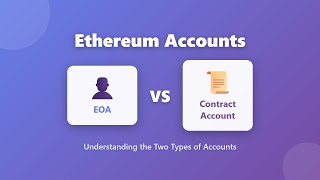
Understanding Types of Ethereum Accounts for DApps

Smart Contracts: Trust, Efficiency, Security, and Scalability Issues

How to Earn Passive Income with Crypto Node Operation

How Smart Contracts Use Blockchain for Benefits and Trade-offs
Frequently Asked Questions
What is crypto actually for?
Moving value between parties who do not need to trust each other or an institution in the middle. Whether that is worth the cost depends entirely on whether you had a trust problem to begin with — which is why it works better between institutions than in a shop.
Is it too late to get involved?
This guide cannot tell you that and neither can a video. What the archive does show is that the conversation moved from price to plumbing: institutional money and regulation come up far more often than trading.
What is the difference between Bitcoin and Ethereum?
Bitcoin does one thing deliberately — it moves and stores value. Ethereum runs programs, which is why nearly everything built on top of crypto is built there. More capability, more ways for something to go wrong.
How do people actually lose money?
Overwhelmingly not through the technology failing. They lose it to scams, to lost access, and to putting money into things they did not understand. The chain works fine; the surroundings are where the losses happen.
Do I need a hardware wallet?
If you hold an amount you would be upset to lose, yes. The trade is real: self-custody means nobody can freeze your funds and nobody can recover them for you either. There is no password reset.