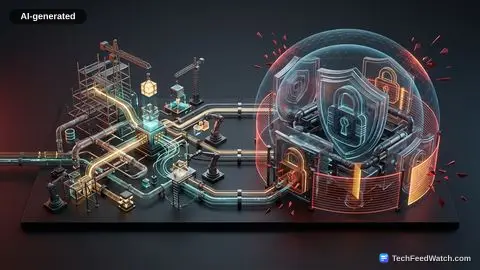
Industry standards like ISO 27001 and NIST set formal requirements
Formal cybersecurity frameworks transform broad governance principles into structured, auditable security benchmarks for public and private organizations. Standard frameworks prevent companies from guessing which controls satisfy baseline legal and operational expectations.
According to the National Institute of Standards and Technology (NIST) in Federal Information Processing Standards (FIPS) Publication 200, published in March 2006, federal agencies are mandated to satisfy minimum information security requirements across 17 distinct security-related areas. These mandatory specifications enforce uniform protection across disparate government information systems.
In parallel, private and international entities rely on ISO/IEC 27001:2022 to implement an Information Security Management System (ISMS). This standard establishes a repeatable cycle of risk assessment, control selection, and performance measurement. By adhering to internationally recognized standards, organizations demonstrate security competence to commercial partners and regulatory auditors alike.
Which operational domains do standard security controls cover?
Standard infosec controls organize protective actions across administrative, technological, and environmental categories. According to NIST Special Publication 800-53 Revision 5 (updated December 2020), security and privacy controls are categorized across 20 distinct control families, extending from Access Control (AC) to Supply Chain Risk Management (SR).
A comprehensive defense covers several critical layers:
- Access and identity controls, which govern user authentication, role separation, and cryptographic validation.
- Technical controls, which enforce network segmentation, endpoint protection, automated patching, and telemetry logging.
- Operational controls, which include physical facility security, equipment disposal, incident response testing, and vendor evaluations.
- Personnel controls, which mandate background checks, specialized role training, and security onboarding requirements.
Teams often identify infrastructure gaps during control rollouts when assessing how cybersecurity engineers structure perimeter protections. The control framework ensures that an oversight in one area, such as software development, does not completely invalidate protections established in human resources or facilities management.
Organizations tailor security requirements to their specific risk profile
Security controls cannot operate as rigid, one-size-fits-all mandates across every business model. An early-stage software provider requires a different defensive posture than a high-volume financial clearinghouse. Organizations determine the intensity and scope of their controls through rigorous risk assessments.
Tailoring involves assessing the likelihood and impact of potential security failures, then adjusting control stringency accordingly. If a system handles low-impact marketing records, mandatory multi-person approval workflows introduce unnecessary drag without providing meaningful protection. Conversely, deploying unmonitored connections within critical operational pipelines can result in a data breach that paralyzes entire commercial networks.
Effective organizations continuously re-evaluate their risk profiles. As infrastructure evolves to accommodate cloud platforms and external contractors, teams adjust control parameters to balance operational agility against systemic exposure.
SIBB e.V. compares ISO 27001 with modern cybersecurity regulations
In a specialized webinar, tech network SIBB e.V. analyzed the relationship between voluntary management standards like ISO/IEC 27001 and emerging European regulatory mandates. The association, representing roughly 200 member companies for 34 years, explained how structured technical frameworks translate into legal compliance.
The presentation noted that ISO/IEC 27001 outlines controls across organizational, people, physical, and technology themes. These voluntary roadmaps help organizations implement structured safeguards that align with modern statutory frameworks such as the NIS2 Directive and the Cyber Resilience Act. Across all regulatory and voluntary models, senior leadership retains ultimate governance duties.