An AI chip is a microchip specifically engineered to accelerate artificial intelligence computations. These specialized processors are designed to handle the massive parallel processing and data throughput required for machine learning tasks, such as training complex AI models and performing rapid inference. They are the hardware foundation for the burgeoning field of AI, enabling everything from advanced data analysis to the development of large language models.
The Core of Artificial Intelligence: What Makes an AI Chip Special?
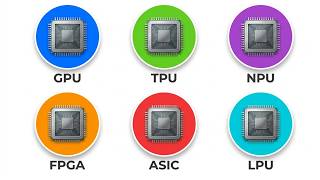
Traditional central processing units (CPUs) are adept at executing sequential instructions, making them suitable for general computing tasks. However, AI workloads, particularly those involving neural networks, demand extensive parallel processing—performing many calculations simultaneously. This is where AI chips excel. Many AI chips are based on graphics processing units (GPUs), which were initially developed for rendering complex graphics in video games but proved highly effective for the parallel computations inherent in AI. Beyond GPUs, more specialized AI accelerators, such as Application-Specific Integrated Circuits (ASICs) and Neural Processing Units (NPUs), are custom-built to optimize specific AI algorithms, offering even greater efficiency for certain tasks.
These chips are designed to handle matrix multiplications and tensor operations with exceptional speed, which are the mathematical backbone of deep learning. Their architecture allows them to process vast amounts of data quickly, whether it’s during the “training” phase where an AI model learns from data, or the “inference” phase where the trained model applies its knowledge to new data. This specialized design is what differentiates an AI chip and makes it indispensable for modern artificial intelligence applications.
Insatiable Demand and Market Growth
The demand for these specialized chips is currently described as almost insatiable, fueling an “AI boom” that is reshaping global industries. Companies are investing heavily to build the infrastructure necessary to support the next generation of artificial intelligence. For instance, Nvidia, a leading producer of AI chips, has announced a $1 billion investment in an AI data center in Korea, signaling the region’s growing importance in the AI hardware ecosystem.
The scale of investment in AI infrastructure is immense. OpenAI, a prominent AI research organization, is reportedly in talks with Nvidia to secure funding for a massive data center project. This initiative is projected to require a $250 billion fund and could ultimately cost more than $500 billion, a figure that includes the specialized AI chips that would power these facilities. Such a project is designed to support a substantial 10 gigawatt power requirement, highlighting the sheer energy and computational resources needed for advanced AI development. SoftBank is also reportedly involved in helping develop this ambitious undertaking, underscoring the collaborative and capital-intensive nature of the AI hardware race.
Capital-Intensive Environment and Investment Strategies
The rapid expansion of AI capabilities necessitates enormous capital outlays, making the sector highly capital-intensive. Major technology companies like Alphabet, Meta, and Apple are reportedly spending significant sums on AI infrastructure, a trend that is beginning to impact their financial performance. There are indications that some of these companies are experiencing negative free cash flow as a result of these investments.
This situation presents a complex “trade-off” for investors. While the long-term potential of AI drives “amazing valuations” based on continuous demand for AI products and massive investments, there are growing questions about whether these companies can deliver consistent profitability amidst such high expenditure. The market is reaching a stage where the balance between growth potential and financial returns is becoming a critical consideration.
Strategic investments and alliances are becoming commonplace as companies seek to secure their position in this competitive environment. Nvidia’s $1 billion strategic investment deal to acquire a 4.5% stake in Naver, a South Korean internet conglomerate, exemplifies this trend. Such deals aim to foster collaboration and secure access to critical technologies or markets. For newer entities like OpenAI, which operates as a non-profit private company and lacks an investment-grade credit rating, securing favorable debt terms for its massive projects requires innovative financing strategies, often involving partnerships with established players.
Shifting Competitive Dynamics
The AI chip market is experiencing a “rotation within the AI themes,” indicating a dynamic and evolving competitive environment. While established players continue to dominate, new contenders are emerging, particularly from Asia. Chinese companies, for example, are starting to gain prominence by offering “cheaper products in the same space.” This competitive pressure is particularly evident in the development of “big language models,” where Chinese firms aim to produce these sophisticated AI systems at a more accessible price for the global market. This shift suggests that the “easy trades” seen in the earlier phases of the AI boom may be diminishing, requiring investors to be “a lot more discerning” in identifying future winners.
The market has also shown signs of volatility. July was characterized as a “terrible, tumultuous month for equity trading,” with many investors paring back positions. Expectations for August, however, suggest a “clean month” that could provide a clearer picture of which companies and strategies will ultimately succeed. This period of adjustment reflects the intense competition and the significant investments required, which are putting pressure on some chipmakers. Concerns have been noted in South Korea, for instance, where the SOX index, which tracks semiconductor companies, experienced a slump, indicating potential challenges for chip producers in the region.
The Future of AI Hardware
The trajectory of AI hardware development points towards continued innovation and intense competition. The foundational role of AI chips in driving artificial intelligence ensures that this sector will remain at the forefront of technological advancement. As demand for AI capabilities grows, so too will the need for more powerful, efficient, and cost-effective processing solutions.
The market will likely see further strategic alliances and regional production capabilities dictating the pace of innovation and economic power. The ability to produce “big language models at a cheaper price” could significantly influence market leadership, especially as AI becomes more integrated into everyday applications and services. The ongoing balance between massive investment, technological advancement, and the pursuit of profitability will define the next phase of growth in the AI chip market.