The Ultimate Guide to AI and Money
What 111 videos from Bloomberg, CNBC, Y Combinator and TED actually say about AI and money — where the revenue really is, and why most of the promises are about someone else's business.
Last updated · by Jacob S. Olsen
Search “make money with AI” and you get a wall of people selling you a course about making money with AI. That is a real business model. It is just not the one worth understanding.
This guide is built from something else. Tech Feed Watch has covered 111 videos about business and money, from Bloomberg, CNBC, Y Combinator, TED, Yahoo Finance and a range of independent analysts. Below is what they actually say.
The first surprise is what is not in there. Of 111 videos, only 6 are about side hustles or passive income. 82 are about investing. 69 discuss mistakes, failure or risk.
That ratio is the guide in one line: the serious conversation about AI and money is mostly about capital and risk, not about a shortcut.
Where the money actually is
Read across all 111 and the revenue clusters in four places. None of them is a side hustle.
Selling AI to businesses. The largest and least visible. Companies pay for software that does a specific job — reading contracts, answering support tickets, checking transactions for fraud. It is unglamorous, it is sold slowly, and it is where most of the actual revenue in this field lives.
The hardware underneath. Chips, data centres, power. When a gold rush is on, the reliable money is in equipment, and this one is no different. The archive covers this heavily, which is itself a signal about where professional investors are looking.
Doing existing work faster. Not a new business — an old business with lower costs. A small agency handling more clients. A shop writing its own product descriptions. This rarely gets a headline because there is nothing to sell you.
Being early to a specific application. Real, and much rarer than it looks from outside. For every company that found an underserved job for AI to do, there are many that built a feature nobody asked for.
Notice what is missing: the automated income stream that runs while you sleep. Six videos out of 111 touch that world at all, and they are not the ones from Bloomberg or Y Combinator.
The bubble question, honestly
This is where the sources genuinely disagree, so it is worth laying out both sides rather than picking one.
The case that it is overheated: valuations are built on projected demand. Some companies are measured by how much AI capacity they are expected to sell, not by what they sell today. Enormous sums are being spent on data centres that must eventually be paid for by customers who have not signed up yet.
The case that it is not: the spending is real, by real companies, on problems they can already measure. Unlike the dot-com era, most of the money is coming from profitable businesses rather than from speculation.
Both descriptions are accurate. They are looking at different parts of the same thing. The disagreement is about timing — whether revenue catches up with capacity before patience runs out.
What that means for a reader is smaller and more useful than a prediction: if you own a broad index fund, you already have significant exposure to this question, because a handful of technology companies now make up a large share of those funds. That is worth knowing whether or not you ever buy a single AI stock.
The 69 videos about getting it wrong
More than half the archive touches failure, risk or mistakes. That is the second strongest signal in the whole set, after investing — and it is the part that never appears in the ads.
Four patterns come up repeatedly.
Buying the tool before knowing the job. A company adopts AI, then goes looking for something for it to do. Months later nobody can say whether it paid for itself, because nothing was measured before it started. This is the single most common story in the archive.
Counting the licence and not the time. The subscription is the cheap part. The expensive part is the weeks of setting it up, the training, and the work that stopped while people learned. A tool that “pays for itself in three months” usually has not counted any of that. If you want to check a claim like that honestly, the question is not what it costs but how long until it has repaid what it cost.
Trusting output nobody checked. The failures here are not dramatic. They are a wrong number in a report, a confident summary of a document that said something else, a customer email that was slightly untrue. Cheap to prevent, expensive to discover late.
Believing the case study. Vendor numbers are calculated with the narrowest possible cost and the broadest possible benefit, and often include savings that were projected rather than measured. Three questions are usually enough: over what period, compared with doing nothing, and what is included in the cost.
What this means if you run something small
Most of the archive is about large companies. This is the part that translates.
Start with a job you already do badly or slowly. Not with the technology. The businesses in the archive that got value did it by picking a task that was already a known annoyance — quotes, invoices, first-draft product descriptions, answering the same question for the fortieth time.
Measure it before you change it. How long does it take now? How many do you do a week? Without that number you will never know if it helped, and you will end up arguing about a feeling.
Keep a person between the output and the customer. Not forever, and not for everything. But the failures in the archive are almost all cases where nobody looked.
Assume it is a cost until it is proven a saving. That is not pessimism. It is the same standard you would apply to any other supplier.
About jobs
Twenty-odd videos touch what AI does to work, and they do not agree. Worth saying plainly: many of the people making confident predictions have a stake in which prediction comes true.
The pattern the archive supports best is narrower than either headline. The work that gets automated first is the work that was already written down as a procedure — because a procedure is exactly what these systems can follow. Judgement calls, the ones nobody wrote down because they depend on context, are much harder to hand over.
That is not comforting or alarming. It is just a useful way to look at your own week: which parts of it could you hand to someone new with a written instruction? Those are the parts under pressure first.
Doing the numbers yourself
The claims in this field are mostly numbers, and most of them are easy to check.
If someone quotes a return, ask over what period. A 30% return is excellent over a year and poor over five, and the figure alone will not tell you which. The percentage calculator does that arithmetic — including what a headline return actually works out to per year, which is the question most investment claims quietly avoid.
If someone quotes a saving, ask what is in the cost figure and how long until it has repaid itself. That number is far harder to inflate than a percentage.
Both tools run inside your browser. Nothing you type is uploaded.
The short version
The money in AI is mostly in selling it to businesses, in the hardware underneath it, and in doing existing work faster. The bubble question is genuinely open, and you probably already have exposure to it through an ordinary index fund. And more than half of the serious coverage is about how this goes wrong — which is worth more attention than any list of tools.
Every article behind this guide links to its original video, with the creator credited. The Business & Money tag has all 111.
This guide draws on 111 videos covered on Tech Feed Watch, from channels including Bloomberg, CNBC, Y Combinator, TED and Yahoo Finance. The counts quoted — 82 on investing, 69 on risk, 6 on side hustles — come from the archive itself, not from an industry report. Nothing here is investment advice; it is a summary of what other people said. Written and maintained by Jacob S. Olsen. If something here is wrong, the corrections policy explains how to tell me.
The numbers in this guide are a snapshot of the archive as of July 2026; the archive itself keeps growing.
Articles in this guide
How Much Does Cybersecurity Pay and Career Outlook

Cybersecurity GRC Defines Enterprise Digital Defense
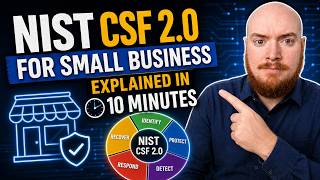
NIST CSF: How to Apply the Cybersecurity Framework

How Does Augmented Reality Enhance E-commerce Experience?
What Is a Proactive Approach in Cyber Security for Business?

Why Is the US Middle Class Shrinking Today

How Does Activist Investing Work to Influence Companies?

Why Does Bitcoin Have a Fixed Supply? Why Institutions Care

What Is Long Term Wealth Creation Through Volatility

How to Invest in SpaceX Pre IPO Opportunities

Open Banking: Data and Trust Drive Personalized Finance

Nvidia's GPU Dominance Fuels AI Acceleration and Tech Transformation

What Is Claude AI Good for Business Growth

How Are ETFs and Index Funds Different for Tax Purposes
What NVIDIA GTC Means for Its AI Compute Ecosystem Strategy

What Is Selling Digital Products Online Today

AI Token Consumption Overstates Demand, Inflating Valuations

How Will PSD3 Reshape Data Exchange for Europe's Open Banking?
Section 1033 Compels US Open Banking Data Access Regulation
What Amazon's Operating Model Means for Modern Commerce
Microsoft Azure Certification Value Shifts to Practical Skills

How AI Integration Changes Cloud Engineer Skills by 2026

FIFA World Cup 2026 Tech Logistical and Profit Complexities

Building Financial Freedom with Strategic Investment Allocation

What Are Index Funds and How Do They Work

How Print and Digital Advertising Drives Online Sales

What Are Debt Management Strategies in Personal Finance?

Robinhood Crypto and Institutions Bet Long-Term on Blockchain
How AI-Native Startups Use AI Core OS to Reshape Business

Find Profitable E-commerce Niches Through Market Analysis

What Is Custom WordPress Development with WooCommerce?

DeepSeek V4 Flash Is a Lighter, Faster AI Model

Is Nike Having Problems? What It Means for Sportswear

Nvidia Vera Rubin Boosts Data Center AI Performance 10x per Watt
What Is an Autonomous Agent in Artificial Intelligence

What Wealth Accumulation Truly Means

Why Cloud Security Is So Important for Businesses
State Sponsored APT Groups Threaten Critical Infrastructure

How US CLARITY Act Dictates Altcoin Classification and Value

Google Cloud TPUs Democratize AI Compute Through Cost Cuts

How Open Source AI GLM-5.2 Lowers Enterprise AI Costs

How the Future of AI Agents Will Transform Business

What Is an AI Data Centre and Its Growing Footprint

Major Data Breaches June 2026 Revealed Critical Flaws
How Does AI Build Websites with Low-Code Platforms?

What Is the Zero Trust Security Model

Asia's $250B AI Chip Growth Fueled by Nvidia Financing

Build in Public Software Development Drives Open Tech Innovation

What Are AI Assisted Development Tools Doing for Indie Devs?

OpenAI GPT-5.6 Sol AI Chip Jalapeño Shift Frontier AI Paradigms

AI Open Source: Geopolitical Security Challenges From Dual-Use Models

What Are Current Limitations of Quantum Computing?

How to Use AI for Value Investing Like Buffett and Simons

Impact of AI on Employees
How AI Agents Change SaaS Per-User Subscriptions

Hard Tech Companies Build Physical Products with Deep Science

How Do Solo Developers Build Wealth with Direct Software Products?

How Does SaaS B2B Pricing Drive Startup Enterprise Value?

Quantum Computing Commercialization Uses Cloud Simulators for Access

Anduril's Luckey Proposes AI Weapons for Peace Through Deterrence
What Are AI Native Service Companies and How They Work

What Are the 10 Evolution Stages From Basic AI to Superintelligence?

Is an AI Postgraduate Program a Good Career Investment?

What Is the Best AI Website Builder Ecosystem

AI Website Builders Automate Design SEO for Non-Coders

Online Learning AI: Andrew Ng's Vision for Global Access
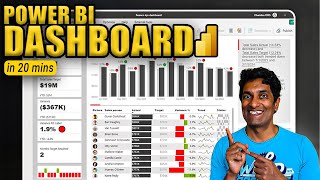
How Power BI Financial Dashboards Drive Proactive KPI

Why Does AI Need a GPU? What Student Laptops Must Have

Fintech Transformation Emphasizes Sustainable Business

FIX Protocol Standardizes Trading Data Using Key-Value Pairs

How Alternative Data APIs Drive Algo Trading and Quant Finance

Machine Learning Engineer Salaries Reflect AI Production Role

Zand Bank UAE Redefines Digital Finance

Hybrid Quantum Systems Integrate Classical and Quantum Processors

What Are Social Engineering Attacks Examples

Fintech Business Models Define Value and Revenue Strategies
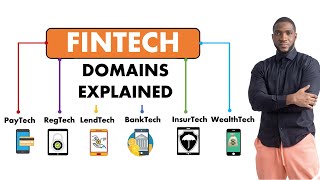
Fintech Evolution Reshaping Financial Services
How No-Code Tools Change Google Maps Web Scraping for Market Research

What Is an AI Agent Loop in Business Automation

How Accessible Are No Code AI Tools for Non-Technical Users

How to Use AI for Small Business Marketing to Boost Local SEO

What Is a No Code AI Platform and Its Impact?

What Is a Fintech Regulatory Sandbox for Innovation?
AI Age Conversion: Landing Page SEO for Human Visitor Experience

What Organizational AI Strategy Means for Reshaping Business Models

What Is Quantum Computing Used for Today? Less Than You Think
How to Use yfinance in Python for Quant Investing

What Is Quantum Computing Explained Simply

N26 Revolut Accounts Freeze From Aggressive AML Automation

How to Earn Passive Income with Crypto Node Operation

What Are Google Search Console and Google Analytics for SEO?

Small Businesses Using AI for Content Generation

How Are AI Influencers Created From Prompt to Persona

Website Traffic Boost From Social Algorithm Pairing Hack

What Is an AI Automation Side Hustle

S and P 500 Diversification Risk Is Higher Than You Think

Can Free Google NotebookLM AI Automate Your YouTube Workflow?
How Do Pinterest Ads Work with AI Creatives? a 5.5x ROAS Case

Anthropic Fable 5 Invisible Degradation Fuels User Trust Crisis

How Can AI Increase Wealth Inequality? Why Billionaires Worry

How AI Can Start Your Online Business From One Prompt

How Does Google Flow AI Video Platform Pricing Democratize Creation?

WordPress Cuts Creator Costs for Paid Community Control
Frequently Asked Questions
Can you actually make money with AI?
Yes, but mostly not in the way the ads suggest. Across this archive the money is in selling AI to businesses, in the hardware underneath it, and in using it to do existing work faster. Very little of it is in the passive-income schemes that dominate search results.
Is AI a bubble?
The sources disagree, and honestly. Some point at valuations resting on projected demand rather than current revenue. Others point at real spending by real companies. Both are looking at true things — the disagreement is about which one runs out first.
Should I invest in AI companies?
This guide cannot tell you that, and neither can a video. What it can tell you is that a normal index fund now carries far more AI exposure than most people realise, because a handful of tech companies make up a large share of it.
Will AI take my job?
The archive leans towards tasks changing rather than jobs vanishing, but it is not unanimous and the people saying it have interests. The safer read: the work that gets automated first is the work that was already written down as a procedure.
What is the most common mistake?
Buying the tool before knowing the job. It comes up again and again — companies adopt AI, then look for something for it to do, and cannot tell afterwards whether it paid for itself.