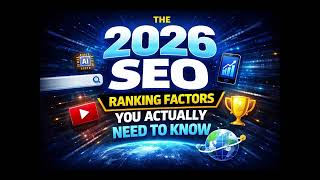
Artificial intelligence profoundly reshapes Search Engine Optimization by introducing sophisticated automation capabilities for foundational tasks, while simultaneously altering the field of how information is discovered and ranked online. This dual impact demands that practitioners move beyond traditional SEO mindsets, embracing tools that scale content production and adapting strategies to satisfy both established search engines like Google and emerging AI-driven platforms.
AI’s Impact on SEO: The Automation Engine
AI fundamentally changes SEO by automating processes once labor-intensive, shifting the focus from manual execution to strategic oversight and refinement. Tools such as Claude AI and its “Claude Code” exemplify this evolution, enabling a level of automation previously unattainable. This technology facilitates an automated AI SEO strategy, echoing the principles of “Rank #1 with Claude Code: Automated AI SEO Strategy,” which includes comprehensive keyword research and content creation for explosive organic growth.
The core of this automation begins with sophisticated keyword research. Instead of manually sifting through data, AI can conduct “Automated Keyword Research in Terminal,” eliminating the need for manual sifting through data. This efficiency extends to “Content Generation via AI Sub-Agents,” where specialized AI sub-agents create content at scale. A powerful feature is the “sub-agent workflow,” a method detailed in “Discover the sub-agent workflow used to rank on Google, Reddit, and AI search engines like Perplexity.” This involves breaking down complex content initiatives into smaller, specialized tasks handled by individual AI agents, streamlining the entire production cycle from initial keyword identification to final article draft.
For organizations looking to scale, the capability for “Scaling with Multi-Terminal Workflows” is significant. This approach allows for simultaneous execution of multiple AI-driven SEO campaigns, pushing out a higher volume of targeted content across various platforms. This automation does not merely speed up existing processes; it redefines the capacity for SEO teams, allowing them to expand their digital footprint more aggressively. As How Does AI Change SEO Strategies explores, this deluge of AI content fundamentally reshapes digital marketing.
However, the automation of content generation also introduces new challenges, particularly regarding quality and authenticity. While AI can produce vast quantities of text, the emphasis remains on relevance and value. This is where the concept of “Humanizing AI Content for Higher Rankings” becomes paramount. Simply generating content is not enough; it must connect with human audiences and satisfy increasingly sophisticated search algorithms that prioritize helpful, trustworthy, and experience-rich content. The integration of human oversight and strategic editing ensures that AI-generated output transcends mere data regurgitation to become genuinely authoritative material. For more on refining AI-generated content, consider How to Use AI for SEO and Content Optimization.
Adapting to New Search Paradigms: AI Search and Engagement
Beyond automating content production, AI’s profound impact on SEO extends to how search engines themselves function and how users interact with search results. The rise of AI search engines like Perplexity, alongside Google’s evolving AI-driven features, means SEO is no longer solely about ranking web pages. It is increasingly about optimizing for direct answers, summarized content, and nuanced user queries that reflect natural language processing capabilities.
Traditional SEO focused on keywords and backlinks for Google. While these remain relevant, the emphasis now expands to optimizing for different forms of content consumption, especially those favored by AI models. For instance, “Leveraging Reddit for AI Search Traffic” highlights a strategic shift. Reddit, a platform driven by user-generated content and discussions, often serves as a training ground and source for AI models that power new search experiences. By strategically engaging on Reddit, content creators can influence the information AI models discover and subsequently surface in AI search results, broadening their reach beyond conventional web searches. This dynamic demonstrates a clear move towards optimizing for content ecosystems rather than just individual web pages.
The ultimate goal remains organic growth, but the pathways to achieving it are diversifying. This involves not only generating text-based content but also “Integrating Funnels and Video Content.” Video content, in particular, is gaining traction across all search platforms, including those leveraging AI. AI can analyze video transcripts and visual cues, making video an increasingly important medium for conveying information and capturing audience attention. Integrating video into a broader content strategy, alongside traditional articles, ensures that brands are visible across diverse media formats that AI models can process and present to users.
As GoldieAgencySEO points out with the phrase “Humanizing AI Content for Higher Rankings,” the human element remains non-negotiable. While AI can draft text, generate ideas, and perform research, the final output must often be refined to possess a unique voice, provide fresh perspectives, and offer genuine value that stands out. This critical step ensures content resonates emotionally and intellectually, something raw AI output frequently struggles with. This approach applies not only to written content but also to how companies integrate their messaging into various funnels, ensuring a consistent and compelling user journey regardless of the entry point. The blend of AI-driven efficiency with human-centric quality is paramount for success in this evolving field, a point underscored by discussions on AI SEO Optimization: A New Data-Driven Reality.
Tracking the effectiveness of these advanced strategies requires sophisticated analytics. The “Search Console Proof and Strategy Session” illustrates the ongoing need for rigorous measurement and adaptation. Despite the advanced automation, fundamental SEO principles—like monitoring performance through tools such as Google Search Console, analyzing user behavior, and iterating on strategies—remain essential. This data-driven feedback loop ensures that automated processes are continually optimized for actual performance rather than running blindly.
Where This Lands
AI’s impact on SEO is not a fleeting trend but a fundamental redefinition of the field. It dramatically enhances efficiency through automation, enabling rapid keyword research and content generation via tools like Claude AI and specialized sub-agent workflows, a strategy that has been shown to deliver results, as highlighted in “How I Rank #1 with Claude AI SEO!” This newfound capacity allows organizations to scale their content initiatives across traditional search engines and emerging AI-driven platforms like Perplexity, extending reach into new discovery channels such as Reddit-influenced AI searches and integrated video content.
However, the efficacy of AI in SEO hinges on a critical human overlay: the necessity of humanizing AI content. Without strategic refinement and a commitment to quality that resonates with human audiences, AI-generated content risks being generic and ineffective in a competitive, algorithmically-driven environment. Success in modern SEO therefore demands a hybrid approach: leveraging AI for unparalleled scale and analytical depth, while simultaneously applying human insight to ensure relevance, authenticity, and enduring value for both users and the evolving search ecosystem. This integrated strategy is the key to achieving and maintaining high rankings in an AI-powered search future.