Google NotebookLM is a powerful AI tool designed to automate and streamline complex knowledge work, such as research, data verification, and content creation. It acts as an autonomous agent, taking a high-level goal and independently executing a multi-step plan to produce finished outputs. This transforms the way users interact with information, moving beyond simple chatbots to a system that thinks and works alongside them.
An Autonomous Agent for Knowledge Work
At its core, Google NotebookLM serves as an advanced AI agent for managing entire projects, from initial concept to final output. Unlike traditional AI tools that require users to gather and organize all source material, NotebookLM, powered by the Gemini 3.5 model, can operate with minimal initial input. Users simply provide a high-level goal, such as “research the future of humanoid robots and create a presentation.” The system then breaks this down into a logical plan.
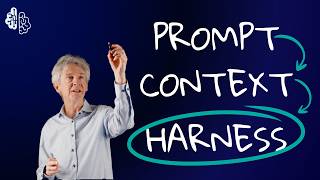
This capability stems from what Google calls the “anti-gravity framework.” This framework shifts the AI from being a reactive chatbot, waiting for specific prompts, to a proactive, autonomous agent. It independently chooses which internal tools to use, finds information, verifies data, and builds the final product. This means the user’s role evolves from operating software to managing a sophisticated digital employee that takes initiative, handling the entire lifecycle of a project within a single workspace.
Deep Research and Data Verification
One of NotebookLM’s most large features is its automated deep research. For anyone involved in content creation, journalism, or analysis, the manual search for trustworthy information is a major drain on time. This AI eliminates that manual hunt. Users no longer need to spend hours tracking down and uploading specific research papers, PDFs, local text files, spreadsheets, or meeting notes. It can start with nothing more than a single question.
For example, if asked “What are the biggest AI trends for 2027?”, NotebookLM automatically scours the web. It identifies relevant sources, gathers expert forecasts, and then builds a structured research library in the background. This goes beyond a simple search engine; it is an automated system for collecting and organizing knowledge.
Beyond gathering information, NotebookLM addresses a critical challenge with AI: hallucinations. To ensure accuracy, especially for business reports and critical analysis, the system features a secure cloud computing environment. This allows the AI to write and execute real computer code to verify its own math. Instead of merely estimating trends based on language patterns, as a traditional chatbot might do with a spreadsheet of sales data, NotebookLM runs actual code calculations. This provides mathematical certainty, helping users avoid costly errors in business forecasts and statistical analysis. It shifts the AI’s function from guessing to calculating.
A Versatile Content Creation Studio
Once research is gathered and data is verified, NotebookLM transforms into a complete content creation machine. Its new studio panel can convert a single source of truth into almost any required format. This includes detailed mind maps, complete study guides, and fully formatted PowerPoint presentations. It also produces outputs optimized for platforms like YouTube or social media. The system can generate 10 different infographic styles, ranging from corporate Bento grids to stylized kawaii designs, all simultaneously to meet various professional needs.
A particularly innovative feature is the cinematic video overview. By combining Gemini 3.5 with Google’s Nano Banana Pro and VO3 video models, NotebookLM can take a dense scientific paper or market analysis and automatically generate a polished, narrated, documentary-style visual story. It creates the animations, visuals, transitions, and voiceover completely on its own, acting as a production studio in a box.
For audio content, the AI podcast feature has been much upgraded. Users can now choose specific formats, such as a deep dive, a quick briefing, a critique, or even a debate. And, users can interrupt the AI hosts in real time, asking questions or redirecting the conversation. This turns passive listening into an engaging, active learning experience, similar to calling into a live radio show where the hosts are experts on the user’s specific documents.
Reshaping How We Work
The evolution of Google NotebookLM represents a large consolidation of workflows, potentially disrupting many standalone software companies. Unlike platforms that excel at only one specific function, such as conversation, search, or video, NotebookLM combines deep research, advanced reasoning, code execution, and high-level content generation into one integrated system.
This creates a true AI workspace where raw, unorganized information enters on one end, and finished, polished work emerges on the other. This shift implies a future where users manage sophisticated AI workflows, demanding new skills while potentially consolidating many standalone tools. The platform aims to be an ultimate productivity tool for knowledge work, streamlining processes that once required multiple applications and large manual effort.
Challenges and the Future of AI Management
While NotebookLM offers large advantages, its advanced abilities also introduce new considerations for users. The shift from being a software operator to a software manager means users need to develop skills in guiding and overseeing AI agents effectively. Understanding how to articulate high-level goals and interpret the AI’s outputs becomes important.
The system’s ability to perform deep web research and computational verification addresses common AI pitfalls like generating inaccurate or fabricated information. However, like any powerful tool, its effectiveness depends on how it is directed. Users must still critically evaluate the AI’s outputs and ensure the initial goals are clear and well-defined. This evolution points towards a future where human oversight and strategic direction remain key, even as AI takes on more autonomous tasks.