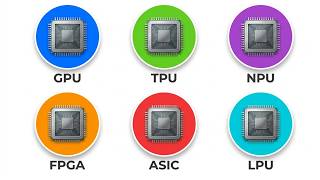
Every interaction with artificial intelligence, from asking a chatbot a question to streaming a video, relies on a vast network of physical hardware. This complex infrastructure begins with raw materials and extends to massive data centers. The journey from silicon to a fully operational AI server involves advanced manufacturing. It uses some of the most sophisticated engineering processes on Earth.
The Foundation: Silicon and Chip Fabrication
The tangible journey of artificial intelligence begins with silicon, one of Earth’s most abundant elements. This raw material undergoes extensive purification. It is then melted and carefully shaped into giant crystal ingots. These ingots are precisely sliced into ultra-thin wafers. These wafers form the basic substrate for billions of microscopic transistors. The creation of these tiny components is a marvel of modern engineering.
Using advanced ultraviolet light and atomic-level precision, intricate circuits are meticulously etched onto each chip. This complex process is where the core processing power, the “brain” of AI, is born. After many fabrication stages, each individual processor is subjected to rigorous inspection. This ensures that only chips meeting the highest quality and performance standards move forward. They proceed in the production chain. The precision at this stage is paramount. Even the slightest imperfection can compromise the chip’s features.
Assembling the AI Server
Once the individual AI processors are deemed fit, robotic systems take over for the next critical step. They mount these powerful processors onto enterprise-grade server motherboards with incredible precision. Every movement is measured in fractions of a millimeter. This level of accuracy is vital. Even a minuscule defect can greatly affect the server’s overall performance and reliability.
The assembly line then integrates a suite of other essential components. High-speed machines install large memory modules and ultra-fast solid-state drive (SSD) storage. They also add advanced network controllers. A key differentiator for AI servers is the inclusion of multiple AI Graphics Processing Units (GPUs). These specialized processors are designed for the massive parallel computation required by AI algorithms. Managing the heat generated by these powerful components is a major challenge. Advanced cooling systems are therefore essential. These include copper heat sinks, specialized thermal paste, and high-performance fans. They are all carefully integrated to keep operating temperatures under control. Finally, every internal cable is meticulously routed. This maximizes airflow within the server chassis and enhances long-term reliability. What appears to be an ordinary metal box is, in fact, one of the world’s most powerful computing machines, engineered for extreme performance.
Rigorous Testing and Quality Assurance
Before any AI server can be deployed into a data center, it must pass an intense gauntlet of tests. This complete validation process ensures that each machine can withstand the demanding, continuous operation expected from AI infrastructure. Processors are run at full capacity for extended periods. This confirms their stability and ability to handle heavy workloads. Memory modules are stressed to their limits. This identifies any potential weaknesses or errors.
Storage components are thoroughly verified for data integrity, speed, and endurance. Thermal cameras continuously scan the servers. They detect any hotspots or signs of overheating that could lead to system failure. And, AI-powered inspection systems are employed. These systems can search for even the smallest imperfections that might be missed by human inspection. A server must successfully pass hundreds of distinct quality checks. Only after this exhaustive validation does it earn approval for deployment. This meticulous approach is essential to guarantee the reliability and performance of the entire AI ecosystem.
Hyperscale Data Centers: The AI Brain
Upon approval, the high-performance AI servers are transported to massive hyperscale data centers. These facilities are purpose-built to house and operate AI infrastructure at an enormous scale. Robotic systems efficiently install these powerful machines into towering racks. Thousands of fiber optic cables then connect every single server together. This creates a vast, high-speed, and interconnected network capable of handling immense data flows.
Inside these data centers, advanced liquid cooling systems circulate continuously. They are vital for dissipating the enormous heat generated by thousands of processors running day and night. This constant cooling is very important for maintaining optimal performance and preventing system failures. From the outside, these facilities often present as unassuming, ordinary buildings. However, inside, they represent one of the most powerful computing brains humanity has ever created. These data centers are engineered for extreme efficiency, redundancy, and security. They ensure uninterrupted service for global AI operations, forming the backbone of modern artificial intelligence.
The Global Impact of AI Infrastructure
The infrastructure housed within these data centers processes billions of AI requests every single day. This immense computational power underpins a vast array of modern technologies and services that people rely on daily. These include the responsiveness of chatbots, the speed of search engines, and the smooth delivery of video streaming platforms. Beyond consumer applications, this infrastructure is basic to groundbreaking scientific research, the development of self-driving technology, and major medical discoveries. Cloud computing services across the globe also depend heavily on this foundational hardware.
Every click, every search query, and every AI conversation travels through these incredible machines. The creation and maintenance of this physical foundation for AI represent a major capital investment, requiring vast financial resources. It also involves complex geopolitical considerations, particularly regarding the global supply chains for very important components like silicon and advanced chips. And, the energy consumption required to power and cool these hyperscale data centers, along with the environmental impact of sourcing the raw materials, presents a notable challenge. This intricate hardware ecosystem is as very important to AI’s continued advancement as the sophisticated algorithms themselves. It stands as an extraordinary engineering masterpiece, built with microscopic precision and powered by some of the most advanced factories ever created.