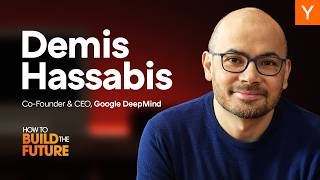
Artificial General Intelligence (AGI) could revolutionize scientific discovery by modeling the inherent structures of natural systems, according to Demis Hassabis. This vision suggests that many complex problems, traditionally considered intractable, are actually efficiently learnable by classical AI. By understanding the underlying patterns shaped by natural processes, AI can move beyond simple data analysis to contribute to basic scientific breakthroughs.
The Learnable Universe
A core idea in this perspective is that “any pattern that can be generated or found in nature can be efficiently discovered and modeled by a classical learning algorithm.” This provocative conjecture stems from the observation that natural systems, across biology, chemistry, physics, and even cosmology, are not random. Instead, they possess deep structure because they have been subjected to evolutionary and selection processes over vast timescales. This concept is sometimes described as “survival of the stablest.”
Consider the formation of mountains, shaped by weathering over thousands of years, or the stable orbits of planets and the forms of asteroids. These are all outcomes of processes that have acted on them repeatedly, leading to predictable patterns. If a system has evolved or survived through such processes, it implies an underlying structure that can be reverse-engineered. This structure often forms a “lower dimensional manifold” or an “energy surface” that neural networks are particularly adept at learning and navigating by following gradients. This contrasts with truly random or abstract problems, like factoring large numbers without inherent patterns, which might require brute-force methods or even quantum computing.
From Proteins to Planets
DeepMind’s work with projects like AlphaFold and AlphaGo provides concrete examples of this principle to action. AlphaFold, which predicts protein structures, tackled a problem with an astronomical number of possibilities, around 10^300 potential protein shapes. Proteins fold in milliseconds within our bodies, demonstrating that physics inherently solves this problem efficiently. AlphaFold mirrored this efficiency computationally by building a model of the protein folding environment, guiding its search in a smart way.
Similarly, AlphaGo mastered the game of Go, a combinatorial challenge with an astronomically large number of possible board positions. Like protein folding, Go presents a high-dimensional space where brute-force enumeration is impossible. By learning the dynamics and properties of the game environment, AlphaGo made the search for best moves efficient and tractable for a classical system. These successes highlight that classical AI can go much further than previously believed in solving problems once thought to be decades away or requiring quantum machines.
Simulating Reality
The ability of advanced AI models to simulate complex physical phenomena further supports this vision. Video generation models like V3 can model liquids, materials, and specular lighting with surprising accuracy. For instance, videos generated by V3 show clear liquids being squeezed through hydraulic presses. Creating such realistic physics simulations through traditional programming is painstakingly difficult. Yet, these AI systems appear to reverse-engineer these behaviors simply by observing vast amounts of video data.
This suggests that the AI extracts an underlying structure around how materials behave, potentially learning a “lower dimensional manifold” that governs these interactions. While this is not a deep philosophical understanding, it represents a form of “intuitive physics,” akin to how a human child understands the physical world. The model can predict subsequent frames in a coherent way, demonstrating a grasp of dynamics that allows it to generate consistent video for durations like 8 seconds. The rapid progress in this area indicates AI’s growing capacity to model core, basic aspects of physics.
Redefining Computational Limits
This perspective has profound implications for theoretical computer science, particularly regarding the P vs. NP problem, which explores what problems can be solved efficiently by classical computers. The success of AI in modeling natural systems suggests that there might be a new class of problems, “learnable natural systems,” that are efficiently solvable by neural networks running on classical machines.
Hassabis views the universe itself as an “informational system,” suggesting that information is a basic unit, even more so than energy and matter. From this viewpoint, the P vs. NP question becomes a basic physics question. The ability of classical systems to model protein structures and play Go at a world-champion level indicates that their abilities are far from fully explored. AGI, built upon neural networks, represents the ultimate expression of this potential, pushing the boundaries of what classical computing can achieve.
The Path to AGI
The ultimate goal of building AGI, in this context, is to empower scientists to answer these basic questions about the universe’s structure and the limits of computation. The continuous surprises from AI advancements, such as AlphaFold 3’s progress on molecular interactions or AlphaGenome’s ability to map genetic code to function, reinforce the idea that many seemingly intractable problems have underlying structures that AI can exploit.
These AI systems excel at finding gradients within complex “energy surfaces,” allowing them to navigate vast combinatorial spaces efficiently. Where humans might naively consider enumerating all possibilities, leading to seemingly impossible calculations, AI can find the inherent patterns. This confidence stems from observing nature itself, where processes like protein folding occur rapidly and efficiently. By mimicking and modeling these natural processes, AI can open new avenues for scientific discovery and redefine our understanding of intelligence and the universe.