AI coding tools prove highly effective for generating boilerplate code and accelerating initial development phases, but their capabilities hit significant limitations when it comes to architecting intricate software systems. These tools best serve as powerful assistants that augment the abilities of experienced developers, rather than acting as substitutes for their comprehensive expertise. The distinction is critical for understanding their true value and potential pitfalls in modern software development.
What It Is
AI coding tools are applications and platforms that leverage artificial intelligence to assist in various stages of software development. This assistance can range from generating code snippets based on natural language prompts to automating repetitive coding tasks and debugging. Tools like Claude Code and other AI coding assistants make it straightforward to sketch out an idea or build a basic prototype, significantly reducing the time required for initial concept realization.
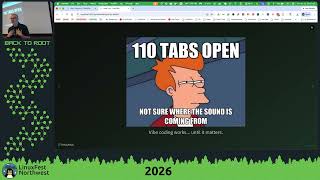
However, a critical distinction lies in what these tools do versus what they cannot do. While they can produce functional code for defined problems, they do not inherently possess the capacity for high-level strategic thinking. This gap leads to concerns about “vibe coding,” a term describing non-expert software prototyping. In this scenario, individuals without a deep understanding of software engineering principles use AI to rapidly generate applications, often overlooking fundamental architectural considerations, scalability, security, or long-term maintainability. This method creates an unsustainable software development field, potentially leading to substantial technical debt down the line.
How It Works
At their core, AI coding tools operate by learning from vast datasets of existing code, design patterns, and programming conventions. They apply machine learning models, often large language models (LLMs), to predict and generate code that matches user inputs and desired functionalities. For instance, when a developer requests a function to parse specific data, the AI draws on its training to produce relevant code. This process simplifies many routine programming challenges and allows for rapid iteration on smaller components.
However, the “reality of modern software engineering is that AI cannot architect complex systems,” as highlighted by Dave Farley and Sam Newman from The Engineering Room podcast. Designing a complex system involves understanding intricate dependencies, anticipating future requirements, managing data flows across multiple services, ensuring solid security, and optimizing for performance and reliability—tasks that require human insight and strategic foresight. Artificial intelligence is actually a magnifier, meaning it enhances the capabilities of skilled professionals by handling the more mechanical aspects of coding, freeing them to focus on higher-order design and problem-solving. It’s designed to make experts better, rather than replacing them entirely. This amplification effect is where these tools truly shine, acting as powerful co-pilots in the development process. What Are Personalized AI Productivity Tools Today?
Who It’s For
AI coding tools primarily serve two main groups: experienced developers seeking to boost their productivity and non-expert users looking to rapidly prototype ideas. For the seasoned software engineer, these tools are invaluable. They can accelerate coding speed, automate mundane tasks, and even suggest improvements or identify potential bugs, allowing developers to allocate more time to complex architectural challenges and creative problem-solving. This aligns with the idea of AI as a magnifier, making experts more efficient and effective. Experienced developers often find that AI assists them in adopting What Are AI Coding Skills Developers Need Now? that reshape their workflows.
Conversely, the use of AI coding tools by non-experts presents a more complex picture. While such tools lower the barrier to entry for programming and enable individuals to “sketch up an idea” quickly, this often comes at a cost. Without a solid understanding of fundamental software engineering principles, projects built via non-expert software prototyping can quickly become unmanageable. These systems, lacking proper architectural design, can collapse under their own weight, leading to significant failures and the accumulation of technical debt. This situation has spurred a rising industry trend of professional developers stepping in as “AI rescue consultants.” These consultants specialize in fixing and refactoring systems that were built rapidly with AI by non-experts, demonstrating the clear distinction between AI’s ability to generate code and human expertise in architecting solid solutions. This problem highlights the difference between using AI Assisted Development Tools Doing for Indie Devs? to build initial concepts versus creating production-ready applications.
Organisations like Equal Experts, a product software development consultancy, demonstrate the value of experienced human talent. They maintain a global network of over 1,000 experienced technology consultants. These professionals increase the pace of innovation by employing modern software engineering practices that prioritize Continuous Delivery, Security, and Operability from the outset. Their approach emphasizes well-architected solutions, a stark contrast to the potential pitfalls of unmanaged AI-driven development.
The Bottom Line
AI coding tools are highly effective for specific tasks, particularly in generating initial code and accelerating the prototyping phase of software development. They act as powerful assistants, enhancing the capabilities of skilled developers and streamlining routine processes. However, these tools do not replace the need for human expertise in software architecture, strategic planning, or deep problem-solving. Relying solely on AI for complex system design without comprehensive human oversight can lead to severe technical debt and system instability. For serious development, AI functions best when integrated into a workflow managed by experienced professionals, allowing them to leverage its speed while retaining control over critical architectural decisions. The discussion by Dave Farley and Sam Newman, as presented by Modern Software Engineering, underscores this precise balance: AI is a magnifier for experts, not a replacement for them.