AI coding skills encompass the sophisticated capabilities that artificial intelligence systems possess to assist, generate, and manage software code. These skills extend beyond simple auto-completion to include advanced functionalities like understanding complex project requirements, generating multi-module solutions, and orchestrating iterative development cycles through AI agents. The impact on traditional coding practices is significant, shifting developer focus towards higher-level orchestration and validation.
What It Is
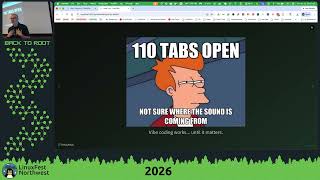
AI coding skills represent the core functionalities that enable artificial intelligence, particularly AI agents, to perform programming tasks. Traditionally, software development often involves “vibe coding”—an intuitive, less structured approach where developers build based on immediate insights rather than strict specifications. While effective for rapid prototyping or small tasks, this method can lead to code that is difficult to scale, maintain, or integrate into larger systems. AI coding skills offer a counter-approach, promoting structured, systematic development.
These skills are not merely about an AI suggesting the next line of code; they involve an agent’s capacity to understand context, execute tasks, and learn from outcomes. For an AI agent, a “skill” can be a specific, modular component that allows it to interact with an API, write a particular type of function, or perform a testing routine. This modularity allows developers to assemble complex behaviors, moving beyond simple prompts to create agents capable of intricate, multi-step coding processes. Platforms like the Loop Library provide examples of such pre-defined skills, with the associated Loop Skill on GitHub by Forward-Future illustrating how these components can be implemented and shared. This structured approach helps transform speculative “vibe coding” into a more predictable and manageable process, making software development more scalable and consistent. To learn more about this transformation, read How AI Coding Agents Change Vibe Coding to Spec-Driven Dev.
How It Works
The mechanics of AI coding skills revolve around the orchestration of AI agents, automations, and iterative loops. AI agents, equipped with various skills, act as autonomous entities capable of performing a series of coding tasks. Automations tie these skills together, defining workflows that can generate, analyze, or modify code without constant human intervention. For instance, an automation might instruct an AI agent to read a project brief, generate a code module, test it, and then refine it based on feedback.
A critical element in this structured coding paradigm is the concept of “loops.” These are iterative processes where an AI agent repeatedly executes a task, evaluates the output, and adjusts its approach based on defined criteria until a satisfactory result is achieved. This looping mechanism is essential for complex coding challenges, allowing agents to move beyond single-pass generation to a continuous refinement cycle. This capability mirrors how human developers iteratively improve code through testing and refactoring, but at a significantly accelerated pace.
Such AI coding environments also leverage advanced technological capabilities like multi-model integration, enabling agents to draw on the strengths of different large language models (LLMs) or specialized AI tools for various aspects of a project. One model might excel at generating logical structures, while another might be better at specific syntax or error correction. This combination allows for more comprehensive and nuanced coding solutions. Infrastructure support for these agents is also evolving; for example, here.now provides free, instant web hosting for agents, demonstrating the accessibility of environments for deploying and running these AI-driven coding processes. As Matthew Berman points out, this systematic approach helps mitigate the unpredictability of “vibe coding” by enforcing best practices within the AI’s operational framework. Tools such as Greptile offer platforms that support these structured AI coding workflows, allowing users to try them free for 14 days and experience the benefits of a more organized development process. For a deeper dive into how these capabilities function, explore What AI Agent Skills Are and How They Work.
Developers can choose between cloud-based and local AI coding solutions. Cloud environments offer scalability and access to powerful hardware, suitable for demanding tasks and collaborative projects. Local setups provide greater control over data privacy and customizability, often preferred by individual developers or for sensitive projects. The choice depends on project requirements, security considerations, and resource availability, each impacting how AI coding skills are deployed and utilized.
Who It’s For
AI coding skills are primarily for software developers, engineering teams, and organizations seeking to enhance productivity, improve code quality, and scale their development efforts. Developers who find themselves entangled in the complexities of “vibe coding” on larger projects can particularly benefit. These skills enable them to offload repetitive, boilerplate, or even complex iterative coding tasks to AI agents, freeing up human talent for higher-level architectural design, strategic problem-solving, and creative innovation.
Teams aiming for consistency across their codebase and adherence to specific coding standards will find value in AI agents that can enforce these practices automatically. This reduces the time spent on code reviews for basic errors and style guides, allowing reviewers to focus on logic and architectural soundness. Companies exploring how to accelerate their software development life cycle (SDLC) or integrate advanced AI capabilities into their operations are also prime candidates.
However, this fundamental shift also presents challenges, particularly around the “Merging & Deploying Problem.” Integrating AI-generated code smoothly into existing, often human-written, codebases requires sophisticated version control and solid testing strategies. Developers must also learn to interact with AI agents effectively, moving from direct coding to guiding, reviewing, and orchestrating AI-driven workflows. This requires a different skillset focused on prompt engineering, system design, and AI model evaluation. While AI coding tools can significantly boost efficiency, they are not a silver bullet for projects with undefined requirements or poorly structured initial designs. Understanding the hidden costs and architectural implications of integrating these tools is important, as explored in How Good Are AI Coding Tools for Software Architecture?.
The Bottom Line
The evolution of AI coding skills signifies a fundamental shift in software development, moving away from informal “vibe coding” towards more structured, agent-driven methodologies. These skills empower AI to take on complex coding tasks, leveraging automations and iterative loops to achieve refined and consistent code outputs. Developers are not replaced but augmented, transitioning to roles that emphasize guiding and validating AI agents rather than writing every line of code. Embracing these advanced AI capabilities means cultivating new human skills centered on collaboration with AI, ensuring that the promise of increased efficiency and higher-quality software becomes a reality. This transformative period redefines the pathway to becoming an AI engineer, requiring mastery of these new interaction paradigms, as detailed in How to Become an AI Engineer in 2025 by Mastering New Skills.