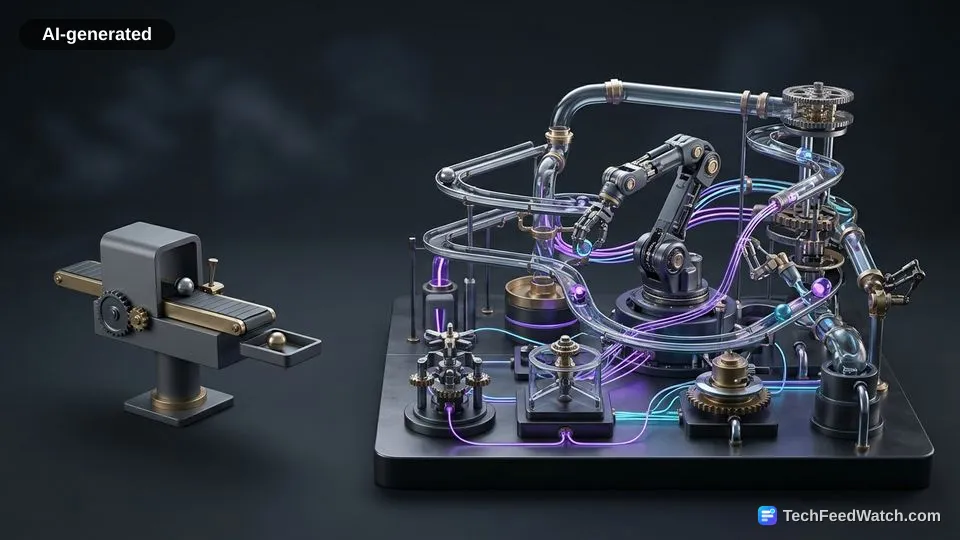
AI assistants execute workflows while chatbots answer simple queries
AI assistants execute actions across connected workplace systems. Standard chatbots only answer direct questions inside an isolated conversation.
A basic chatbot acts like an interactive reference manual. It retrieves answers from a knowledge base when a user types a common question.
The conversation remains self-contained. The chatbot forgets earlier statements once the session closes. It also never touches background databases.
AI assistants operate with agency (the power to act independently) across third-party tools. According to IBM, virtual assistants combine intelligent search and robotic process automation to complete multi-step actions across business platforms.
An assistant can look up an open ticket. It can adjust customer records and verify billing information. According to Salesforce, modern AI systems assess enterprise data autonomously rather than merely returning scripted paragraphs.
These advanced tools run tasks across multiple digital environments:
- Reading enterprise records to detect discrepancies across account files.
- Scheduling calendar meetings across multiple worker schedules without human input.
- Triggering software updates inside customer management software after resolving complaints.
- Pulling technical specifications from private company documentation during support calls.
A worker no longer opens five separate applications to complete one customer request. The assistant coordinates those digital steps directly.
This shift saves administrative time. Organizations must monitor what actions these automated programs take inside private corporate systems.
Connecting language models directly to critical databases creates security obligations. Modern enterprises often reevaluate their internal cybersecurity protocols (protection rules) before granting software agents write access to core infrastructure. If an assistant misinterprets instructions, automated tasks could corrupt business records.
To be fair, I do not have extensive experience with software agents yet, but granting an algorithm the power to make independent decisions requires real caution. An assistant only performs as well as the detailed guidance you give it. Doing thorough research before turning over active tasks helps ensure you stay in control.
When is a standard chatbot better than an AI assistant?
A standard chatbot works best when an organization needs predictable, inexpensive answers for repetitive user questions. It does this without exposing internal corporate networks.
Complexity brings operational risk. AI assistants require broad permissions across email servers, internal drives, and customer databases.
Standard chatbots present zero risk of unauthorized database changes because they possess no execution tools. They simply display written replies to predictable questions.
Simple chatbots require fewer computing resources and minimal software maintenance. Small businesses do not always need autonomous task completion. A basic FAQ (frequently asked questions) bot delivers business value when customers only need store hours, return policies, or shipping updates.
Standard chatbots offer clear operational benefits in specific business situations:
- Handling high volumes of identical customer service questions about store hours.
- Directing website visitors toward static return policies through clickable menu options.
- Providing informational support on platforms where security rules forbid database access.
- Deploying rapid customer triage tools on tight software budgets.
According to Salesforce, basic chatbots work well for simple inquiries that follow clean, predictable paths. A basic bot provides safety and predictability at low cost. Meanwhile, an assistant offers operational speed at higher technical complexity.
There is enormous hype urging everyone to adopt the newest technology, but sticking with a basic tool is often the wiser move. A plain informational bot keeps your files completely separated and eliminates the risk of accidental system damage. Staying safe and keeping boundaries tight beats chasing complex features you do not truly need.
TechCrunch breaks down turning chatbots into proactive AI assistants
TechCrunch reporter Tim Fernholz spoke with Alexander Embiricos, head of enterprise product at OpenAI. They discussed turning reactive chatbots into proactive (action-taking) software assistants.
During the interview, Fernholz observed that autonomous assistants are poised to shape 2026. He noted that software development agents defined 2025. Embiricos, who joined OpenAI a little over two years ago, explained that true personal assistants require two core capabilities.
First, the software must turn text generation into actual actions. Second, the assistant must operate continuously in the background to propose helpful tasks.
OpenAI launched a personal assistant product called Dots, built around their GPT-6 Astra model. Embiricos explained that in February of this year, the company introduced background automations for its AI system, Codex, to read user emails overnight.
That architectural work evolved into persistent assistants. These assistants hold their own computational environment and maintain long-term memory across interactions.
Embiricos shared practical examples of proactive behavior during the discussion:
- A drone delivery startup engineer resolved a service outage. Their Dot noticed the system failure and proposed a technical solution before staff detected the problem.
- Early in development, Embiricos received an alert from his assistant 3 minutes before an event. The booking conflicted with an existing calendar commitment.
- The assistant operates across daily communication software, with Embiricos naming his own instance ae.dot inside the team Slack workspace.
System trust remains a significant hurdle for widespread adoption. Embiricos referenced competitor Hark, an AI agent company that differentiates itself by avoiding advertising sales and data collection. OpenAI addresses trust by adding granular (detailed and specific) permission controls.
Embiricos noted that users should not have to click 40,000 times through permission menus to control data access. Instead, users can instruct the assistant directly on which files it may read.
OpenAI plans to bring these agent capabilities to well over a billion ChatGPT users. Embiricos pointed out that only roughly 11% of people in the United States take flights over five times annually.