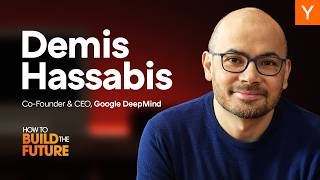
Quantum computing relates to artificial intelligence by offering a fundamentally new way to process information, potentially overcoming the computational limits of classical computers that currently constrain AI’s capabilities. This partnership promises to accelerate AI’s ability to analyze vast, complex datasets, optimize sophisticated algorithms, and simulate intricate systems, pushing the boundaries of what AI can achieve.
The Background
Artificial intelligence, in its current state, relies heavily on classical computing architectures. These systems process information using bits that represent either a 0 or a 1, performing computations sequentially or in parallel across many processors. While classical AI has achieved remarkable feats in areas like natural language processing, image recognition, and strategic gaming, it faces inherent limitations when confronted with problems that exhibit exponential complexity. For instance, simulating molecular interactions for new drug discovery, optimizing global logistics networks with countless variables, or breaking certain cryptographic codes can quickly become intractable, even for the most powerful supercomputers, requiring computational time that scales beyond practical limits.
Quantum computing operates on a different set of principles, leveraging quantum mechanical phenomena like superposition and entanglement. Instead of classical bits, quantum computers use qubits, which can represent 0, 1, or a combination of both simultaneously. This ability allows a quantum computer to explore many possibilities concurrently, offering a potential exponential speedup for certain types of problems. Historically, AI and quantum computing developed on separate tracks, with AI focused on intelligent algorithms and quantum computing on novel hardware. The current shift involves exploring how these distinct fields can converge to mutual benefit.
What Changed
The convergence of quantum computing and AI marks a pivotal shift in computational strategy. What truly changed is the realization that quantum mechanics offers solutions to some of AI’s most stubborn computational bottlenecks. Quantum algorithms, particularly those designed for machine learning (QML), are showing theoretical promise for quadratic or even exponential speedups in tasks fundamental to AI. This includes complex linear algebra operations, Monte Carlo simulations for sampling, and various optimization problems that are the bedrock of many machine learning models.
Quantum computers can potentially handle high-dimensional data spaces more efficiently, which is critical for advanced machine learning models dealing with massive, intricate datasets. This enhanced processing power means AI could perform more accurate molecular simulations, leading to faster drug discovery, or develop highly optimized materials with specific properties previously impossible to model. In finance, quantum-enhanced AI could optimize portfolios and detect fraud with unparalleled precision. However, this power comes with significant challenges. The hardware is still in its noisy intermediate-scale quantum (NISQ) era, meaning qubits are prone to errors and decoherence, making computations unreliable without extensive error correction. The cost, therefore, isn’t just monetary; it includes the immense research and development investment, the specialized infrastructure, and the need for highly skilled quantum engineers and programmers. Many common misconceptions arise from overestimating quantum computing’s current capabilities, viewing it as a universal accelerator for all AI tasks, which it is not. It offers a specialized advantage for particular, computationally intensive problems.
The Ripple Effects
The implications of quantum-enhanced AI extend across numerous industries, promising to drive breakthroughs previously considered science fiction. In healthcare, this synergy could revolutionize personalized medicine through advanced genomic analysis and protein folding simulations, accelerating the development of new treatments and vaccines. The finance sector could see ultra-fast, complex risk modeling and algorithmic trading strategies, potentially influencing how Fintech AI Pressures Traditional Wealth Management even further. Manufacturing could benefit from AI-driven design of novel materials with optimized properties, and logistics could achieve unprecedented efficiency in supply chain management.
A significant ripple effect will be felt in cybersecurity. While quantum computers pose a threat to current encryption methods (known as “post-quantum cryptography”), quantum AI could also be instrumental in developing and breaking new, more secure cryptographic protocols. This introduces a race to develop quantum-resistant security measures, prompting strategies like Zero Trust Security Shrinks Enterprise Network Attack Surfaces to become even more critical in protecting sensitive data against future quantum threats. Furthermore, the enhanced analytical capabilities of quantum AI could bolster defensive systems, identifying subtle attack patterns that evade classical detection methods. The principles behind securing modern AI agents against novel attacks, such as those discussed in Zero Trust Secures AI Agents From Prompt Injection, will likely need to incorporate quantum-resilient components. Maintaining a robust security posture, where How Zero Trust Security Verifies All Access to Prevent Cyberattacks becomes paramount, will be essential in a quantum-influenced future. This dynamic will necessitate substantial investment in talent, research, and infrastructure.
What To Watch Next
The immediate future of quantum AI development will likely center on hybrid classical-quantum approaches, where classical computers handle most tasks, offloading only the most computationally demanding portions to quantum processors. This strategy acknowledges the current limitations of quantum hardware while leveraging its specialized strengths. We must closely monitor advancements in qubit stability, error correction techniques, and the development of more practical quantum programming languages and algorithms. Progress in these areas will dictate the pace at which quantum AI moves from theoretical promise to practical application.
Companies and governments are investing heavily in quantum research, signaling a global race for quantum supremacy. Observing the development roadmaps from major tech players and the allocation of research grants will provide insights into the technology’s maturity. It is also important to maintain realistic expectations, distinguishing between genuine scientific breakthroughs and speculative hype. Quantum computers are not poised to replace classical computers for general tasks, nor will they instantaneously solve all AI’s problems. Instead, their impact will be profound but specialized, enabling AI to tackle a subset of problems previously considered insurmountable. The true measure of progress will be the demonstration of clear, verifiable quantum advantages for real-world AI applications.