The Ultimate Guide to AI and Productivity
What 36 videos actually say about AI and getting work done — including the ones arguing it makes you slower, and the second-brain idea that keeps coming back.
Last updated · by Jacob S. Olsen
Most productivity advice about AI is a list of tools. This archive is more interesting than that, and in one respect more honest.
Tech Feed Watch has covered 36 videos on productivity. Seven are about building a personal knowledge system — the “second brain” idea, in Notion, Obsidian, or something homemade. And six of them argue that AI is making people worse at thinking, not better at working.
Those six are the reason this guide is worth reading. Nearly every other source on this subject is selling something.
The six videos arguing the opposite
Start here, because it is the part nobody else covers.
The argument is not that the tools do not work. It is about what happens to you when they do. If a model drafts your thinking, summarises what you would have read, and answers what you would have worked out, then the thinking, reading and working out are the things you stop practising.
One video puts it as passive use harming memory and reasoning. Another argues that a second brain built by AI can slow you down, because retrieving something you never processed is not the same as knowing it. A third, aimed at developers, warns against relying on intuition that was never built.
None of them say avoid the tools. They say notice which parts you have handed over, and keep doing the ones you still want to be good at.
That is a more useful instruction than it sounds, because the handover happens by accident. Nobody decides to stop reading properly. It just becomes easier not to.
The second brain, and why it keeps coming back
Seven videos cover personal knowledge systems, more than any other single topic here.
The idea is old: capture what you come across, so you can find it later. The part that changed is retrieval. A large pile of notes used to be a graveyard — you could not remember what was in it, so you did not look. A model that can search and summarise your own notes turns the same pile into something you can ask questions of.
What the archive agrees on:
Capture has to be nearly free. If saving something takes more than a few seconds, you stop doing it, and the system dies quietly.
Your own words matter more than the clipping. Notes you rephrased are findable and useful. Pasted articles you never processed are the ones that turn into the graveyard again, just a searchable one.
The tool matters far less than the habit. Notion, Obsidian, Apple Notes, plain text files — the archive covers all of them and reaches the same conclusion. People change tools when the habit stops working, which rarely fixes the habit.
What the tools are genuinely good at
Setting aside the sales pitch, the archive is consistent about where the time actually gets saved.
Turning a mess into a first draft. Notes from a call, a half-formed argument, a list of bullet points. Getting from nothing to something rough is where most people lose the most time, and this removes that part almost entirely.
Summarising things you would otherwise skip. A long document you need the gist of. The honest version of this is that you are trading depth for coverage — fine for the things you were going to ignore anyway, less fine for the things that mattered.
Repetitive writing you have done a hundred times. The fortieth version of the same email. Nobody gets better at that through practice.
Explaining something at the level you need it. Asking for a simpler explanation is faster than finding an article pitched correctly.
Finding things in your own material. This is the second-brain case, and the one with the clearest before-and-after.
Prompting, briefly
There is a whole industry around this, and the archive suggests the useful part takes an afternoon.
Be specific about what you want. Give the context you would give a competent colleague who just walked in. Ask for the approach before the finished thing, so a wrong direction costs a sentence rather than a page. Say what the output is for and who reads it. And when it comes back wrong, fix the question rather than the answer — the second time is nearly always better than editing the first.
That is most of it. The prompt engineering entry covers the rest, and the returns fall off faster than the courses suggest.
The mistake underneath most of the others
Adding tools instead of removing steps.
A new app is visible. You can install it this afternoon and feel like something happened. Working out which meeting does not need to exist, or which report nobody reads, produces nothing you can show anyone — and it is where the time actually is.
The archive is blunt about the pattern: people with a productivity problem collect systems, and the collecting becomes the problem. Six videos touch tool fatigue directly.
If you are about to add something, the question worth asking first is what it replaces. If the answer is nothing, you have added a step.
A week that would actually work
Nothing in the archive supports a complicated system. What it supports is short and slightly boring.
Decide what the week is for on Monday. Two or three things. Not a list of twenty, which is a way of deciding nothing.
Protect one block for the hard thing. The work that needs an uninterrupted stretch does not fit between meetings, and it will not get done in the gaps.
Capture as you go, in your own words. A few seconds each time. This is the second brain, and it only works if it is nearly free.
Use the tools on the middle of tasks, not the ends. Let them draft and summarise. Keep the deciding what matters and the checking whether it is right.
Notice what you stopped doing. Once a month, honestly. If you have stopped reading properly, or stopped working things out before asking, that is the cost side of the ledger — and it does not show up anywhere else.
The short version
Seven of 36 videos are about building a personal knowledge system, and six argue that AI is making people worse at thinking. Both of those are more useful than another list of apps.
The tools are genuinely good at first drafts, summaries, repetitive writing and finding things in your own material. They are not good at deciding what matters. The most common mistake is adding a tool where a step should have been removed. And the cost that nobody measures is the practice you quietly stop getting.
Every article behind this guide links to its original video, with the creator credited. The Productivity tag has all 36.
This guide draws on 36 videos covered on Tech Feed Watch. The counts quoted come from the archive itself, not from an industry survey. Written and maintained by Jacob S. Olsen. If something here is wrong, the corrections policy explains how to tell me.
The numbers in this guide are a snapshot of the archive as of July 2026; the archive itself keeps growing.
Articles in this guide

Everyday Users Prevent Cyber Attacks with MFA and Password Management

AI Automation in Notion: Agentic AI Manages and Executes Tasks

Apple Native Apps Are Core Integrated Productivity Tools

Craft App: A Unified Digital Productivity and Knowledge Hub
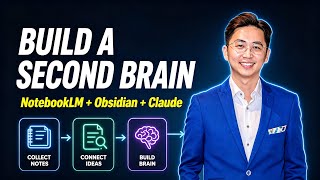
AI Second Brain: Automate Your Personal Knowledge System

Google AI Tools Available with Free Access and Tiers

LLMs Transform Personal Knowledge Management to AI Second Brains

Will an AI Second Brain Stop AI Context Rebuilding Slowing Work?
How Does AI Help Individuals with ADHD?

Local AI Agents Shift PKM From Centralized Platforms to Obsidian

How AI Automates Routine Tasks in Modern Workflows

Samsung Gemini: Agentic AI Smart Glasses Launch

What Are Personalized AI Productivity Tools Today?

Google Gemini and Android XR AI Enter the iPhone Realm

iPhone AI Boosts Productivity Through Nuanced Task Automation

Autonomous Agents in AI Reshape Google Gemini's Future

How Much Does AI Increase Developer Productivity?
Vibe Coding and AI Pitfalls Block Developer Progression

What Is Prompt Engineering in Generative AI

What Are the Fundamental Differences Between AR and VR?

AI Smart Glasses Foster Constantly Sensing Augmented Intelligence

What Smart Glasses Technology Is: Hardware and Software

What High-VRAM GPU and PCIe 5.0 Handle LLMs on Local AI PCs?

How to Become an AI Engineer in 2025 by Mastering New Skills

Generative AI Impact on Product Design: Is it Transformative?

Does Looki L1 AI Life-Logger Turn Memories Into Comic Strip Stories?

What Does Prompt Engineering Primarily Involve for AI
What Is a Frontier Model?
Master Prompt Engineering in 29 Min for 2025 AI Productivity

What Artificial Intelligence Means for Machine Learning

Anthropic Claude Science Plans and Executes Self-Correcting Research

What Are the Primary Features and Products of Claude AI Ecosystem?
How Gemini AI Changes Google Drive for Intelligent File Management

How Does AI Reliance Reduce Critical Thinking?

What Are Google Gemini's Features Now?

Advanced Tips on How to Use NotebookLM
Build AI Brains: Architecting Local, Self-Improving Experts
Frequently Asked Questions
Do AI tools actually make you more productive?
For specific, well-defined tasks, yes. Across a whole working week the picture is far less clear, and several videos in this archive argue the opposite — that passive use costs you the thinking you were trying to save time on.
What is a second brain?
A system for capturing notes and finding them again later. The idea predates AI; what changed is that a model can now search and summarise your own notes, which makes a large messy collection useful rather than intimidating.
Is it worth learning prompt engineering?
The basics, yes, and they take an afternoon: be specific, give context, ask for the approach before the output. Beyond that the returns fall off quickly, and the models keep getting better at handling vague instructions.
What is the most common mistake?
Adding tools instead of removing steps. A new app is visible progress; deciding what not to do is not, and it is usually where the time actually is.
Can AI make you worse at your job?
Six videos in this archive argue that it can, through the same mechanism: if you stop doing the thinking, you stop getting better at it. None of them recommend avoiding the tools — they recommend noticing which parts you have handed over.