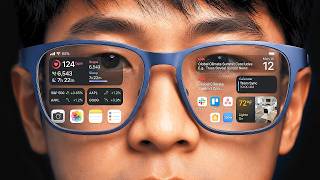
AI smart glasses are wearable devices that integrate artificial intelligence directly into the user’s field of vision and hearing, allowing for contextual understanding and interaction with the physical world. They are used for a wide array of tasks, from providing real-time information and translation to assisting with memory, navigation, and even creative expression, all through natural conversational interfaces. These glasses essentially transform the surrounding environment into an interactive display, augmenting human perception and intelligence rather than just reality.
What are AI Smart Glasses?
The concept of AI smart glasses represents a significant evolution in computing, moving beyond traditional rectangular screens to an immersive, 360-degree experience where the world itself becomes the interface. This shift is driven by the convergence of artificial intelligence and Extended Reality (XR) technologies. At their core, these glasses are designed to be lightweight and personal, sharing the user’s viewpoint and understanding the real-world context around them.
Typically, AI smart glasses are packed with technology despite their ordinary appearance. They feature miniature cameras and microphones that give the integrated AI the ability to “see” and “hear” the user’s surroundings. Small speakers allow the AI to communicate back, play music, or handle phone calls. Crucially, a tiny, full-color high-definition display is embedded within the lens, projecting information directly into the user’s line of sight. Many designs operate by streaming data back and forth with a smartphone, which helps keep the glasses themselves very light while still providing access to a wide range of applications. This integration means the glasses can also incorporate medical lenses, serving as both vision correction and an advanced computing device.
Augmenting Intelligence in Daily Life
The practical applications of AI smart glasses extend across numerous aspects of daily life, fundamentally changing how individuals interact with information and their environment. One of their primary uses is providing contextual information and assistance. The AI sees what the user sees and hears what they hear, responding in real-time. For example, if a user glances at a book on a shelf, the AI can recall its title, even if the user wasn’t explicitly tracking it. Similarly, it can help locate misplaced items, such as a hotel key card, by remembering where it was last seen in the user’s environment. This “memory” feature allows the AI to maintain a rolling contextual window, making it a powerful tool for those who might be forgetful or simply need quick recall.
Beyond simple recall, AI smart glasses excel at information summarization and explanation. Users can point their gaze at complex diagrams or text, and the AI can quickly analyze and explain their meaning, such as detailing the process of habit formation from a chart. This capability transforms passive observation into active learning and understanding.
Breaking down language barriers is another compelling use. The glasses can translate signs and spoken language in real-time, displaying the translation in the user’s preferred language, whether it’s English, Farsi, or Hindi. What makes this particularly powerful is the ability for the user to also speak to the AI in different languages, fostering truly multilingual interaction. The AI can even adopt natural-sounding accents and dialects, making conversations feel more human.
Furthermore, these devices facilitate smooth interaction between the physical and digital worlds. By recognizing objects in the environment, the AI can take action using linked digital applications. For instance, if a user points at a record album, the AI can identify it, search for its tracklist, and then play a song from that album through a connected music app. This ability to bridge physical context with digital functionality streamlines tasks and enhances convenience.
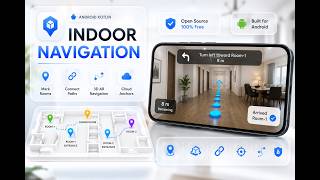
For navigation and exploration, AI smart glasses offer an intuitive experience. They can provide directions to nearby locations, complete with 3D maps displayed directly in the user’s field of view, helping them navigate unfamiliar areas without constantly looking down at a phone. This feature can guide users to specific landmarks or points of interest, making them feel more confident in new surroundings.
Beyond the Glasses: The Headset Experience
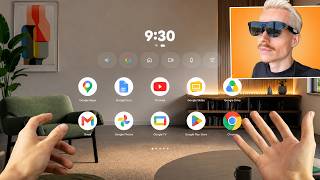
While smart glasses offer a subtle integration of AI into daily life, the same underlying principles extend to more immersive Extended Reality (XR) headsets. These devices, often larger than glasses, provide an expansive, infinite display for tasks requiring deep focus or complete immersion. Users can control these systems with their eyes, hands, and voice, creating a highly intuitive and hands-free computing experience.
In a headset environment, AI acts as a conversational companion that can assist with complex digital tasks. For example, it can organize multiple digital windows on a virtual desktop, manage travel itineraries, or bring up specific applications on command. The AI interprets user requests and intelligently executes actions, such as opening a maps application and navigating to a desired location like Cape Town, all through natural conversation.
These headsets also enable rich exploration and learning. Users can view detailed 3D models of locations worldwide, zooming in to city levels and receiving real-time information about landmarks, such as the cultural significance of Table Mountain. The AI can even analyze dynamic content like 360-degree videos, identifying specific actions—like a “backside 540 with a grab” in a snowboarding video—and answering questions about the content in real-time. This capability makes learning new skills or exploring virtual environments highly interactive and informative. The AI can also apply creative filters, such as narrating a video in the style of a horror movie trailer, adding an element of fun and personalization to content consumption.
Furthermore, AI in headsets can act as a personal tutor or guide, especially in interactive applications like gaming. It can provide real-time advice and instructions, helping users learn game mechanics, such as how to plant seeds and water crops in a farming simulation game. This level of personalized guidance transforms passive entertainment into an active learning experience, making complex tasks more accessible.
The Technology Enabling Contextual Understanding
The power of AI smart glasses and XR headsets stems from their ability to integrate multimodal artificial intelligence. This means the AI can process and understand information from various sources simultaneously, primarily visual data from cameras and natural language from microphones. This multimodal capability allows the AI to comprehend complex queries in real-time while also remembering previous context, creating a more natural and intelligent interaction.
The AI models, such as Gemini, are designed to be fast enough to engage in live conversations, understanding not just the words spoken but also the visual cues from the environment. This contextual awareness is what enables the AI to identify objects, interpret diagrams, translate signs, and even recognize specific actions within a video. The system processes these inputs, determines the best way to respond, and then takes action, often by interfacing with existing smartphone applications or displaying information directly on the internal lens screen.
The continuous development in large language models and multimodal reasoning has been instrumental in achieving this rich understanding of language and images. These advancements allow the AI to not only process information but also to act on the user’s behalf, always with explicit permission. The goal is to make computers more conversational, context-aware, and personalized, adapting to the user’s specific needs and language.
Implications and Future Outlook
The integration of AI with XR devices marks an exciting new phase in computing, moving towards a future where technology is more intimately woven into our perception of the world. This is not merely about augmenting reality, but about augmenting human intelligence itself. As XR devices become increasingly wearable and AI becomes more context-aware, conversational, and personalized, users will gain instant access to information and assistance that adapts to their terms and language.
However, this constant sensing environment also introduces complex questions, particularly around privacy and data processing. With devices that continuously see and hear the user’s surroundings, the volume and sensitivity of collected data are significant. Ensuring responsible data handling, transparent privacy policies, and strong security measures will be paramount as this technology becomes more ubiquitous.
Despite these considerations, the trajectory points towards a future where computing is less about interacting with a separate device and more about an intuitive, natural extension of human capabilities. The development of operating systems like Android XR, designed to combine XR hardware with advanced AI assistants, suggests a broad ecosystem supporting a wide range of devices, from today’s smart glasses and headsets to form factors yet to be imagined. This evolution promises a future where technology is not just a tool, but a perceptive and intelligent companion, enhancing our understanding and interaction with the world around us.