Google Gemini on Android refers to Google’s advanced artificial intelligence model, accessible primarily through the dedicated Gemini app and integrated into various Google services on Android devices. It acts as a conversational AI assistant, capable of understanding and generating human-like text, code, and more. While deeply embedded in the Android ecosystem, Google is also making Gemini available on other platforms, including iOS, through its standalone app and other integrations.
Gemini 3.5 Flash: Powering Smarter Experiences
Google recently introduced Gemini 3.5 Flash, a significantly faster version of its AI model. This update powers many Google products, including the Gemini app itself and Google Search. The model is designed for speed and efficiency, allowing for quicker responses and more dynamic interactions. Users with an iPhone can download the Gemini app from the App Store today to experience this updated version. This cross-platform availability shows Google’s strategy to make its AI services accessible regardless of the user’s primary device. There is also speculation that a version of Google’s Gemini will power the next iteration of Siri on Apple devices, highlighting its growing influence beyond Google’s own hardware.
Gemini Spark: The Always-On AI Agent
A notable advancement is Gemini Spark, envisioned as a personal AI agent that operates continuously in the background. This agent lives in Google’s cloud, meaning it does not require a device to be actively open or in use. Users can give it instructions via email, text, or directly through the Gemini app. Spark can then perform multi-step tasks, such as researching topics, drafting documents, or managing workflows. It supports integrations with third-party applications through an open standard called MCP, allowing various tools to connect with it. Currently, Spark is available to Google’s top-tier AI Ultra subscribers in the US, costing about $100 a month. This feature offers a glimpse into the future of AI assistants that proactively manage aspects of a user’s digital life.
A Transformed Google Search Experience
Google Search is undergoing its most significant upgrade in over 25 years, with AI at its core. The new search box can now understand various input types beyond just text, including images, files, visual recordings, and even open Chrome browser tabs. This allows for more complex and contextual queries. AI agents are also built directly into search, enabling them to monitor web activity and send alerts. For example, a user could ask the agent to watch for a specific product launch on a retailer’s website and receive a notification when it happens.
This summer, Generative UI will come to search, allowing it to build interactive mini-maps and widgets on the fly to answer intricate questions. This means search results will be more dynamic and tailored. Another significant addition is a universal shopping cart, which works across different websites and merchants. Users can add items to this cart while using Gmail, watching YouTube, or browsing the web, then check out through Google or the retailer. These changes will be noticeable to anyone using Google Search, including iPhone users, as they roll out.
Android XR Audio Glasses: Cross-Platform Spatial Computing
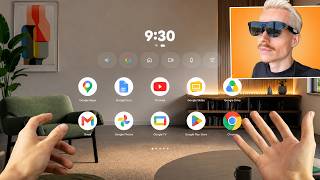
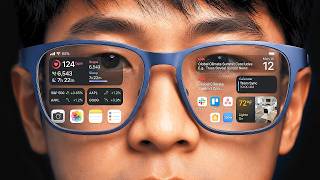
On the hardware front, Google introduced Android XR audio glasses, developed in partnership with Gentle Monster and Warby Parker. These glasses are designed to look like regular eyewear and do not feature a screen. Instead, Gemini communicates by whispering responses privately into the user’s ear through speakers embedded in the frames. Users can use them to take photos, make calls, listen to music, and ask Gemini questions hands-free, without needing to pull out their phone.
Crucially for iPhone users, these audio glasses are designed to work with both Android and iOS devices. This means that if Google begins selling them in the fall, iPhone owners could theoretically pair them with their phones. This move positions Google in direct competition with existing smart glasses, like the Ray-Ban Meta glasses, and potentially with any similar devices Apple might be developing. It represents a push for spatial computing hardware that is not restricted to a single operating system.
Broader AI Integrations and the Competitive Environment
Beyond these major announcements, Google is integrating Gemini across its product suite. The Gemini app itself received a visual redesign, featuring fluid animations, vibrant colors, and new typography. A “Daily Brief” agent is now available for paid subscribers, creating a personalized summary of daily events each morning. Inside the YouTube app, “Ask YouTube” allows for conversational AI experiences, where users can ask questions about moving image content, and the AI will understand context and jump to relevant parts of the content. This feature is rolling out in the US this summer.
Even Mac users are seeing new Gemini features. A dedicated Gemini Mac app will gain voice support this summer, enabling users to select files in Finder and give Gemini voice instructions on how to process them. For instance, it was shown generating an email for a dog kennel by pulling a dog’s photo and information directly from Finder and drafting the email through Gmail.
These developments signal Google’s aggressive strategy in the AI space, moving quickly to embed advanced AI capabilities into its core products and extending its reach across different platforms and hardware. This approach challenges traditional tech ecosystem boundaries and prompts other companies, like Apple, to respond with their own AI innovations.