Popular Visual Tools and Environments for Teaching Young Learners
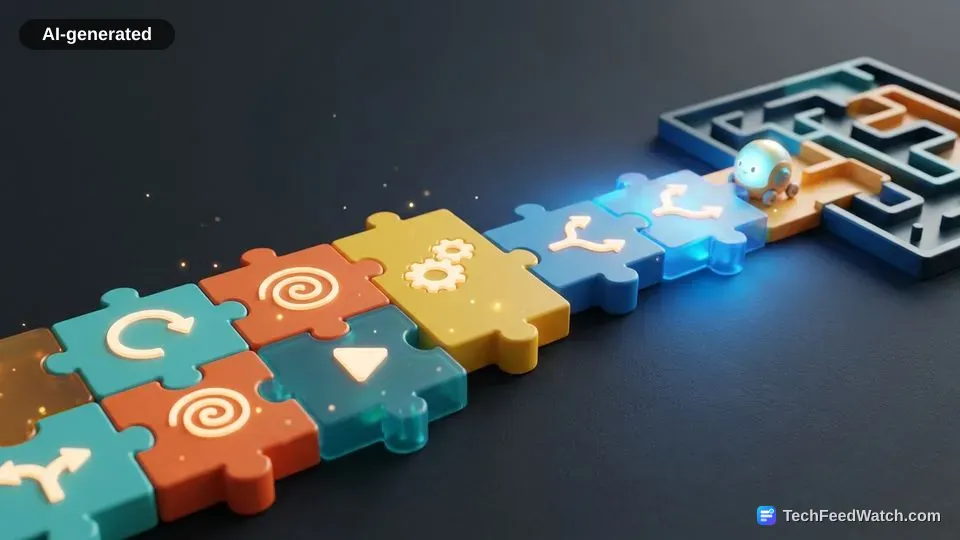
Novice programmers often struggle with mechanical friction. Punctuation errors, misplaced brackets, and missing semicolons create immediate stumbling blocks. Visual block interfaces eliminate this friction by turning textual commands into interlocking graphical puzzles.
According to the MIT Media Lab, its visual programming environment Scratch was developed in 2007 by the Lifelong Kindergarten group and surpassed 100 million registered global users by December 2022.
Scratch allows students to drag and drop functional blocks to build games, animations, and soundboards. Exploring what using coding blocks means for everyday coders highlights why visual layouts build real procedural logic without syntactic exhaustion.
According to Code.org, its educational platform has reached over 150 million students globally, supporting over 232 million student projects with 48% female or gender-expansive participation. These platforms demonstrate that inclusive design broadens participation across young demographics.
However, visual platforms create transition hurdles. According to a study published in the Journal of Statistics and Data Science Education by Taylor & Francis in July 2022, visual block-based coding reduces syntactic frustration for novices, but students with low self-efficacy or poor prior instructional experiences continue to face significant friction when transitioning to text-based programming languages.
Instructors must bridge visual metaphors to typed languages like Python with deliberate scaffolding.
Measurable Impacts on Logic, Problem-Solving, and Mathematical Reasoning
Advocates often claim that learning to code automatically turns children into mathematics prodigies.
According to an experimental study published in Frontiers in Psychology, primary school coding instruction yielded significant cognitive gains in pattern recognition and logic puzzle solving, but showed low improvement in pure arithmetic calculation. The researchers demonstrated that cognitive transfer from coding is largely restricted to structural logic rather than general calculation skills.
Children learn how to construct relational systems, not calculate faster. Investigating what happens when you ask why coding is important reveals similar findings across adult learners.
Linguistic abilities play a massive role in technical learning. Natural language aptitude and communication ability are stronger predictors of learning to program than basic numeracy or mathematical knowledge. Programming mirrors language acquisition, relying heavily on grammar, vocabulary, and semantic comprehension.
Current Reach of Computer Science in K–12 Schools
Policy makers increasingly view computing literacy as basic civic infrastructure. School districts throughout North America and Europe now integrate computing into core curriculums rather than treating it as an extracurricular club.
According to the Code.org Advocacy Coalition, 32 U.S. states required high schools to offer at least one computer science course by 2024. According to the Code.org Advocacy Coalition, 12 states made computer science a mandatory high school graduation requirement as of April 2025. This legislative push forces schools to train classroom educators in foundational computational concepts.
Yet instructional equity varies widely across rural and urban districts. While mandates expand availability, access to experienced mentors and hardware infrastructure dictates program depth. Analyzing how coding is not dead, but rapidly transforming by 2026 explains why modern curricula must evolve beyond obsolete rote memorization.
Bricks and Brains Tracks DHH’s Transition to AI Coding
Educational YouTube channel Bricks and Brains explored the shifting value of code literacy through the lens of David Heinemeier Hansson, the creator of Ruby on Rails and co-founder of Basecamp.
The creator noted that Hansson tried learning to code twice during childhood, once around age 6 or 7 typing magazine programs, and again at age 11 or 12, quitting both times because syntax errors and opaque messages made him feel inadequate. Hansson finally built a snake game he had wanted since age 6 in well under a minute using modern tools, a milestone that took about four decades to achieve.
The channel tracked Hansson’s rapid ideological shift toward generative development. During a July 2025 conversation on Lex Fridman’s podcast, Hansson remarked that he still entered his code manually, yet while speaking on The Pragmatic Engineer Podcast in April 2026, he shared that autonomous agents drove his daily workflow.
Bricks and Brains noted that by August 2026 on Lex Fridman, Hansson stated autonomous agents wrote all code for the latest release of his Linux operating system. In September 2026 at the Rails World Conference, Hansson announced his retirement from manual coding, noting that in a span of about 14 months, typing code by hand ceased to be an economically productive enterprise.
Bricks and Brains argued that while syntax matters less, underlying computational logic remains vital. The host illustrated that a child telling an assistant to make a robot stop at a wall only when carrying an object has designed two nested conditionals.
Learning how coding agents work and why developers use them requires precise problem definition. Evaluating code from the outside requires deep structural judgment, which children develop by testing logic rather than hunting for misplaced commas.
Starting Your Child’s Coding Journey at Home
Parents do not need an engineering background to introduce their children to computing fundamentals. The objective centers on cultivating curiosity, resilience, and diagnostic thinking.
Introduce children to coding through these targeted steps:
- Begin with unplugged logic games, board games, or grid mazes that emphasize sequential directions.
- Explore block-based creative platforms like Scratch to let children design their own animations without syntax hurdles.
- Incorporate programmable physical robotics kits to ground software logic in physical feedback.
- Encourage children to explain what their project should do before assembling instructions.
When young learners discover how to analyze errors and test alternate paths, they acquire skills that extend far beyond the computer screen.