Quantum mechanics explores the fundamental nature of matter and energy. It describes how particles behave at the subatomic scale. This scientific theory has reshaped our understanding of reality and drives many advanced technologies.
The Quantum Revolution in Physics
Classical physics, largely based on Isaac Newton’s work, presented a deterministic “clockwork universe.” It suggested that if one knew the exact state of everything, future events could be perfectly predicted. This applied even to seemingly random events, like rolling dice. In principle, their outcome was predetermined by the initial conditions.
However, by the first two decades of the 20th century, scientists faced significant challenges. They struggled to explain phenomena at the smallest scales, particularly the fundamental nature of light. Light sometimes behaved as a wave, an extended object that waves in space and travels over time. Other times, it acted like a collection of particles, almost like miniature billiard balls.
Quantum mechanics emerged roughly 100 years ago to reconcile these observations. Its earliest formulation was discussed at a 1927 conference in Brussels. This new physics offered a radical departure from classical ideas. It introduced a world where certainty gave way to probability.
Understanding the Quantum World’s Unique Rules
At the quantum level, reality operates differently from our everyday experience. Unlike classical physics, where external reality is independent of an observer, quantum mechanics suggests observation can influence a system.
One core concept is superposition. Before observation, a quantum particle, like an electron, exists in a combination of all its possible states. It is neither here nor there, but rather in all potential outcomes simultaneously. This is often described mathematically as a wave.
When observed, this probabilistic “wave function” collapses. The particle then appears in one specific location or state. This means we cannot know a particle’s exact position when it is not being observed. What picks out which outcome happens is still a subject of active thought among physicists.
Quantum mechanics also introduces entanglement. This phenomenon links the fates of two or more particles. Their properties become correlated, even when separated by vast distances.
Crucially, quantum probabilities are intrinsic to the theory. They are not a measure of our lack of knowledge. Instead, they are fundamental to how the quantum world works. This means even with the most complete description, we can often only predict the likelihood of different outcomes. Albert Einstein famously expressed discomfort with this idea. He believed “God plays dice with the universe.”
Precision Timekeeping and Quantum Sensors
Quantum mechanics has profoundly impacted our ability to measure time. Since the 1960s, atomic clocks have defined official time. These clocks rely on the precise quantum characteristics of atoms, making them a prime example of quantum sensing.
Within an atom, electrons occupy specific energy levels. They cannot exist in between these levels. To move to a higher energy state, an electron must absorb a photon. This photon must have a very specific amount of energy.
This unique relationship between an atom’s electrons and a photon’s energy is called a resonant frequency. It acts as a highly stable and specific standard. This consistency allows for universally defined time.
The laws of physics governing these atomic transitions are unchanging. This makes atomic clocks incredibly consistent. They provide a universally defined time. This time is independent of factors like Earth’s rotation, which can change due to plate tectonics or the moon’s movement. No matter who performs the experiment, or where, the fundamental physics ensures the same time is produced.
Quantum Physics and Cosmic Mysteries
Quantum physics also offers insights into some of the universe’s most extreme phenomena. Black holes, for instance, are among the most mysterious and violent objects known. In 1971, scientists revealed that the constellation Cygnus contained what was then a mythical mathematical beast: a black hole. They are formed when immense gravitational forces create a rip in space-time. Some black holes are genuinely monstrous, with masses millions, billions, or even ten billion times that of our sun.
For decades, scientists believed nothing could escape a black hole once it crossed its event horizon. However, Stephen Hawking theorized in 1974 that black holes might emit radiation. This idea, known as Hawking Radiation, stems from quantum physics at the tiniest scales.
Empty space is not truly empty. It constantly seethes with possibilities. Particle-antiparticle pairs can spontaneously appear and then annihilate each other. Near a black hole’s event horizon, one particle from such a pair might fall in. Its partner would then escape as radiation.
If a black hole emits radiation without consuming more matter, it would gradually shrink. This means black holes could eventually evaporate and disappear. This is a stunning revelation. The existence of Hawking Radiation remains a theory. If it occurs, the evaporation process would take an extremely long time. For many black holes, this period would be longer than the current age of the universe.
The Enduring Influence of Quantum Mechanics
Quantum mechanics has proven itself repeatedly. It makes predictions with uncanny accuracy. It is arguably the most successful scientific theory produced in the last 100 years.
Its principles govern everything around us. They have changed how we live. From the computers and cellphones we use daily to the precise timekeeping that synchronizes our world, quantum mechanics is fundamental. It was also behind the discovery of gravitational waves, which offer a new way to observe the universe.
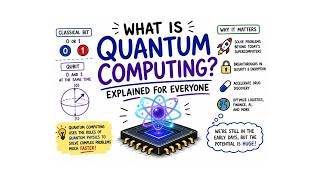
The practical applications of quantum science continue to expand. They promise to reshape our technological capabilities far beyond current digital limits. This includes the development of ultra-precise quantum sensors and potentially revolutionary quantum computers.