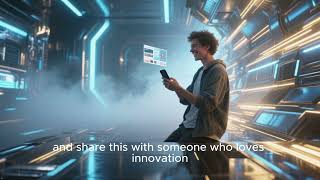
An AI video generator is a software application that uses artificial intelligence to produce video content from various inputs. These tools transform text descriptions, static images, or other media into dynamic, animated videos, often featuring advanced elements like realistic motion and expressive characters. Their primary goal is to simplify and accelerate video production, making high-quality content creation more accessible to a broad audience.
What Are AI Video Generators and How Do They Work?
AI video generators operate by interpreting user inputs, such as written text prompts or uploaded images, and then synthesizing visual and auditory elements to construct a video. At their core, these systems employ sophisticated machine learning models trained on vast datasets of existing videos, images, and text. This training enables them to understand context, generate appropriate visuals, and animate them convincingly.
The process typically begins with either a text-to-video or image-to-video approach. In text-to-video generation, a user types a detailed description, like “a cinematic shot of a futuristic city at night, neon lights everywhere, flying cars between skyscrapers, cyberpunk vibe, ultrarealistic 4K video.” The AI then interprets this prompt, generating a sequence of frames that visually represent the description, complete with motion and style. For image-to-video, a static image is provided, perhaps “a cute golden retriever in a sunny park, soft lighting, ultrarealistic, high detail,” and the user adds a motion prompt, such as “a cute golden retriever running in a sunny park, slow motion, cinematic camera movement, realistic sunlight.” The AI then animates the image, bringing it to life with movement and camera effects.
These generators often incorporate various specialized video models, such as Hai Luo 2.3, V 03.1, Nine Sora 2, and Nano Banana Pro, each potentially offering different strengths in terms of visual style, realism, or output quality, including stunning 4K resolution. Some platforms also offer AI avatars and characters, allowing for the creation of virtual presenters or animated figures within the generated videos.
Advanced Capabilities for Realistic and Stylized Content
Modern AI video generators are equipped with a range of advanced features designed to produce professional-grade content. A significant development is the ability to generate realistic motion and subtle facial micro-expressions, which adds a layer of authenticity to animated characters and scenes. This goes beyond simple movement, aiming for nuanced human-like gestures and emotional cues.
Stylization is another key capability. Users can often select specific visual styles, such as “cinematic,” to influence the overall aesthetic of the output. This allows creators to match their videos to particular genres or brand identities. Furthermore, the availability of 4K output ensures that the generated videos meet high-resolution standards suitable for various professional applications.
A notable innovation in some tools is the integration of cinematic lighting systems, often referred to as a “Light Studio.” This feature provides extensive control over the mood and atmosphere of a video. Users can apply cinematic lighting presets with a single tap, instantly transforming a scene from a bright daytime look to a dramatic, moody setting. For those seeking more precise control, manual adjustments are available for elements such as light direction, intensity, color temperature, and even the placement of multiple light sources. This level of lighting control can dramatically alter storytelling without requiring any camera changes or complex editing. For instance, the same scene can convey vastly different emotions simply by adjusting its lighting.
Streamlining Production for Diverse Applications
The practical implications of AI video generators are far-reaching, significantly streamlining content production across numerous sectors. These tools are democratizing professional-grade content creation, making it accessible even to individuals or small businesses without extensive video editing experience or expensive equipment.
For marketing and advertising, AI video generators enable rapid creation of compelling visual content. Businesses can quickly produce marketing videos, cinematic advertisements, or product showcases, such as those featuring luxury items, ensuring stable, high-quality representation. The ability to adjust lighting to match commercial styles—like luxury, dramatic, or soft—further enhances their utility for product promotion.
Social media content creators benefit immensely from the speed and ease of generating engaging videos for platforms like YouTube, TikTok, and Instagram. Whether it’s short films, viral trends like dance videos, or re-style content, these generators provide templates and tools to quickly bring ideas to fruition. The ability to animate fight scenes or anime-style action also expands creative possibilities for various forms of storytelling.
Beyond individual videos, some platforms offer integrated “agent” features that allow users to generate images, videos, audio, and music all within one platform. This comprehensive approach simplifies the entire content creation workflow, from initial concept to final output, eliminating the need to switch between multiple specialized software applications. This ease of use helps bring ideas and storyboards to life without complex editing processes.
Considerations and Creative Control
While AI video generators offer remarkable efficiency and creative potential, understanding their operational nuances is important for optimal results. The quality and specificity of the output are highly dependent on the input prompts. Vague or generic descriptions may lead to less precise or imaginative videos. Therefore, crafting detailed and descriptive text prompts is often necessary to guide the AI toward the desired outcome. For example, specifying “cinematic camera tracking” or “slow motion” can significantly influence the final video’s presentation.
Another aspect to consider is the balance between automation and creative control. While tools offer one-tap solutions and presets, achieving a truly unique or highly specific vision often requires fine-tuning. Features like manual adjustment of lighting parameters, aspect ratio (e.g., 16:9), motion type, and quality settings provide this granular control. Users can also utilize start and end frames for precise storytelling, combining these with lighting adjustments for cinematic results. Previewing the generated video to check motion expressions, lighting, and overall style before saving is a common step to ensure satisfaction.
Despite the emphasis on realism, AI-generated content can sometimes exhibit subtle imperfections or an “uncanny valley” effect, where visuals are almost, but not quite, human-like. While technology is rapidly improving, continuous refinement and user feedback are part of the process. The development of new models and updates, such as Hai Luo 2.3, continually pushes the boundaries of what these tools can achieve in terms of realism and creative flexibility.
The Evolving Future of AI Video Generation
The field of AI video generation is experiencing rapid evolution, with continuous advancements in capabilities and accessibility. The focus remains on enhancing realism, expanding creative control, and further integrating various media creation functionalities into single, cohesive platforms. As AI models become more sophisticated, they are expected to produce even more lifelike motion, nuanced expressions, and complex visual narratives.
Future developments are likely to include more intuitive interfaces, allowing creators to interact with the AI in increasingly natural ways, perhaps through voice commands or even direct manipulation of virtual environments. The integration of advanced audio generation and music composition within these platforms, as seen with features like Hai Luo Agent, suggests a move towards complete AI-powered media studios. This holistic approach aims to empower creators to produce entire multimedia projects—from concept to final polished output—with unprecedented speed and efficiency. This continuous innovation promises to further democratize high-quality content creation, making advanced video production capabilities available to an ever-wider audience.