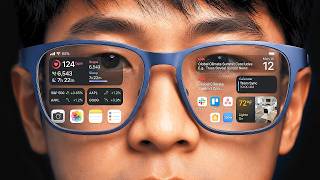
Augmented reality works by overlaying computer-generated digital content, such as images, sounds, or 3D models, onto a user’s real-world view in real-time. This technology employs devices equipped with cameras and sensors to capture the physical environment, then processes this data to accurately place and display virtual elements as if they are part of the real world. This interaction creates an enhanced perception of reality, providing information and experiences that go beyond what is physically present.
What is Augmented Reality and How Does it Function?
Augmented reality (AR) enhances the physical world by adding digital layers to it. Unlike virtual reality (VR), which immerses users in a completely simulated environment, AR maintains the user’s connection to their immediate surroundings while enriching it with virtual elements. This distinction is fundamental: AR adds to reality, while VR replaces it. The concept of enhancing human perception with digital overlays has a history stretching back decades, aiming to change how we interact with information and our environment, as explored in discussions around Why Was Augmented Reality Invented to Change How We See the World?.
The core function of AR hinges on a sophisticated interplay of hardware and software components. At its heart, an AR system needs three primary capabilities: perception, processing, and display.
Perception: This begins with a camera or sensor system that captures data about the user’s physical environment. Modern AR devices, from smartphones to dedicated smart glasses, integrate cameras that feed live video streams to the processing unit. Alongside cameras, various sensors play a vital role. Accelerometers and gyroscopes track the device’s orientation and movement in space. GPS modules provide location data outdoors. More advanced AR systems incorporate depth sensors, like lidar or structured light cameras, to build a precise 3D map of the environment, understanding distances, surfaces, and obstacles. This detailed environmental understanding allows digital objects to interact realistically with the physical world, such as appearing to sit on a table or behind a real-world object.
Processing: Once environmental data is captured, a powerful processing unit — often a mobile processor for smartphones or specialized AR chips for glasses — takes over. This unit runs complex algorithms, central among them are computer vision techniques and Simultaneous Localization and Mapping (SLAM).
- Computer Vision: This technology allows the device to “see” and interpret the real world. It identifies features, shapes, and patterns, recognizing objects, faces, and even text within the camera’s view. This recognition is crucial for anchoring digital content. For instance, an AR application might recognize a specific product on a shelf and overlay its price or reviews.
- SLAM: This critical algorithm allows the AR device to track its own position and orientation within an unknown environment while simultaneously creating a map of that environment. SLAM continuously analyzes incoming visual data to understand where the device is moving and how the real world around it is structured. This prevents digital objects from “drifting” or appearing disconnected from the physical space as the user moves.
Based on this real-time environmental understanding and device tracking, the processing unit then renders the virtual content. This digital content, whether a 3D model, an animation, or simple text, is generated to appear consistent with the lighting, perspective, and scale of the real world. Modern AR platforms often leverage artificial intelligence (AI) to enhance this rendering, making virtual objects more responsive and intelligent. The advanced capabilities of AI, similar to how How Gemini AI Changes Google Drive for Intelligent File Management improves data handling, allow AR systems to understand context better and deliver more adaptive digital experiences.
Display: The final step is presenting the combined view—real-world and virtual content—to the user. For smartphone-based AR, the phone’s screen serves as a “magic window,” showing the camera feed with digital overlays. For dedicated AR glasses, transparent optics project images directly into the user’s field of view, allowing them to see through the lenses to the real world while simultaneously perceiving virtual elements. These displays must be high-resolution and maintain low latency to ensure the digital content appears stable and integrated with the physical environment.
What Does Augmented Reality Cost and Where Do People Misunderstand It?
The cost of augmented reality varies dramatically depending on the scale and application. For individual consumers, entry to AR is largely accessible and often free. Most modern smartphones inherently support basic AR experiences through their cameras and processors. Thousands of AR applications are available for download, ranging from simple games and filters to utility apps for home decorating or measurement, often at no cost or for a few dollars. However, dedicated AR hardware, like smart glasses, can be expensive, often costing hundreds or even thousands of dollars for developer kits or specialized enterprise models. These devices are still niche, primarily due to their higher price points, technical limitations, and often unproven value proposition for average users.
For businesses and industries, the investment in AR can be substantial. Developing custom AR applications for specific use cases, such as manufacturing assembly instructions, surgical training, or complex retail visualization, requires significant upfront costs. This includes specialized software development, licensing of AR platforms, potentially purchasing industrial-grade AR headsets or tablets, and extensive integration with existing enterprise systems. Ongoing maintenance, updates, and training for employees also contribute to the total cost of ownership. A small proof-of-concept project might start in the tens of thousands, while a full-scale enterprise deployment across multiple sites could easily reach into the millions.
Despite its growing presence, AR faces several common misunderstandings:
- AR is the same as VR: This is perhaps the most frequent misconception. As established, AR adds to reality, while VR replaces it entirely. AR users remain aware of their physical surroundings, whereas VR users are immersed in a simulated world. The technologies share some underlying components but serve different experiential goals.
- AR is perfect and seamless: Current AR technology, while impressive, is not flawless. Challenges persist in areas like accurate object tracking, especially in dynamic or poorly lit environments. Field of View (FOV) on many AR glasses is still relatively narrow, meaning virtual objects might only appear in a small central area rather than across the entire vision. Latency, computational demands, and battery life also remain limitations that can break the illusion of seamless integration.
- AR is only for entertainment and games: While popular in gaming (e.g., Pokémon GO) and social media filters, AR has profound applications in productivity and industry. It is used for remote assistance, visualizing construction plans on-site, providing step-by-step guidance for factory workers, enhancing retail shopping experiences, and even aiding in complex medical procedures. These utility-driven applications represent significant value beyond mere amusement.
- Advanced AR is ready for mass consumer adoption: True, highly immersive, and lightweight AR glasses that blend perfectly with daily life are still some years away. Current devices are often bulky, expensive, and primarily target developers or specific enterprise scenarios. The technology needs further miniaturization, improved optics, and more compelling everyday use cases to reach widespread consumer adoption akin to smartphones.
- Privacy and data collection are minor concerns: AR systems frequently use cameras and sensors to map and understand a user’s environment, potentially capturing sensitive visual data about homes, workplaces, and personal interactions. Managing this data, ensuring privacy, and establishing clear guidelines for its use are critical challenges that are often underestimated by the public. As AI becomes more integral to processing this environmental data, understanding ethical implications and security, much like prompt engineering ensures ethical AI interaction, becomes paramount for designers and users alike. Master Prompt Engineering in 29 Min for 2025 AI Productivity highlights the importance of guiding intelligent systems responsibly, a principle that extends to AR’s data handling.
What To Actually Do
Engaging with augmented reality today means recognizing its current capabilities and future potential. For everyday users, smartphones remain the most accessible gateway. Experiment with AR apps for navigation, gaming, or practical tasks like furniture placement. These experiences offer a practical understanding of how AR works and its current limitations. Do not expect perfectly photorealistic, fully interactive virtual worlds through a phone screen, but appreciate the convenience and enhancement it provides.
For businesses considering AR, start with identifying a specific problem that AR can solve, rather than adopting the technology for its own sake. Can it improve training efficiency, reduce errors in assembly, or enhance customer engagement? Begin with small-scale pilot projects to test the waters and gather real-world data on return on investment before committing to large deployments. The manufacturing sector, for example, uses AR to overlay digital instructions onto physical machinery, streamlining maintenance and training processes. Retailers employ AR apps for virtual try-ons or product visualization, allowing customers to see how an item looks in their own space before buying.
The integration of AR into various sectors mirrors how Fintech AI Pressures Traditional Wealth Management by leveraging advanced technology to redefine existing services. AR, much like AI in finance, offers new ways to interact with information and physical environments, driving efficiency and innovative customer experiences.
Looking ahead, the development of AR continues to accelerate. Expect further advancements in miniaturization, improved optics, and enhanced processing power. The convergence of AR with artificial intelligence will lead to more intelligent, context-aware, and responsive digital overlays. As devices become lighter, more comfortable, and offer wider fields of view, AR will gradually move beyond niche applications and smartphone screens, potentially integrating into daily life in ways that are currently hard to imagine. However, responsible development will need to address privacy concerns and ensure ethical data handling as AR systems become more embedded in our physical and digital realities.