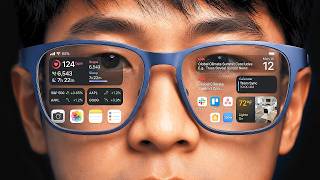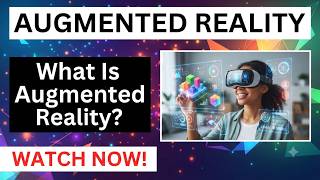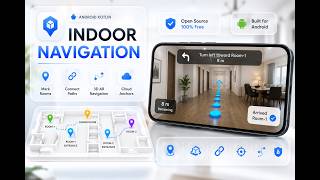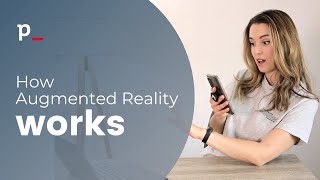
Augmented reality (AR) superimposes digital information onto the real world, enhancing what you see rather than replacing it. Common examples include using your smartphone camera to visualize virtual furniture in your living room, seeing navigation directions overlaid on a live street view, or playing games where digital characters appear in your physical environment. Indeed, if your phone uses its camera and software to place digital information over the real environment, you’re experiencing a form of augmented reality. This technology aims to enrich our perception of reality by seamlessly blending virtual elements into physical spaces, creating a more interactive and informative experience.
AR operates by using sensors, cameras, and processing units in devices like smartphones or specialized headsets to capture and analyze the real-world environment. It then generates digital content—images, videos, 3D models, or text—and overlays it onto the live camera feed or through transparent lenses, synchronized with the user’s perspective. The system constantly tracks the user’s position and orientation, as well as features in the environment, to accurately anchor digital objects, making them appear stable and integrated into the physical space. This process requires robust computer vision algorithms and rendering capabilities to deliver a convincing illusion. The question of Why Was Augmented Reality Invented to Change How We See the World? lies in this core ability to enhance human perception and interaction.
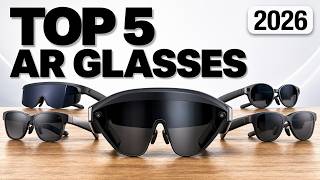
The cost associated with augmented reality primarily revolves around the hardware and software development. For many, the entry point for AR is their existing smartphone, which comes with no additional cost beyond the device itself and any specific AR applications. More sophisticated AR experiences, however, require dedicated headsets or smart glasses. These devices, like those from Microsoft or Magic Leap, can range from hundreds to thousands of dollars, reflecting their advanced optics, sensors, and processing power. Developing AR applications also incurs costs related to 3D modeling, programming, and user experience design. Businesses adopting AR for training or operational efficiency might invest significantly in custom solutions, while consumers often access AR through free or low-cost apps.
Understanding Augmented Reality Examples and Misconceptions
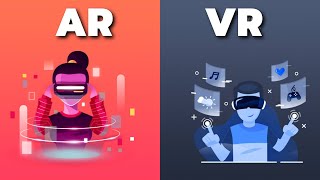
A frequent point of confusion is distinguishing AR from its cousins, virtual reality (VR) and mixed reality (MR). Virtual reality completely immerses users in a simulated environment, blocking out the real world entirely. When you put on a VR headset, you might “feel like you’re exploring outer space, playing a game, or walking through a virtual museum,” as Beyond What We Know explains, entirely detached from your physical room. Augmented reality, by contrast, keeps you firmly rooted in your physical surroundings, adding digital layers without obscuring the real view. Think of an app that lets you try on virtual glasses by looking at your phone’s camera, or a utility app that identifies constellations when you point your device at the night sky. These are direct enhancements to your existing reality.
Mixed reality takes AR a step further. While AR overlays digital content, MR allows those digital objects to interact with the physical environment in more sophisticated ways. For instance, in MR, a virtual machine placed on your real table might cast shadows, be occluded by physical objects, or even react to your touch if you could “walk around it, look at different parts, and interact with it as though it occupies that space.” This deeper level of environmental understanding and interaction blurs the lines between the digital and physical, often requiring specialized MR headsets that can map and understand the environment in real-time. The core distinction lies in the system’s ability to not just display, but to truly understand and integrate with the physical world.
The deployment of AR technology is growing across various sectors. In retail, customers use AR apps to preview how clothing might look on them or how furniture fits in their homes before purchase. Education benefits from interactive 3D models appearing in classrooms. Industrial applications include technicians using AR glasses to receive step-by-step repair instructions overlaid on complex machinery, reducing errors and training time. Even the field of How AI Is Used in Finance for Transformation and How Gemini AI Changes Google Drive for Intelligent File Management stands to gain as AI-powered analytics and data visualization could be delivered directly into a professional’s line of sight through AR. However, concerns about data privacy and the security of real-world environmental data collected by AR devices mean that robust frameworks, like What Is the Zero Trust Security Model, will become increasingly important.
The Bottom Line
Augmented reality stands as a powerful tool for bridging the digital and physical worlds, offering practical enhancements to everyday life and specialized professional tasks. Its diverse applications, from consumer-friendly smartphone features to enterprise-grade solutions, demonstrate its versatility and accessibility. Understanding that AR enhances reality, rather than replacing it like VR, and differs in interactive depth from MR, is crucial. As the technology matures, processing power increases, and costs decrease, AR will likely become an even more pervasive and intelligent interface, reshaping how we perceive, interact with, and leverage information in our physical environments.