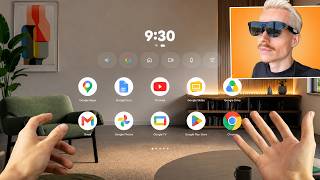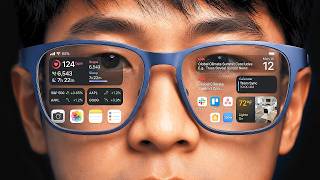
Augmented reality (AR) merges digital information with the physical world, creating an interactive environment where virtual objects appear to reside within real surroundings. This technology was invented not just to entertain, but to extend human perception, provide immediate contextual data, and enhance our interaction with the environment without isolating us from it. It seeks to integrate digital utility directly into our daily lives, offering information precisely where and when it is most relevant.
What Is Augmented Reality?
Augmented reality layers computer-generated content onto a real-world view. Users see their actual environment, enhanced with virtual elements like images, text, or 3D models. Unlike virtual reality (VR), which creates fully immersive digital worlds, AR maintains the user’s connection to physical reality. It acts as a digital overlay, adding information or interactive components to what you already perceive. This capability transforms everyday objects and spaces into interactive interfaces. Devices range from smartphones and tablets to specialized AR glasses, which are becoming increasingly sophisticated. Current market offerings, like those highlighted in product comparisons, showcase a growing diversity in performance and form factors for these wearable devices.
AR is about adding to reality, not replacing it. Imagine looking at a machine and seeing maintenance instructions overlaid on its parts, or walking through a city and having navigation arrows appear directly on the street in front of you. This real-time, context-aware information presentation is the essence of augmented reality. It leverages the physical world as a backdrop, making digital content feel more integrated and tangible within our surroundings.
Why Was Augmented Reality Invented To Change How We See The World?
The invention of augmented reality stems from a desire to bridge the gap between digital data and physical experience. Early pioneers envisioned a system that could provide information contextually, directly within a user’s field of view, enhancing their understanding and interaction with the physical world. One of the earliest conceptualizations came in the 1960s with Ivan Sutherland’s “The Ultimate Display,” which proposed a system that could overlay computer graphics onto a user’s vision. This foreshadowed the core principle of AR: enriching reality, not replacing it.
Practical applications quickly emerged. Industries sought ways to improve efficiency, reduce errors, and provide hands-on training without complex physical setups. Imagine a technician repairing intricate machinery, seeing repair instructions overlaid onto the actual parts. Or a surgeon visualizing internal organs during an operation. These early motivations drove development, pushing AR beyond mere novelty into a tool for serious industrial and military applications. The ability to present dynamic, location-aware information made AR a powerful concept for fields requiring precise spatial understanding and real-time data access. It provided an intuitive way to access complex digital information in a physical context, making tasks easier and more efficient.
As computing power miniaturized, consumer applications became viable. The shift from bulky laboratory setups to portable devices, like those discussed in What Augmented Reality Means Today for Users, has made AR more accessible. Developers began to explore how AR could enhance everyday life, from gaming (think Pokémon Go) to navigation, shopping, and even social interaction. The drive was to move information from two-dimensional screens into the three-dimensional world we inhabit, making digital content feel more integrated and natural. The goal was to provide a more intuitive and integrated interaction with information, enabling users to perceive and interact with digital content as if it were part of their physical environment.
How Does Augmented Reality Work?
Augmented reality systems rely on a combination of hardware and software to blend digital content with reality. The foundational components include a camera, sensors, a processor, and a display. The camera captures the real-world view, which the system then analyzes. Sensors, such as accelerometers, gyroscopes, and GPS, provide data about the device’s position, orientation, and movement in space. This sensory input is critical for understanding the user’s environment and perspective.
The system’s processor takes this information to perform two main tasks: tracking and rendering. Tracking involves continuously monitoring the device’s position and orientation relative to the physical world, often identifying specific markers or features in the environment. This ensures that the virtual content remains stable and correctly aligned with real-world objects, even as the user moves. Advanced AR devices utilize simultaneous localization and mapping (SLAM) algorithms to build a real-time map of the environment while simultaneously tracking the user’s position within it. This process creates a coherent spatial understanding for the device.
Once the position is known, rendering software generates the virtual objects. These digital elements are then composited with the live camera feed and displayed to the user. On smartphones and tablets, this happens on the device screen. With AR glasses, specialized optical systems project the digital image directly into the user’s field of view, creating the illusion that virtual objects are truly present in the physical space. The integration must be precise, matching perspective, lighting, and scale to create a convincing experience. This complex interplay of technologies allows AR to place a virtual bookshelf on a real wall or show digital instructions hovering over a machine part. The accuracy of tracking and the fidelity of rendering directly impact the user’s sense of immersion and the utility of the AR experience.
Who Is Augmented Reality For?
Augmented reality offers significant benefits across a broad spectrum of users and industries, but it also has its limitations. For professionals, AR enhances productivity and precision. In manufacturing and engineering, technicians can use AR glasses to overlay schematics onto complex machinery, speeding up repairs and reducing errors. Architects and designers utilize AR to visualize projects in real-world scale before construction begins, allowing for immediate adjustments and collaborative reviews. Healthcare professionals leverage AR for surgical planning, training, and even visualizing patient data in context. Its application in training scenarios, from military simulations to intricate surgical procedures, provides a safe and effective way to practice without real-world risk.
Consumers also benefit, albeit in different ways. AR apps transform shopping experiences, letting users virtually try on clothes or place furniture in their homes before buying. Navigation apps use AR to overlay directions directly onto the street view. Educational tools bring textbooks to life with interactive 3D models. The entertainment sector, particularly gaming, has seen popular AR experiences that blend digital characters into the player’s physical environment. The increasing availability and affordability of devices mentioned in product reviews, like various models of AR glasses, are expanding this reach. This growth mirrors broader trends in technology adoption across industries, including how Fintech AI Pressures Traditional Wealth Management by introducing new, efficient digital interfaces and services.
However, AR is not universally suited for everyone or every task. Individuals prone to motion sickness might find some AR experiences disorienting. The cost of advanced AR hardware remains a barrier for some, particularly for enterprise-grade solutions. Furthermore, the technology requires robust computing power and often a stable internet connection for real-time data overlays, which might limit its utility in remote or challenging environments. Issues with battery life, field of view, and the weight of wearable devices also present practical challenges. While Master Prompt Engineering in 29 Min for 2025 AI Productivity discusses enhancing digital interactions, AR’s challenge is about enhancing physical ones while maintaining fidelity and practical usability.
Misconceptions often arise around AR’s capabilities, particularly when confused with full virtual reality. AR does not replace the real world; it enhances it. Users sometimes expect a completely immersive, indistinguishable blend, which current technology, while advanced, still has limits achieving perfectly. Understanding these practical boundaries is essential for effective deployment and managing user expectations. For instance, expecting perfect digital fidelity across all lighting conditions or seamless interaction with every real-world surface without careful calibration can lead to disappointment. The utility comes from contextual enhancement, not complete digital illusion. Businesses exploring new tech might also consider implementing robust security measures like those detailed in How Zero Trust Security Verifies All Access to Prevent Cyberattacks for securing the sensitive data generated or accessed via AR devices.
The Bottom Line
Augmented reality was invented to bridge the physical and digital, offering a new dimension of interaction that enriches our real-world experiences with contextual information. From its origins in scientific visualization and industrial applications to its growing presence in consumer products, AR continually refines how we perceive and engage with our environment. While technical hurdles and user adoption challenges persist, the core promise of AR—to make information more intuitive and accessible in our daily lives—remains a driving force behind its ongoing innovation and expansion. It promises to subtly redefine our visual and interactive relationship with the world around us, making the digital an ever-present, yet unobtrusive, layer of reality.