Sensors, actuators, and AI models drive humanoid movement
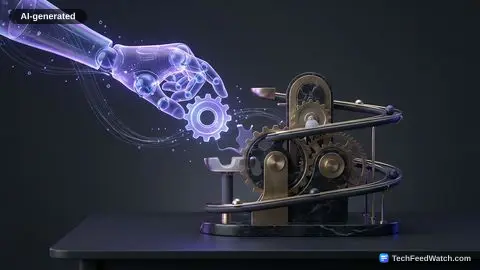
Sensors collect environmental data, and motorized actuators (parts that create motion) execute joint movements. Meanwhile, artificial intelligence models process balance calculations to keep humanoids walking upright.
Actuators function as motorized joints that turn electrical power into physical movement across the frame. According to Unitree Robotics, its compact G1 bipedal (two-legged) robot incorporates between 23 and 43 degrees of freedom across its moving joints.
A degree of freedom measures an independent direction of mechanical movement in a joint. Sensors like optical cameras and depth detectors map the surrounding room in real time. Machine learning algorithms (problem-solving computer programs) then calculate torque (twisting force) adjustments to keep the machine balanced.
Engineers combine several key hardware layers:
- Sensory perception: Cameras and optical scanners identify physical obstacles and measure distances.
- Mechanical actuation: Electric motors supply controlled rotational force to move the limbs.
- Motion intelligence: Neural networks (brain-like computer systems) calculate walking gaits (footstep patterns) and balance forces during motion.
According to NASA, its Valkyrie humanoid stands 6 feet 2 inches tall and weighs 300 pounds. NASA states Valkyrie features 44 degrees of freedom. The robot runs on a 1.8 kilowatt-hour dual-voltage battery to evaluate operations in uncrewed facilities.
Where are humanoid robots working today?
Humanoid robots currently work in logistics (shipping and warehouse operations), automotive manufacturing plants, and research laboratories. In these settings, humanoids test automation alongside human staff.
Commercial deployment remains modest compared to traditional factory equipment. According to the International Federation of Robotics, robot manufacturers sold approximately 7,000 full-size humanoids taller than 4 feet 7 inches for commercial use in 2025.
In contrast, the International Federation of Robotics notes global factories deployed an equivalent number of industrial robots roughly every four days in 2025. According to the IEEE (Institute of Electrical and Electronics Engineers) study The Impact of Technology in 2026 and Beyond, 52% of surveyed technology leaders identified robotics as one of the industries most transformed by artificial intelligence.
They picked robotics as heavily transformed by artificial intelligence. That same IEEE report found that 77% of surveyed leaders agreed humanoid robots will transition into standard workplace coworkers.
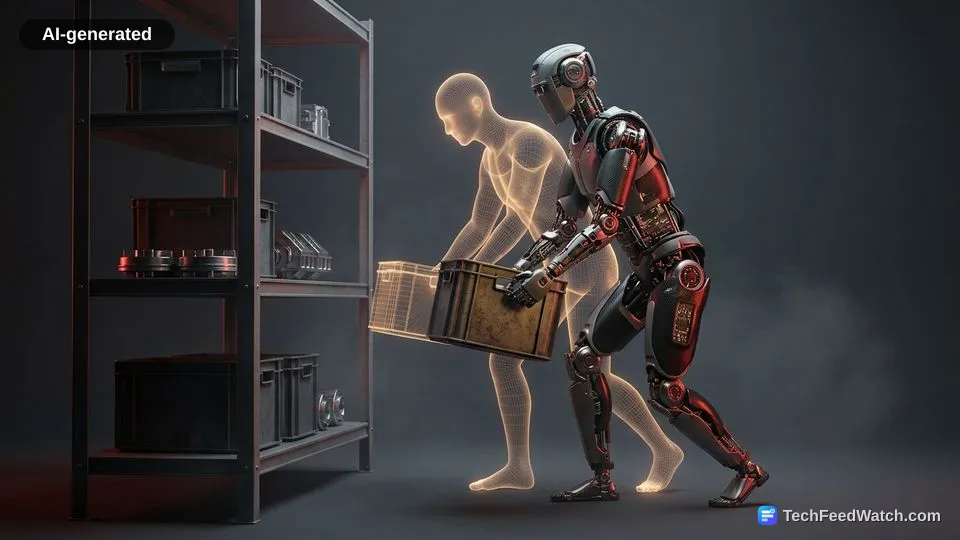
Consumers may soon see humanoids moving heavy inventory in local stores. These machines may also assist workers in hazardous supply facilities. A humanoid robot was once seen tested outdoors on a city street from a passing car.
High costs and physical constraints limit mass adoption
Steep manufacturing expenses and battery limitations slow down humanoid robots. Mechanical fragility and motion stability challenges also prevent rapid mass deployment across consumer and business settings.
According to a February 2026 survey in Frontiers of Information Technology & Electronic Engineering, primary bottlenecks include severe actuator hardware constraints. The survey also points to complex control dynamics (the math required to manage balance and movement).
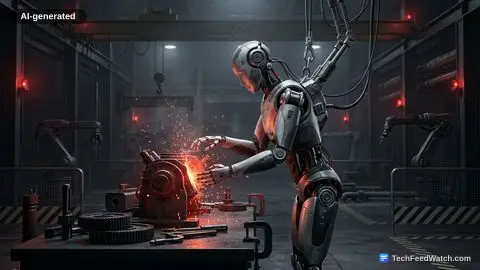
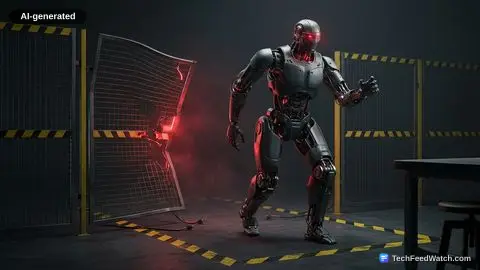
That February 2026 Frontiers survey also cited sensory perception limitations and unresolved physical human-robot interaction safety risks. A single slip on a factory floor can crack costly internal gears and disable delicate electronic assemblies.
Power consumption creates another major operational challenge. Heavy battery packs drain quickly during continuous lifting, forcing machines to pause frequently for recharging.
Technology with Tyler tests humanoids from DroidUp and UBTECH
Technology with Tyler reviews recent commercial machines from DroidUp and UBTECH. The show examines how bipedal frames operate in personal companion and factory support settings. Technology with Tyler examines the DroidUp Moya robot.
Moya features artificial skin engineered to stay between 32 and 36 degrees Celsius. Technology with Tyler reports that Moya’s face features 25 degrees of freedom to produce micro-expressions and track gaze.
Technology with Tyler notes that DroidUp projects a price of around $173,000 when Moya launches in late 2026. Turning to industrial systems, Technology with Tyler reports that UBTECH signed a $35 million deal to deploy its Walker S2 units in commercial factories.
Technology with Tyler also highlights UBTECH’s consumer line. Its flagship model offers 88 degrees of freedom and uses a ResonanceLM software model for emotional interaction.
These platforms show developers pushing beyond pure industrial chores into social engagement. According to the IEEE global study “The Impact of Technology in 2026 and Beyond,” 77% of surveyed technology leaders agreed that humanoid robots will transition into standard workplace coworkers.
According to Frontiers of Information Technology & Electronic Engineering, primary bottlenecks limiting humanoid viability include severe actuator hardware constraints. These bottlenecks also include complex control dynamics, sensory perception limitations, and unresolved physical human-robot interaction safety risks.