OpenAI’s ChatGPT Image 2 represents a significant leap forward in AI generative models, setting new standards for image creation and manipulation. This advanced system integrates sophisticated visual understanding with a deep grasp of world knowledge, allowing it to produce highly precise and usable visuals from complex text prompts. It marks a substantial improvement over previous models, demonstrating enhanced capabilities in realism, consistency, and intelligent instruction following.
What is ChatGPT Image 2?
ChatGPT Image 2 is OpenAI’s latest state-of-the-art image model, designed to handle complex visual tasks and generate precise, immediately usable visuals. It has achieved a remarkable performance increase, with an Elo score jump of over 250 points, moving from 1270 to 1512, significantly surpassing previous top models like Gemini 3.1 flash image preview, also known as Nano Banana 2. This advancement is attributed to its “thinking-level intelligence” and its function as a “world knowledge model,” meaning it understands the context and implications of prompts rather than just generating pixels.
The model excels in detailed instruction following, accurately placing related objects, and rendering dense text across various languages. It also offers greater flexibility by generating images across diverse aspect ratios, such as 3:1 and 1:3. Its expanded visual and world knowledge enables it to fill in gaps in prompts, leading to smarter and more coherent images with less effort from the user. This allows it to conceptualize sophisticated images and effectively bring those visions to life.
Unprecedented Visual Fidelity and Consistency
One of the most striking features of ChatGPT Image 2 is its ability to produce visuals with exceptional fidelity and consistency. It achieves a high degree of photorealism, often generating images that are difficult to distinguish from actual photographs. For instance, it can render individual grains of rice with such detail that they appear distinct and realistic, even when zoomed in to 2K resolution. This level of detail extends to subtle elements like coffee stains, enhancing the overall authenticity of the generated images.
Beyond photorealism, the model demonstrates stylistic sophistication, capable of capturing the defining characteristics of various visual languages, including cinematic stills, pixel art, and manga. It maintains greater consistency in texture, lighting, composition, and fine detail across these styles. A significant improvement is its ability to maintain visual coherence across multiple images in a sequence, such as a chameleon changing its pose or background, or a character evolving through different stages of life.
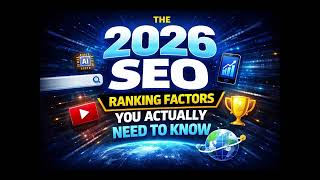
Furthermore, ChatGPT Image 2 shows impressive accuracy in generating readable text within images. It can produce entire infographics with accurate text, render equations clearly on a blackboard, and even replicate various handwriting styles convincingly. This capability addresses a common challenge in previous generative models, where text often appeared as gibberish or distorted.
Beyond Pixels: Integrating World Knowledge and Logic
ChatGPT Image 2 distinguishes itself through its “thinking-level intelligence,” which allows it to integrate world knowledge and logical reasoning into image generation. This means the model doesn’t just process visual data; it understands the underlying concepts and relationships within a scene. For example, it can solve mathematical equations and display the correct answer within an image. While it might initially miscalculate a complex equation, such as 18 * 24 + 11 - C = ? where C equals 5, yielding 413 instead of 438, it can often correct itself when prompted to engage its “thinking mode.”
The model also demonstrates an understanding of basic physics and object permanence. In a test where it was asked to show a marble under an upside-down cup and then depict what happens when the cup is lifted, it accurately showed the marble in its expected location. This indicates a grasp of how objects interact with their environment, a capability that was previously a benchmark for large language models. This contextual understanding, combined with its expanded visual knowledge, allows it to generate more intelligent and contextually appropriate images, even with minimal prompting.
Practical Applications and Creative Horizons
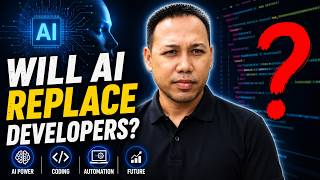
The advanced capabilities of ChatGPT Image 2 open up a wide array of practical applications across various industries. For content creators, it offers a powerful tool for generating high-quality visuals, such as YouTube thumbnails that can be customized to specific styles, like a “Mr. Beast style” with a user’s face integrated. Its ability to accurately integrate faces, even copying and pasting a user’s face into different scenarios, provides significant potential for personalized content creation. It can also accurately depict well-known public figures, such as Elon Musk and Sam Altman, in various settings.
In game development, the model can generate comprehensive sprite sheets for character movements, including damage reactions, stealth actions, death animations, and power-up auras, which can significantly streamline the asset creation process. For artists, it serves as an advanced creative assistant, enabling the rapid generation of diverse visual concepts, styles, and detailed compositions. Its capacity for photorealism and stylistic versatility can accelerate creative workflows and inspire new artistic directions. Furthermore, its ability to generate accurate infographics and detailed product shots makes it valuable for marketing and design professionals.
Navigating the Nuances: Current Limitations
Despite its impressive advancements, ChatGPT Image 2 is not without its limitations. The model can sometimes struggle with precise counting or specific object placement in highly complex scenes. For example, in a detailed prompt requesting seven cups, it might generate eight, or miscount pencils and keys within an image. Similarly, while it excels at drastic image changes, achieving very subtle alterations, such as making text “a little messier,” might result in only minor, less impactful adjustments.
Anatomical inconsistencies can occasionally appear in generated images, such as unusually large hands or an incorrect number of visible fingers. The accuracy of generating less famous individuals can also be affected by the scarcity of reference images available on the internet, potentially leading to less realistic or slightly distorted facial features compared to well-known personalities. When asked to age a person backward, the model might not accurately infer or recall past features, such as childhood hair color, if they differ significantly from current appearance. In some instances, the model might also introduce unintended elements into images, such as mobile device UI components, if the prompt is interpreted in a way that suggests a screenshot.
The Evolving Role of Human Curation
The emergence of highly capable AI image generators like ChatGPT Image 2 underscores the evolving relationship between artificial intelligence and human creativity. While the model can produce visuals of unprecedented quality and complexity, the role of human taste, judgment, and curation remains vital. Even with advanced AI, the internet still faces a potential “flood of AI slop” if content is not thoughtfully guided and selected.
Artists and creators will continue to be essential in defining the creative vision, crafting effective prompts, and discerning the best outputs from the AI’s generations. The technology serves as a powerful tool, augmenting human capabilities and accelerating the creative process, but human oversight is necessary to ensure the quality, relevance, and artistic integrity of the final visual content. Ultimately, the model enhances the creative toolkit, but human expertise remains the driving force behind meaningful and impactful visual communication.