Features and video creation tools in Sora
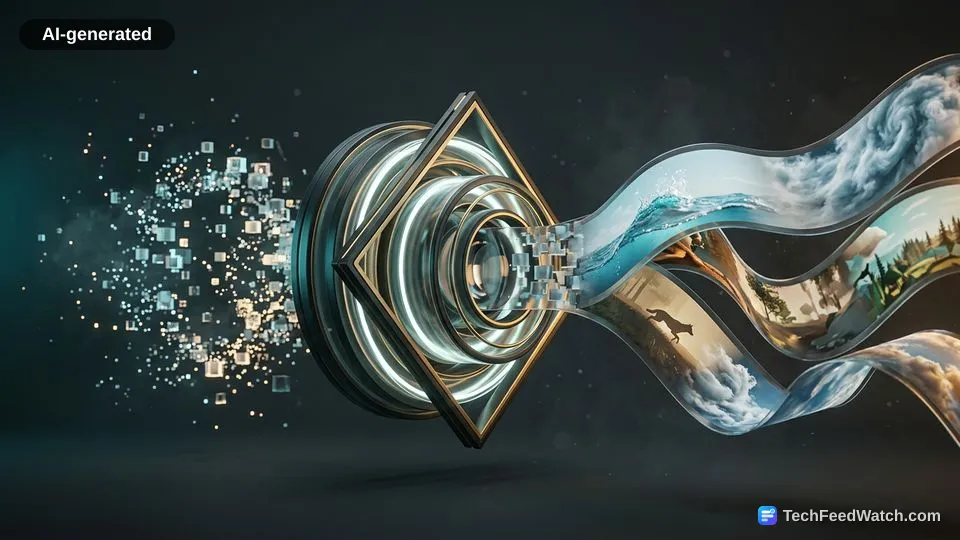
Sora provides end-to-end video synthesis across multiple formats alongside prompt-based controls for editing existing motion sequences.
According to OpenAI’s product release announcement on December 9, 2024, the public deployment model Sora Turbo supports generating videos at up to 1080p resolution. It creates clips up to 20 seconds in length in widescreen, vertical, or square aspect ratios.
According to Microsoft Azure’s technical documentation updated in March 2026, the updated Sora 2 pipeline accepts text-to-video, image-to-video, and video-to-video inputs. It applies built-in safety filters designed to block intellectual property violations and explicit media.
OpenAI integrated several direct editing features into the web interface to help users control scene output:
- Remix allows users to alter an existing clip’s style, subject matter, or setting using written instructions.
- Blend fuses visual elements, lighting, and movement from two separate source videos into a composite video.
- Storyboard provides frame-level sequencing to let creators plan visual continuity across individual shots.
Sora launched at sora.com on December 9, 2024, included at no extra cost for ChatGPT Plus subscribers, who pay $20 per month. This baseline tier provides up to 50 videos per month at 480p resolution. Meanwhile, ChatGPT Pro subscribers paying $200 per month gained access to ten times higher generation limits.
What are Sora’s main flaws and limitations?
Sora frequently produces visual hallucinations. It struggles with complex physical causality and generates inaccurate spatial interactions between objects.
According to VentureBeat’s product review on December 9, 2024, Sora often creates unnatural physics. Examples include objects moving in impossible trajectories or liquid flowing backward without context.
The model also shows severe weaknesses when rendering on-screen typography. It frequently generates garbled letterforms rather than readable text. In addition, background objects and secondary characters often appear or vanish between consecutive frames for no discernible reason.
These technical flaws stem from the gap between statistical pattern matching and actual physical comprehension:
- The engine struggles to model irreversible actions. For example, a person may take a bite out of an apple without leaving a visible bite mark.
- Complex multi-agent motions cause severe morphing, where limbs multiply or fuse into surrounding scenery.
- Precise spatial relationships, such as tracking left versus right over rapid camera pans, often reverse mid-sequence.
Because generative media carries these artifacts, spotting differences between AI video and real video often comes down to scrutinizing fine spatial details. Viewers must inspect subtle elements like reflections, text stability, and object permanence.
OpenAI rolled out Sora Turbo and Sora 2
OpenAI transitioned Sora from a research demonstration into consumer products through successive releases of Sora Turbo and Sora 2.
Following the initial February 2024 preview, OpenAI launched the public version under the Sora Turbo name on December 9, 2024. This iteration focused on faster generation times, lower latency, and consumer access within the ChatGPT subscription ecosystem.
The release brought the initial web interface to paying subscribers. It also introduced the Remix and Blend tools to creative workflows.
According to OpenAI’s product announcement on September 30, 2025, the company launched Sora 2. This release introduced native synchronized audio generation alongside video capabilities. Consequently, creators no longer needed to manually align synthesized sound effects, voices, or ambient tracks in third-party editing suites.
FutureFuel breaks down Sora’s rise and fall
FutureFuel details the operational collapse that prompted OpenAI to sunset Sora. OpenAI launched the model in February 2024 after ChatGPT quickly passed 100 million users.
While OpenAI chief executive Sam Altman envisioned a filmmaking platform, the company shifted direction in September 2025. It repositioned Sora 2 as a social app with 10-second facial cameos.
This pivot triggered severe financial and legal strains:
- According to FutureFuel, producing each individual clip required approximately $1.30 of compute, which drove daily GPU expenditures to $15 million.
- Sora earned only $2.1 million in revenue by January 2026, as creators rejected the $200 monthly Pro tier.
- Even though early app downloads reached 1 million, Sora saw its monthly user base drop by 45% from November 2025 to January 2026.
Legal threats from the Motion Picture Association mounted. Competition from rival AI model Gemini 3.1 Flash and the resignation of veteran OpenAI researcher Jerry Tworek added pressure. OpenAI announced on March 24th, 2026, that the app would sunset, setting the final shutdown for April 26th, 2026. Disney then walked away from its licensing deal and planned $1 billion investment in OpenAI.
FutureFuel summarized: “You can’t automate a soul, and you can’t build a business on cool videos if each clip costs more than a Starbucks latte.” Readers can evaluate why is Sora no longer available to understand these infrastructure pressures.