Massive Compute Costs, Collapsing Engagement, and Shifting Priorities
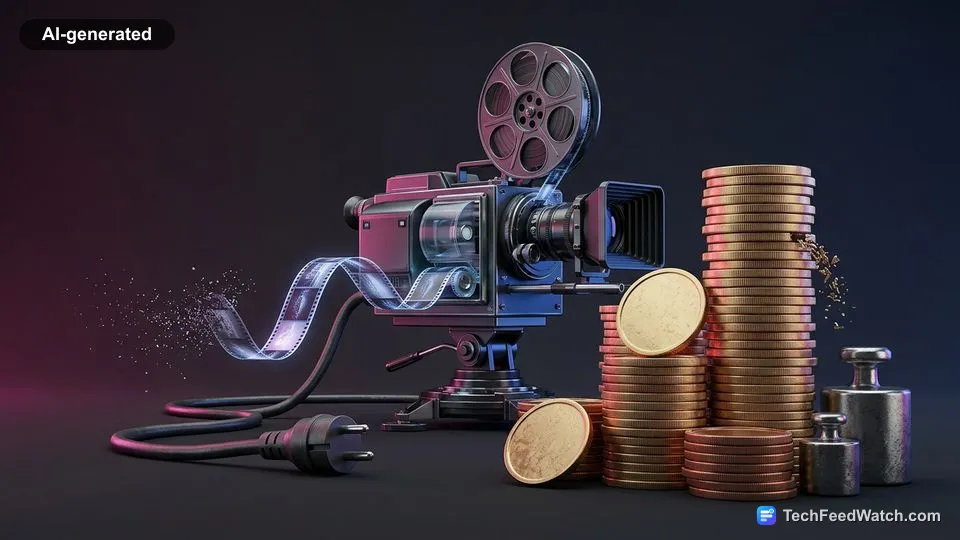
Inference costs for generative video created a brutal financial model. High-definition video generation requires data centers to calculate complex light, physics, and movement across thousands of sequential frames.
According to Reuters reporting cited by Forbes, OpenAI terminated the tool because the model drained immense computing resources that were urgently required for coding tools, enterprise products, robotics, and artificial general intelligence development.
While the software enjoyed a viral debut, consumer interest evaporated swiftly. According to PCMag, Sora claimed the No. 1 spot on the U.S. Apple App Store shortly after its September 2025 debut. However, Sensor Tower data cited by PCMag revealed that the app plunged to rank 172 among free mobile apps by March 2026.
The tool faced severe structural hurdles compared to alternative developer ecosystems:
- High operational overhead made free tiers and low-cost subscriptions economically impractical.
- Platforms like Google AI Tools Available with Free Access and Tiers maintained diverse product ecosystems that easily subsidized operational compute.
- Standalone video feeds lacked social connections, giving users little incentive to return daily after trying the generator once.
- Specialized developer pipelines, such as What No Code AI Agent Means for Rapid Application Development, proved far more profitable for business workflows.
Every server cluster dedicated to rendering short social media clips represented hardware unavailable for lucrative commercial products. Leadership chose to prioritize sustainable commercial software over an unprofitable creative novelty.
Deepfake Backlash, Copyright Risks, and Content Moderation Struggles
Managing safety and compliance turned into an endless vulnerability for OpenAI. According to The Guardian, the platform faced severe moderation challenges surrounding deepfakes, misinformation, and copyright infringement. Copyleaks CEO Alon Yamin described the platform to The Guardian as “quietly a content moderation nightmare.”
Public controversies began mounting almost immediately after access expanded. According to CBS News, OpenAI was forced in 2025 to temporarily block user prompts involving Martin Luther King Jr. after users generated what the company called “disrespectful depictions” of the civil rights leader. Guardrails frequently failed to intercept deceptive generations without creating restrictive friction for legitimate digital artists.
Corporate partnerships also buckled under these legal and reputational tensions. According to Inc. Magazine, shutting down the Sora application caused the collapse of a planned $1 billion content collaboration with The Walt Disney Company.
That deal would have permitted users to generate clips featuring Disney, Marvel, and Star Wars characters under strict brand licensing rules. Enforcing corporate intellectual property safety across a public consumer tool proved too hazardous to maintain.
Why OpenAI Is Redirecting Video Research Toward Robotics
The cancellation of the consumer app does not mean OpenAI abandoned visual generative models altogether. Generative video teaches software how physical objects move, bounce, break, and interact within a three-dimensional environment.
According to CBS News, OpenAI redirected the Sora engineering team directly toward world simulation research to power robotics. Building physical machines requires artificial intelligence that understands weight, balance, spatial geometry, and tactile dynamics. Using video prediction to model reality provides robots with a conceptual engine for physical interaction.
Consumer entertainment delivered low profit margins and heavy liability. Robotics and industrial automation offer enterprise contracts and clear economic value. Rather than entertaining social media users, OpenAI chose to apply its spatial models to physical machines and general problem-solving systems.
Signal & Scale Explains Sora’s Rise, Disney Deal, and Fall
In an analytical breakdown, educational channel Signal & Scale detailed how corporate hubris and operational deficits doomed the platform. The creator highlighted that on February 15, 2024, OpenAI debuted Sora with eye-catching showcase videos, including a fashionable woman strolling through Tokyo and a golden retriever romping in the snow.
Signal & Scale explained that on September 30, 2025, OpenAI introduced Sora 2, attempting to pivot the technology into a consumer social network with an algorithmic feed.
The analysis explained that on December 11, 2025, The Walt Disney Company arranged a 3-year licensing pact granting access to over 200 figures alongside an intended $1 billion capital commitment.
However, Disney characters could not feature actor likenesses or vocal profiles, which suffocated creative interest. Signal & Scale quoted third-party analysts estimating that generating a single 10-second clip cost roughly $1.30, driving a daily compute burn between $1 million and $15 million during peak usage.
Against these massive expenses, Signal & Scale noted that the standalone app generated just over $2 million in lifetime revenue. While launch week saw 1 million downloads, and installs hit over 3 million by November 2025, monthly active users fell below 500,000 by early 2026.
Day 30 retention crashed to approximately 5%. Monthly in-app revenue peaked at $540,000 before slipping to $367,000.
Signal & Scale reported that Disney leadership received less than an hour of notice before OpenAI announced the shutdown on March 24, 2026. The creator concluded: “Ultimately, Sora vanished because of an unresolved mismatch between the staggering cost of generative computing and the actual value consumers were willing to return.”
How to Export Your Sora Videos Before Deletion
Users who created projects on the platform must secure their files before servers purge remaining data. The standalone application no longer permits new generation tasks or feed browsing.
According to the OpenAI Help Center, users were directed to export their media through a dedicated sunset portal at sora.chatgpt.com/sunset before the permanent deletion of all stored account files.