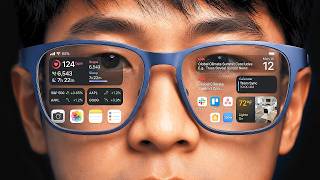
Augmented reality applications layer digital content onto a user’s view of the real world, creating an enhanced interactive experience. These applications range from simple filters on social media to sophisticated tools for industrial design and medical training, operating by interpreting the physical environment through a device’s camera and sensors, then rendering digital elements in context. The core innovation lies in blending the digital with the physical, rather than replacing it entirely as virtual reality does. This technology’s accessibility and deployment methods are rapidly evolving, impacting its adoption and potential across various sectors.
What Augmented Reality Apps Are and How They Function
Augmented reality (AR) apps are software programs that leverage a device’s camera, GPS, accelerometer, and other sensors to project virtual objects, information, or interactive elements into a user’s live view of the physical world. Unlike virtual reality, which creates fully immersive, simulated environments, AR supplements reality. The fundamental principle involves computer vision identifying surfaces and objects in the real world, tracking the device’s position and orientation, and then rendering 3D digital content that appears anchored within that environment.
Historically, accessing these experiences meant downloading a native application from a platform-specific app store, such as Google Play or Apple’s App Store. These “app-based AR” solutions offer deep integration with device hardware, superior graphics performance, and persistent data storage, making them suitable for complex applications like high-fidelity gaming or professional design tools. They often utilize robust AR Software Development Kits (SDKs) like ARKit for iOS or ARCore for Android, which provide advanced capabilities for spatial mapping, object recognition, and light estimation. These capabilities enable rich, interactive, and often computationally intensive AR experiences.
The emergence of WebAR fundamentally alters this deployment model. WebAR delivers augmented reality experiences directly through a standard web browser, eliminating the requirement for a dedicated app download. This is made possible by web technologies such as WebGL for 3D rendering and the WebXR Device API, which allows web browsers to access AR capabilities of underlying hardware. Users can simply click a link, scan a QR code, or visit a webpage, and the AR experience loads instantly within their browser. This shift prioritizes instant access and broad reach over the deep hardware integration characteristic of native apps, lowering the barrier to entry for users and enabling far more spontaneous engagement. The immediate accessibility of WebAR transforms how AR content can be distributed and consumed, especially for temporary or marketing-focused campaigns.
The Operational Mechanics and Cost Realities
The operational mechanism of AR apps, whether native or web-based, hinges on a sophisticated interplay of hardware and software. Devices equipped with cameras capture the real-world view. Computer vision algorithms then analyze this visual data to understand the geometry of the environment, detect feature points, and track the device’s movement in real-time. This foundational layer allows digital content to be precisely anchored and oriented within the physical space. Modern AR capabilities also incorporate environmental understanding, estimating lighting conditions to ensure virtual objects appear naturally integrated. As AI models become more sophisticated, they can even interpret complex scenes, allowing for more context-aware AR overlays. This deep reliance on advanced processing highlights why tools for managing digital assets, like How Gemini AI Changes Google Drive for Intelligent File Management, are increasingly relevant for developers handling the vast datasets AR applications generate.
The “why it works that way” for AR is a blend of optical tracking, inertial measurement units (IMUs), and often AI-powered recognition. The device constantly localizes itself in space, creating a virtual map of its surroundings. The digital content is then rendered onto this map from the device’s perspective, creating the illusion of virtual objects existing in the real world. This process requires significant computational power, which native apps can more efficiently leverage due to direct access to device CPUs and GPUs.
Regarding costs, the picture is multifaceted. Developing native AR apps typically involves higher upfront costs due to the need for specialized development teams, platform-specific coding (iOS and Android), and rigorous testing. The distribution through app stores also carries associated fees and strict review processes. For users, native apps might be free but often include in-app purchases or subscriptions. WebAR, while potentially lowering development costs due to its reliance on web standards and cross-platform compatibility, still requires expertise in 3D web graphics and responsive design. Performance limitations on the web, such as constraints on model complexity and frame rates, mean developers must often optimize content more aggressively. For businesses, the “cost” of user friction – or rather, the benefit of frictionless access – is a major factor driving WebAR adoption, especially in marketing where instant engagement is paramount. Understanding these tradeoffs is vital for any enterprise considering AR implementation. For creators, mastering tools to build and refine these experiences, potentially through efficient content generation, mirrors the broader demand for skills like Master Prompt Engineering in 29 Min for 2025 AI Productivity.
Common Misconceptions and Where Users Go Wrong
Despite the accelerating adoption of AR, several common misconceptions persist, often leading users and businesses to misunderstand its capabilities and limitations. A primary error is confusing augmented reality with virtual reality. While both are immersive technologies, AR layers digital information onto the real world, maintaining the user’s connection to their physical surroundings. VR, conversely, creates an entirely synthetic environment, disconnecting the user from reality. This distinction is fundamental to understanding appropriate use cases and user experiences.
Another significant area where people err is underestimating the friction associated with traditional app downloads. The video highlights this problem: many compelling AR experiences fail to reach a broad audience because users are reluctant to download a new app for a single interaction. This “app fatigue” is precisely what WebAR addresses by removing the download barrier, making AR instantly accessible. This changes the dynamics for marketing campaigns, educational modules, and quick interactive product views, as discussed in What Augmented Reality Means Today for Users.
Furthermore, users often have unrealistic expectations about the fidelity and persistence of AR experiences on current consumer hardware. While technology progresses rapidly, truly photorealistic, perfectly occluded, and persistently anchored digital objects are still challenging to achieve outside of controlled environments or with specialized, high-end devices. Glitches in tracking, inaccurate lighting estimations, and performance drops in complex scenes are still common, especially with less powerful smartphones or under suboptimal lighting conditions. These technical realities mean that not every digital asset can be rendered perfectly into the real world.
Finally, a common oversight is limiting AR’s potential solely to gaming or novelty filters. While these are popular applications, the true transformative power of AR lies in its utility across diverse sectors. From visualizing complex architectural designs on-site to overlaying instructional guides for field technicians, or even transforming how retail and finance operate with interactive product displays or data visualizations, AR offers profound practical benefits. The integration of AR into sectors like retail and finance parallels the broader impact of advanced technologies on established industries, akin to how Fintech AI Pressures Traditional Wealth Management. Understanding AR’s diverse applications is essential to appreciating its long-term societal and economic impact.
Where This Lands
Augmented reality apps represent a powerful technological shift, transforming how we interact with digital information in our physical world. The evolution from native, app-dependent AR to accessible WebAR marks a critical inflection point, fundamentally altering distribution and user engagement models. WebAR’s ability to bypass app stores and offer instant, browser-based experiences democratizes AR, making it a viable tool for widespread marketing, education, and utility applications. While native AR apps retain advantages in performance and hardware integration, WebAR prioritizes accessibility and reach. Organizations and individuals must understand these distinctions and the inherent trade-offs between deployment models, cost implications, and user expectations. The future of AR will likely involve a hybrid approach, with WebAR driving mass adoption for ephemeral content and simpler interactions, while native applications continue to deliver deep, immersive, and computationally demanding experiences. The key to successful AR implementation lies in matching the chosen technology to the specific use case, recognizing that friction in access remains a primary obstacle for widespread adoption.