Chemicals, finance, and logistics lead commercial quantum adoption
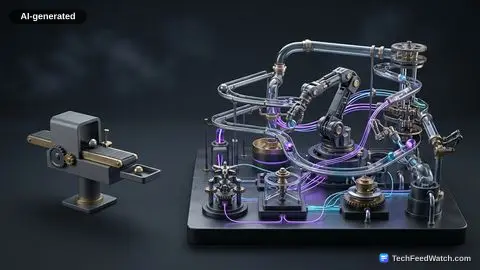
Major industries apply quantum algorithms (step-by-step problem-solving instructions) to practical tasks. They screen chemical compounds, balance investment portfolios, and route supply chain logistics. Companies turn to these machines when too many operational variables overwhelm standard data centers.
According to McKinsey & Company’s Quantum Technology Monitor report, quantum computing’s projected global economic value is between $1.3 trillion and $2.7 trillion by 2035. Adoption is led by the chemicals, life sciences, finance, and mobility industries.
The IBM Institute for Business Value’s research looked across 750 surveyed global companies. According to the IBM Institute for Business Value’s Quantum Readiness Index, enterprise investment reached an average of 11% of organizational R&D budgets in 2025. That figure is up from 7% in 2023.
Commercial enterprises evaluate practical use cases across several primary sectors:
- Chemical synthesis: Modeling molecular bonds to develop industrial catalysts and fertilizers without physical lab testing.
- Pharmaceutical research: Simulating how drug molecules bind to target proteins to predict safety and efficacy early.
- Financial risk modeling: Calculating market dependencies across thousands of fluctuating assets. This includes finding arbitrage opportunities (chances to profit from price differences for the same asset in different markets).
- Logistics management: Optimizing fleet delivery routes and freight schedules across complex global transit hubs.
According to Microsoft Azure, qubits tackle specialized challenges like molecular modeling, financial risk analysis, and route optimization. Simulating a chemical compound with dozens of interacting electrons requires classical memory that exceeds physical reality.
Will quantum computers break modern encryption standards?
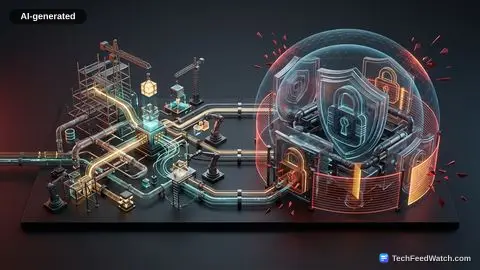
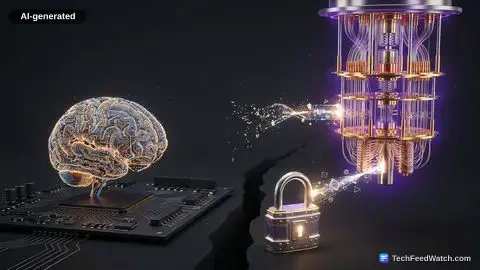
Future quantum systems will break standard public-key encryption (digital security systems that protect online communications). This will happen unless organizations migrate to quantum-resistant mathematical defenses. Modern digital communications rely on mathematical problems that take classical computers thousands of years to crack.
According to the National Institute of Standards and Technology (NIST), cryptographically relevant quantum computers (machines powerful enough to crack modern cybersecurity) will eventually emerge. Running Shor’s algorithm (a quantum method for quickly factoring large numbers), these machines will possess powerful computational capability.
They will break widely used public-key encryption schemes (digital security systems that protect online communications). These vulnerable protocols include RSA (an encryption standard based on factoring large numbers). They also include elliptic-curve cryptography (a mathematical security method used to protect digital transactions).
Online banking, private messages, and digital signature verifications depend on these public-key standards. If an adversary uses an advanced quantum processor, the underlying mathematics can be solved quickly. This threat has prompted a coordinated overhaul of global cybersecurity standards.
According to the National Institute of Standards and Technology (NIST), the agency officially released three standards on August 13, 2024. Designated FIPS 203, FIPS 204, and FIPS 205, they protect digital infrastructure against decryption by future quantum systems.
This security challenge matters right now because adversaries can intercept encrypted communications today and archive them. They can hold that protected data until capable hardware emerges years down the road. Upgrading web browsers, enterprise networks, and operating systems to post-quantum algorithms eliminates this long-term exposure.
Having been hacked myself on Facebook and dealing with issues on my Gmail, I know firsthand how vital cybersecurity really is. Attackers are remarkably skilled today, and quantum machines will be stronger than many people think once companies like IBM and Microsoft roll them out properly. When it comes to protecting digital systems, it is always better to be safe than sorry.
Hardware noise and error correction hold quantum machines back
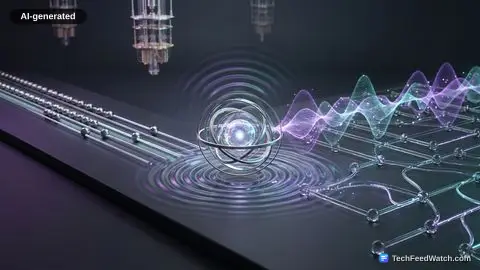
Physical environmental disturbances introduce computational noise (disturbances that cause calculation errors). This noise prevents modern quantum processors from sustaining reliable calculations.
Today’s hardware is fragile. Qubits easily lose their quantum states when exposed to heat or electromagnetic interference.
According to National Institute of Standards and Technology (NIST) physicist Scott Glancy, early quantum computers have calculated the energy states of small molecules. They have also simulated interacting atoms. However, none of these demonstrations have yet proven commercially useful beyond classical capabilities.
To achieve commercial utility, machines require fault tolerance through quantum error correction. Fault tolerance combines multiple physical qubits into a single stable logical qubit (a reliable, corrected qubit). This combined qubit detects and corrects errors during execution.
According to IBM’s Quantum Roadmap, the company is engineering IBM Quantum Starling for deployment in 2029 as a modular fault-tolerant computer. The system is intended to execute 100 million quantum gates (elementary operations that manipulate quantum information). It will run these across 200 logical qubits (stable, error-corrected quantum bits).
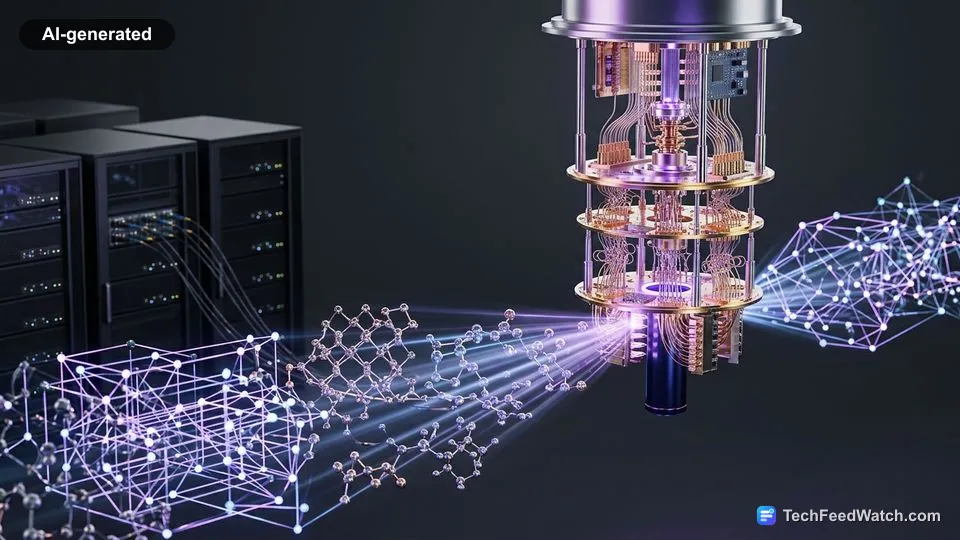
Current systems must run inside specialized dilution refrigerators (cooling devices) cooled down close to absolute zero. This extreme operational requirement keeps equipment costs high. It also limits physical deployment to specialized research facilities and cloud server farms.
New Scientist explores how quantum computers threaten modern encryption
A documentary report by New Scientist examines the accelerating timeline toward Q-Day. This is the theoretical date when quantum machines crack public-key encryption.
The production visits commercial labs to investigate decryption requirements. These requirements have dropped faster than analysts originally predicted.
New Scientist explains that RSA encryption relies on the mathematical difficulty of factoring large numbers. MIT mathematician Peter Shor proposed an algorithm in 1994. This algorithm allows quantum processors to find these prime factors efficiently.
At the Quantum Motion laboratory in London, New Scientist inspects the dilution refrigerators required to operate quantum chips. The video notes that hardware components must run at low energy scales near absolute zero to suppress environmental noise.
New Scientist highlights how rapidly algorithmic requirements have declined over recent years:
- In 2019, the best estimate to crack RSA-2048 encryption required 20 million physical qubits.
- According to researcher Craig Gidney, by 2025, optimized models lowered that estimate to under 1 million qubits.
- In March 2026, a research team claimed an architecture that could break state-of-the-art encryption with 10,000 qubits.
- Google stated that an advanced machine with 500,000 qubits could compromise cryptocurrency transactions in as little as 9 minutes.
New Scientist notes that the largest physical array assembled contains 6,100 qubits. However, it has not yet run full computations.
The outlet also highlights Google Quantum AI’s Willow architecture. This architecture demonstrated that expanding qubit counts can reduce overall system error rates.
Worldwide capital directed toward the quantum field is expanding. According to the Quantum Economic Development Consortium, market revenue in the quantum computing industry is forecasted to rise from $1.07 billion in 2024 to roughly $2.2 billion by 2027.
Google has urged industry migration to post-quantum cryptography by 2029. Meanwhile, the United States federal government aims to complete its transition by 2035.
Try the numbers yourself in our Quantum Speed-up Calculator.