Input bottlenecks and barren plateaus stall practical quantum AI
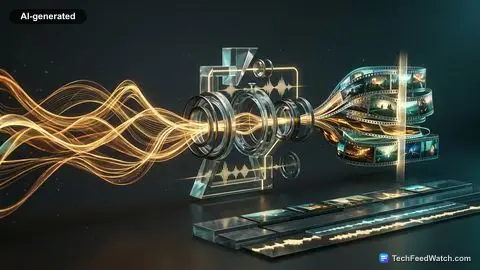
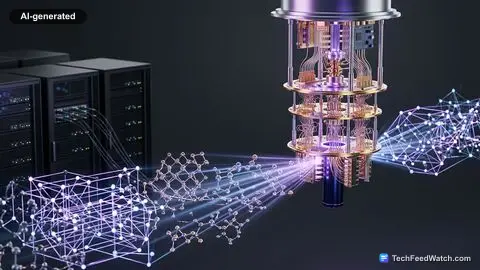
Translating classical records into quantum states introduces massive computational latency before any calculation begins.
According to an analysis published by IEEE Xplore on data-centric quantum machine learning, the “input problem”—the time and circuit depth required to encode large classical datasets into quantum states without scalable quantum RAM (QRAM)—often negates theoretical quantum speedups on real-world enterprise data.
Transferring gigabytes of images or text into fragile qubit states takes longer than simply running the model on a standard classical server. Without fault-tolerant QRAM architectures, feeding large training sets into a quantum processor remains impractical.
In Nature Reviews Physics, M. Cerezo and colleagues explain that quantum neural networks frequently suffer from the “barren plateau” phenomenon, in which optimization gradients vanish exponentially as qubit counts and circuit depth increase, making deep models untrainable.
As engineers add more qubits to improve expressiveness, the mathematical field flattens completely. Classical optimization algorithms cannot detect which direction parameters should move, leaving deep quantum neural networks stalled.
Where will quantum AI actually work first?
Quantum machine learning will deliver its earliest verifiable results on problems involving quantum-mechanical data. Datasets derived directly from nature bypass the classical encoding bottleneck entirely.
According to a comprehensive research survey published on arXiv in June 2025, verifiable quantum advantage in machine learning is far more probable when analyzing quantum-native data (such as molecular quantum states and physical sensor outputs) than when processing classical text or image data.
Systems analyzing chemical bonds or crystalline structures do not need complex classical-to-quantum translation. The quantum circuit processes natural state vectors directly, eliminating the overhead that stalls commercial business applications.
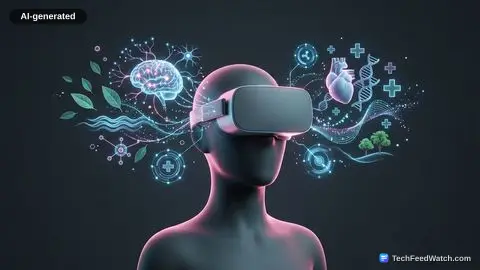
Healthcare and materials research represent the initial proving grounds. According to the Cleveland Clinic Lerner Research Institute in July 2024, quantum computing will not outright replace classical AI architectures, but rather operate in hybrid classical-quantum configurations where quantum processors are deployed specifically for intractable sub-problems in molecular biology and drug discovery.
A classical system manages patient databases and training pipelines, while an integrated quantum co-processor calculates molecular binding energies. Those exploring deployment viability can examine is practical quantum computing achievable in current operational environments.
Classical AI actively accelerates quantum hardware design
While quantum chips face hurdles running machine learning, modern neural networks actively resolve engineering problems in quantum physics laboratories.
Building stable quantum processors requires solving several key hardware challenges:
- Configuring complex gate layouts
- Compensating for physical noise
- Verifying circuit outputs
Human engineers face millions of parameter variations when tuning pulse shapes or placing gates to prevent cross-talk. Machine learning models identify efficient configurations far faster than traditional calibration scripts.
According to Anthropic research published in October 2026, AI is actively helping quantum computing progress faster by using the Claude model in closed-loop systems to autonomously redesign quantum circuits and verify implementations with Lean proofs. This feedback loop allows classical models to streamline the hardware required for future quantum systems.
Half-True Universe explains why quantum AI won’t become Skynet
In a dedicated analysis of emerging computing narratives, educational channel Half-True Universe examines media claims that merging quantum processors with neural networks creates an uncontrollable superintelligence.
Half-True Universe observes that commentators frequently invoke images of “Skynet” to generate sensational headlines. “But in physical reality, there is absolutely no credible mechanism right now that connects quantum machine learning to human extinction,” the channel explains. Real quantum devices function like specialized computational tools rather than autonomous entities.
The channel emphasizes that despite “over a decade” of dedicated research, there is “absolutely zero demonstrated quantum advantage on real-world datasets, like images, text, or customer records.”
Existing trials merely use mixed architectures in which an isolated quantum loop executes a minor task while ordinary processors shoulder the principal computation. Classical algorithms repeatedly match these designs via dequantization, which Half-True Universe views as healthy scientific competition constantly adjusting where true quantum gains might exist.
Additionally, Half-True Universe points out that although roughly two-fifths of surveyed machine learning researchers attach higher than a one-in-ten probability to catastrophic outcomes, this existential discussion focuses entirely on conventional computing models. That dialogue reflects public statements signed in 2023 by researchers like Geoffrey Hinton, alongside opposing perspectives from organizations like Brookings.
The channel concludes that existential risk arguments require “absolutely zero quantum computing involvement.” The immediate quantum concern instead centers on cryptography, where NIST’s target to phase out legacy RSA standards by 2030 confronts potential harvesting attacks intended for decryption in future decades.
Try the numbers yourself in our Quantum Speed-up Calculator.