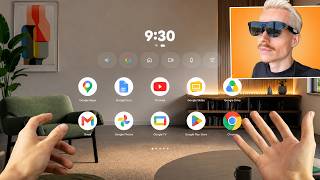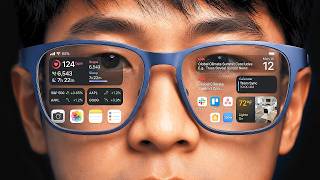
Augmented reality tools are the hardware, software, and platforms that enable the overlay of digital information onto the real world, creating interactive, blended experiences. These tools allow users to perceive virtual objects and data as if they exist within their physical environment, enriching perception without replacing it. From specialized smartglasses to everyday smartphones, AR technology extends our reality by integrating computer-generated enhancements.
The core functionality of augmented reality relies on sophisticated sensor fusion and rendering capabilities. Devices capture real-world imagery and environmental data—such as depth, spatial anchors, and user position—using cameras, lidar, accelerometers, and GPS. This data allows the AR system to precisely map the physical space and then accurately render virtual content with correct perspective, lighting, and occlusion, making digital objects appear organically blended. This blend transforms flat data into tangible, spatial representations, offering new ways to interpret complex information. Artists, for instance, leverage these capabilities to reveal unseen scientific phenomena or create immersive narratives that unfold within real-world settings, demonstrating What Augmented Reality Means Today for Users.
Developing and deploying augmented reality experiences involves a range of costs. On the accessible end, mobile AR SDKs like Apple’s ARKit and Google’s ARCore are often free, allowing developers to create applications for a vast user base with existing smartphones. However, specialized AR hardware, such as smartglasses designed for enterprise or specific consumer niches, carries higher price tags, impacting both development and deployment budgets. Custom content creation, particularly for highly interactive or visually rich experiences, demands significant investment in skilled designers, 3D artists, and developers, often requiring expertise in areas like Master Prompt Engineering in 29 Min for 2025 AI Productivity for AI-driven content generation.
A common misstep is equating augmented reality solely with virtual reality. While both are immersive technologies, AR enhances the real world with digital overlays, whereas VR immerses users entirely in a simulated environment. Another frequent oversight involves underestimating the value of spatial data. AR thrives on understanding the physical context, translating abstract datasets into interactive 3D models placed directly in a workspace or natural environment. This capability moves AR beyond entertainment, making it a powerful utility for fields from education to manufacturing. The perception that AR is still a distant future technology is also incorrect; it has matured significantly, with practical applications already transforming industries and daily interactions, often leveraging AI to manage and present complex spatial information more intelligently, much like How Gemini AI Changes Google Drive for Intelligent File Management. Creators across disciplines are driving this evolution, pushing the boundaries of what these tools can achieve.
The Bottom Line
Augmented reality tools are rapidly evolving, shifting from experimental projects to tangible solutions that redefine interaction with digital content. They empower a diverse group of creators, from immersive artists to industrial engineers, to build applications that augment human perception and capabilities. The true impact lies in AR’s capacity to make invisible information visible and static data dynamic, transforming how we learn, work, and engage with the world around us. As hardware becomes more refined and development platforms more intuitive, AR’s integration into our daily lives will only deepen, offering profound implications for everything from personal productivity to how businesses derive insights, mirroring transformations seen in areas like Fintech AI Pressures Traditional Wealth Management.