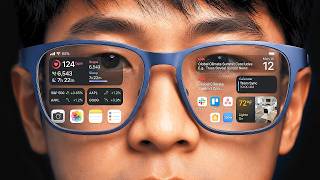
Augmented Reality (AR) fundamentally reshapes the educational experience by projecting digital information, interactive models, and simulated environments directly into the physical classroom. This technology allows educators to transform abstract concepts into tangible, explorable experiences, effectively answering the question of how to use augmented reality in classroom settings by making learning more engaging and intuitive.
Augmented reality (AR) integrates digital content with a user’s real-world environment in real-time, creating an interactive blend of both. Unlike virtual reality (VR), which fully immerses users in a simulated world, AR layers virtual elements onto existing reality through devices like smartphones, tablets, or specialized smart glasses. This capability enables students to engage with three-dimensional models of human anatomy, explore historical sites as if they were present, or conduct virtual science experiments right on their desks. The technology operates by leveraging device cameras to capture the physical environment, then using computer vision to track surfaces and objects, allowing digital overlays to appear fixed in space and interact realistically with the surroundings. This principle of real-time interaction and contextual information delivery is what makes AR a powerful tool for visual learners and for subjects requiring spatial understanding.
Integrating Augmented Reality Into Classroom Learning
The practical application of AR in education spans a wide range of subjects and learning objectives. In science classrooms, for instance, AR applications can project a detailed 3D heart onto a textbook page, allowing students to rotate, zoom, and even “dissect” it virtually. This moves beyond static diagrams, offering a dynamic and interactive understanding of complex systems. Similarly, geography lessons can come alive as students hold a tablet over a map and see topographical features rise in 3D, or ancient civilizations appear superimposed on modern landscapes. History classes might use AR to place virtual artifacts or historical figures within the classroom, providing a direct, immersive connection to the past. These applications demonstrate how AR not only enhances visual learning but also fosters curiosity and active participation.
Beyond visualization, AR facilitates experiential learning. Medical students can practice complex surgical procedures on virtual organs, engineers can overlay blueprints onto real-world structures to visualize construction phases, and art students can design virtual sculptures that appear in their physical studio. These scenarios provide opportunities for hands-on practice without the logistical or cost barriers of physical models or real-world simulations. The development of such rich, interactive content often benefits from modern AI tools, which can assist in generating models or even tailoring experiences. Learning how to effectively Master Prompt Engineering in 29 Min for 2025 AI Productivity can empower educators or content creators to rapidly develop sophisticated AR assets, further expanding its potential.
The Costs and Challenges of Augmented Reality Adoption
While the pedagogical advantages of augmented reality are evident, its widespread adoption in educational settings faces several practical hurdles related to cost, infrastructure, and content development. The initial investment in AR-compatible devices, whether tablets, smartphones, or more advanced smart glasses, can be substantial for school districts. Although many students already possess smartphones, relying solely on personal devices introduces equity issues and management complexities. For schools aiming for a uniform experience, purchasing and maintaining a fleet of devices is a significant budgetary commitment. Furthermore, robust Wi-Fi infrastructure is essential to support the data-intensive nature of AR applications, ensuring smooth, lag-free experiences for all users. These infrastructure costs often go overlooked when schools consider the initial hardware investment.
Another major challenge lies in the availability and quality of educational AR content. Generic AR apps may offer a “wow” factor, but truly effective integration demands curriculum-aligned applications that support specific learning objectives. Developing such high-quality, pedagogically sound AR experiences requires expertise in instructional design, 3D modeling, and software development, which can be expensive and time-consuming. Schools often mistakenly assume that simply providing AR devices will automatically translate into improved learning outcomes. Without carefully curated content and clear integration strategies, AR can become a mere novelty rather than a transformative educational tool. Ensuring that digital assets are securely managed and accessible is also paramount, a challenge that robust solutions like How Gemini AI Changes Google Drive for Intelligent File Management might address, particularly as AR content libraries grow. Protecting student data and network integrity when using school-issued or personal devices for AR also requires stringent security protocols, aligning with principles often found in Zero Trust Security Shrinks Enterprise Network Attack Surfaces models.
Moreover, effective teacher training is indispensable. Educators need professional development not just in operating AR technology, but in integrating it thoughtfully into lesson plans, managing classroom dynamics during AR activities, and assessing learning outcomes derived from these new experiences. The promise of augmented reality, dating back to concepts explored when Why Was Augmented Reality Invented to Change How We See the World? was first being conceived, hinges on more than just the technology itself; it depends on a holistic approach to its implementation within the existing educational ecosystem.
Where This Lands
Augmented reality represents a compelling frontier for educational innovation, offering unparalleled opportunities to make learning more interactive, engaging, and deeply contextual. It shifts classrooms from passive reception to active exploration, enabling students to grasp complex ideas through direct, immersive experiences. However, the path to widespread and effective AR integration is not without its obstacles. Schools must move beyond the allure of cutting-edge technology and instead focus on strategic planning, significant investment in both infrastructure and high-quality educational content, and comprehensive professional development for educators. When implemented thoughtfully, with a clear focus on pedagogical goals rather than merely technological novelty, AR can indeed transform the classroom into a dynamic space where digital information and physical reality converge to create profound learning opportunities. It is a powerful tool, not a panacea, requiring judicious application to fulfill its considerable promise.