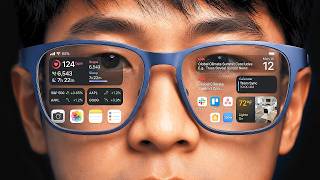
Augmented reality applications overlay digital information onto the physical world, creating an enhanced view of reality. These applications use a device’s camera and sensors to detect real-world surroundings and project virtual objects, data, or interactive experiences directly into the user’s field of vision. This capability offers innovative ways for individuals and businesses to interact with their environment, offering context-aware information and dynamic digital content where it is most relevant.
What It Is
Augmented reality (AR) supplements the real world with computer-generated enhancements, unlike virtual reality (VR), which creates an entirely simulated environment. AR maintains the user’s connection to the physical world while enriching it with digital content. This digital overlay can manifest as 3D models, text, videos, or animations, appearing as if they are physically present in the user’s immediate surroundings. The core idea is to merge the virtual and real seamlessly, providing real-time interactive experiences that leverage both worlds.
The technology behind AR relies on devices that can perceive and process the real world. Smartphones and tablets are common platforms for AR, using their cameras to capture the environment. Dedicated AR headsets, such as smart glasses, offer a more immersive and hands-free experience, projecting digital images directly onto transparent lenses. The goal is always to enhance the user’s current perception, adding layers of information or interaction that would otherwise be unavailable. This distinction means AR does not isolate users from their surroundings but rather gives them a “superpower” to see beyond the immediate physical limitations, offering new perspectives on objects, places, and data.
How It Works
AR functions by combining hardware and software components to perceive the real world, process digital content, and display it in a contextually relevant manner. At its foundation, AR requires a camera to capture the physical environment. This camera feed is then analyzed by the device’s processing unit, which often includes specialized chips for computer vision and artificial intelligence tasks. Sensors, such as accelerometers, gyroscopes, and depth sensors (like LiDAR), help the device understand its position, orientation, and the geometry of the surrounding space. This spatial awareness is crucial for accurately anchoring virtual objects to real-world locations.
Software platforms, such as Apple’s ARKit and Google’s ARCore, provide developers with the tools to build AR experiences. These frameworks handle complex tasks like motion tracking, environmental understanding (identifying surfaces like floors, walls, and tables), and light estimation (adjusting digital objects to match real-world lighting conditions). Developers often use game engines like Unity in conjunction with these AR-specific packages, such as AR Foundation, to construct the digital content and logic for their applications. This allows for the creation of interactive 3D assets, animations, and user interfaces that respond to real-world movements and user input.
Once the environment is mapped, the AR application renders 3D models or other digital elements. These virtual objects are then displayed on the device’s screen (or directly into the user’s field of view for smart glasses), precisely overlaid onto the live camera feed. For instance, an application might detect a flat surface and allow a user to place a virtual furniture item onto it, viewing how it would look in their room. Interaction often occurs via touch gestures on a screen, or through specialized controllers for more advanced AR devices. The processing power required for real-time scene analysis and rendering often benefits from advanced Fintech AI Pressures Traditional Wealth Management techniques that optimize performance and visual fidelity.
What Are Augmented Reality Applications?
Augmented reality applications span a diverse array of industries, transforming how people learn, work, play, and interact with products. One prominent application area is gaming and entertainment. Users can overlay digital characters onto their surroundings, making their living room a virtual battleground or their local park a fantastical habitat. This creates immersive and interactive experiences, moving gaming beyond traditional screens.
In retail, AR applications allow customers to virtually “try on” clothes, place furniture in their homes before purchase, or visualize how makeup would look on their face. This reduces buyer’s remorse and enhances the online shopping experience. For education, AR can bring textbooks to life, offering interactive 3D models of historical artifacts, anatomical structures, or complex machinery, providing students with a deeper understanding of subjects. Similarly, in healthcare, AR assists surgeons with overlaying patient data during operations, helps medical students visualize organs in 3D, and aids nurses in locating veins for injections.
Industrial and manufacturing sectors benefit significantly from AR. Maintenance technicians use AR glasses to overlay digital instructions or schematics directly onto equipment, guiding them through complex repair processes without needing a manual. This can reduce errors and speed up tasks. Architects and construction workers employ AR to visualize building designs on a construction site, ensuring accurate placement and identifying potential issues early. Navigation applications use AR to overlay directions, points of interest, or real-time traffic information onto the live view of the street, making it easier to find destinations. Even How Gemini AI Changes Google Drive for Intelligent File Management for intelligent file management can be seen as an extension of AI-driven augmentation, though not strictly visual AR, by enhancing data access and contextual understanding.
Who It’s For
Augmented reality is for anyone seeking to enhance their interaction with the real world, whether for practical tasks, entertainment, or critical decision-making. Consumers find value in AR for games, social media filters, virtual try-ons, and home décor planning. Businesses, across almost every sector, leverage AR for operational efficiency, customer engagement, and product innovation. This includes field service technicians, manufacturing assembly line workers, logistics personnel, educators, and medical professionals.
Small businesses can use readily available smartphone AR tools to create interactive marketing campaigns or provide enriched product information. Large enterprises deploy custom AR solutions for training, remote assistance, and sophisticated design visualization. However, adopting AR comes with considerations. The upfront cost for developing custom AR applications can be substantial, requiring specialized skills in 3D modeling, programming, and user experience design. While basic AR experiences can be built with accessible tools, creating polished, industrial-grade applications demands significant investment. Hardware costs also vary, from utilizing existing smartphones to investing in specialized AR headsets that can cost thousands of dollars.
For businesses, the return on investment often comes from reduced errors, improved training outcomes, faster completion of tasks, and enhanced customer satisfaction. However, a common pitfall is overestimating current AR capabilities or underestimating implementation challenges. Not every problem finds its best solution in AR. Sometimes, simpler digital tools prove more effective. Moreover, concerns around data privacy and security rise when spatial data is collected and processed, necessitating robust frameworks like Zero Trust Security Shrinks Enterprise Network Attack Surfaces to manage access and protect sensitive information. Developers also benefit from AR, with a growing demand for skills in creating immersive experiences, often incorporating Master Prompt Engineering in 29 Min for 2025 AI Productivity for efficient content generation and system optimization.
The Bottom Line
Augmented reality offers a transformative way to bridge the digital and physical worlds, creating interactive experiences that enhance our perception and interaction with reality. It is not an immersion into an entirely virtual world but an enrichment of the existing one. However, it is essential to approach AR with realistic expectations. Current AR technology, particularly on mobile devices, can sometimes suffer from limitations in tracking accuracy, field of view, battery life, and processing power. Dedicated AR glasses are improving, yet they still face challenges related to size, cost, and social acceptance.
Many misconceptions arise from confusing AR with VR, or from expectations set by futuristic portrayals in science fiction. AR is not a replacement for physical interaction; it is a supplement. Its effectiveness hinges on context, utility, and a well-designed user experience that minimizes friction. The costs associated with AR range from free basic applications on smartphones to multi-million dollar enterprise deployments. Successful AR implementation requires careful planning, skilled development, and an understanding of the technology’s current capabilities and constraints. Despite these challenges, AR’s potential to revolutionize industries, education, and daily life remains immense, steadily evolving to become a more integrated and indispensable part of our technological future.