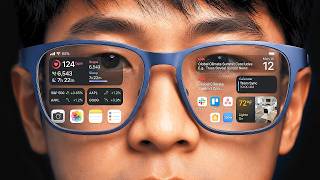
Augmented reality helps in education by overlaying digital information onto the real world, creating interactive and immersive learning experiences that enhance comprehension, engagement, and retention for students. This technology allows abstract concepts to become tangible, facilitates hands-on exploration without physical constraints, and supports personalized learning pathways.
The traditional classroom, with its whiteboards and textbooks, has long been the standard for learning, but it often struggles to convey complex, three-dimensional, or abstract concepts effectively. Students frequently grapple with visualizing intricate systems or understanding dynamic processes from static diagrams. Augmented reality (AR) offers a powerful counterpoint, promising a shift from passive observation to active, experiential learning. This technology is not merely a digital upgrade; it represents a fundamental change in how information is presented and absorbed, moving education toward a more interactive and deeply engaging model that prepares students for an increasingly digital world.
Key Takeaways
- AR minimizes cognitive load by presenting complex information spatially and contextually, allowing learners to interact directly with digital overlays rather than interpreting flat representations.
- It significantly boosts student engagement through gamified experiences and active participation, transforming abstract lessons into dynamic, memorable interactions that cater to diverse learning styles.
- The technology democratizes access to expensive or hazardous real-world simulations, providing virtual lab experiences and training scenarios that would otherwise be impractical or impossible.
- Effective AR integration requires substantial investment in content development, hardware, and teacher training, underscoring that its value hinges on pedagogical application, not just technological novelty.
Technical Breakdown
Augmented reality fundamentally differs from virtual reality (VR) by enhancing the real world rather than replacing it. While VR immerses users entirely in a simulated environment, AR superimposes digital content—images, videos, 3D models, and interactive data—onto a user’s view of their physical surroundings. This integration creates a blended reality where virtual objects appear to coexist with real ones.
The core of AR technology relies on several key components. Hardware, typically smartphones, tablets, or dedicated smart glasses, captures the real-world environment through cameras. Software then performs crucial tasks: spatial tracking, which identifies and tracks points in the environment to understand its geometry and motion; rendering, which generates the digital content and projects it onto the live camera feed; and interaction, which allows users to manipulate these virtual objects through touch, gaze, or gestures.
Different types of AR experiences cater to various educational needs. Marker-based AR uses specific visual markers (like QR codes or images) to trigger and position digital content. Markerless AR, more sophisticated, employs simultaneous localization and mapping (SLAM) algorithms to recognize surfaces and objects without predefined markers, offering greater flexibility. Location-based AR uses GPS and compass data to overlay information relevant to a user’s geographical position.
In an educational context, AR transforms abstract concepts into tangible, interactive models. For instance, a student studying human anatomy, as illustrated by the AI tutor interaction, can point a tablet at a textbook diagram, and a fully rendered, rotatable 3D model of the ear or skeletal system appears directly on the page, seemingly floating above it. This allows for detailed exploration of structures like the cochlear duct or ossicles, enabling students to virtually dissect, label, and manipulate these models. This capability extends to fields like physics, where students can visualize magnetic fields or molecular structures in 3D, or engineering, where complex machinery schematics can be overlaid onto physical components for assembly practice. The immediate, visual feedback provided by AR enhances the learning process by making abstract principles concrete and interactive.
How Augmented Reality Transforms Learning
The impact of augmented reality on learning extends across multiple dimensions, fundamentally altering how students engage with and comprehend educational material. One of its primary benefits lies in enhancing comprehension, especially for subjects traditionally difficult to visualize. Imagine a chemistry student manipulating a 3D model of a molecule, seeing its bonds and spatial arrangement from every angle, or an architecture student overlaying a digital building design onto a physical scale model. These immersive experiences allow learners to grasp complex spatial relationships and abstract concepts more intuitively than static diagrams or verbal descriptions ever could. The ability to interact with dynamic, context-aware information means students can explore, experiment, and learn at their own pace, making education less about memorization and more about discovery.
Beyond comprehension, AR significantly boosts student engagement. The interactive nature of AR applications transforms passive learning into an active process. When students can virtually “touch” a dinosaur skeleton in their classroom or assemble a virtual engine, their intrinsic motivation increases. This gamified approach to learning reduces boredom and fosters a deeper connection with the subject matter. For instance, an AR app could challenge students to identify parts of the human ear, providing immediate feedback, much like the AI tutor demonstrated, reinforcing learning through an engaging quiz format. This kind of active participation supports diverse learning styles, catering to visual, kinesthetic, and auditory learners simultaneously.
AR also plays a pivotal role in developing practical skills. In fields requiring hands-on training, such as medicine, engineering, or skilled trades, AR offers cost-effective and safe simulation environments. Medical students can practice complex surgical procedures on virtual organs, receiving real-time feedback without risk to patients. Engineering students can troubleshoot virtual machinery, gaining experience before working with expensive physical prototypes. This capability is particularly relevant for vocational training, where replicating real-world scenarios can be costly or dangerous.
Moreover, AR has the potential to expand learning accessibility and personalization. It can bring rich, interactive resources to students in remote areas, effectively bridging geographical gaps in educational access. For students with specific learning needs, AR can adapt content presentation, offering visual aids, auditory cues, or simplified interactive elements to support their learning styles. The integration of AI, as seen in systems that tailor learning pathways based on student performance, can further enhance this personalization. AI-driven tutors, potentially augmented by AR visuals, can offer individualized instruction and adapt to a student’s progress, much like the flexible, responsive feedback provided in the anatomical lesson. As AI models become more sophisticated, educators may find new ways to leverage tools that allow them to master prompt engineering in 29 min for 2025 AI productivity, potentially enabling them to create richer, more responsive AR learning content. This synergy between AI and AR can help address the growing pressure on traditional educational models to innovate, mirroring the broader industry changes seen when Fintech AI pressures traditional wealth management.
What Others Missed
While the promise of augmented reality in education is compelling, several critical factors often get overlooked or underestimated, presenting significant hurdles to widespread adoption and effective implementation. One of the most substantial challenges is cost. The initial investment in AR hardware—whether it’s school-wide sets of tablets, specialized smart glasses, or robust computing infrastructure—can be prohibitive for many institutions. Beyond hardware, the cost of developing high-quality, pedagogically sound AR content is substantial. Creating interactive 3D models, complex simulations, and engaging learning modules requires specialized skills in 3D design, programming, and instructional design, making it far more expensive than producing traditional digital learning materials.
Another major hurdle is content creation itself. The educational value of AR hinges entirely on the quality and relevance of its digital overlays. Simply rendering a 3D object is not enough; the content must be thoughtfully designed to support specific learning objectives, integrate seamlessly with curriculum, and be truly interactive and adaptive. The current availability of such high-quality, ready-to-use educational AR content remains limited, forcing many institutions to invest heavily in custom development or rely on generic, less effective applications. Managing this influx of complex digital assets, from 3D models to interactive lesson plans, also presents organizational challenges. Platforms like those leveraging How Gemini AI changes Google Drive for intelligent file management might alleviate some of this management burden, but the underlying content creation remains intricate.
Teacher training also represents a significant overlooked aspect. Even with advanced AR tools, their effectiveness is limited if educators are not proficient in their use and integration. Teachers need comprehensive training not only on operating the technology but also on pedagogical strategies for leveraging AR to enhance learning outcomes. This includes understanding how to troubleshoot technical issues, manage multiple devices in a classroom setting, and design lessons that maximize AR’s potential while avoiding potential distractions. Without adequate professional development, AR tools risk becoming underutilized or perceived as mere novelties.
Technical glitches and reliability issues are further concerns. Network connectivity problems, device compatibility, battery life, and tracking inaccuracies can disrupt lessons and frustrate both students and teachers. These technical imperfections can erode confidence in the technology and hinder its consistent application. Furthermore, the novelty effect of AR can wane; if the technology primarily offers entertainment rather than genuine instructional value, its long-term impact on learning may be minimal. Educators must ensure AR is used as a tool to solve specific learning problems, rather than as a mere flashy addition.
Finally, equity gaps can widen if AR adoption is not handled thoughtfully. Schools in underfunded districts may lack the resources to acquire AR technology, creating a digital divide that further disadvantages students without access to advanced learning tools. Privacy and data security considerations also come into play, especially when dealing with student data and network access. Educational institutions must adopt robust security protocols, potentially including approaches like How Zero Trust Security Verifies All Access to Prevent Cyberattacks, to protect sensitive information in these new digital learning environments. Failing to address these practical and ethical considerations risks undermining the very benefits AR promises to deliver.
The Verdict
Augmented reality in education is far from a passing trend; it represents a foundational shift in how information is delivered and absorbed. Its capacity to transform abstract concepts into interactive, spatial experiences addresses long-standing challenges in comprehension and engagement that traditional teaching methods often struggle with. However, classifying AR as a universal solution or a standalone educational panacea would be a mistake.
The future trajectory of AR in education depends critically on addressing the current limitations in cost, content development, and teacher preparedness. As hardware becomes more affordable and user-friendly, and as more sophisticated, curriculum-aligned content emerges, AR’s accessibility will expand. The integration of AI, particularly in personalizing learning pathways and generating dynamic content, will further solidify AR’s role. Yet, its success is not solely a technological play; it requires a thoughtful pedagogical approach. AR is most effective when it augments, rather than replaces, skilled teaching, acting as a powerful tool in a broader educational ecosystem. When applied strategically and supported by robust infrastructure and trained educators, augmented reality has the undeniable potential to fundamentally enhance learning outcomes and prepare students for a world increasingly defined by digital interaction.