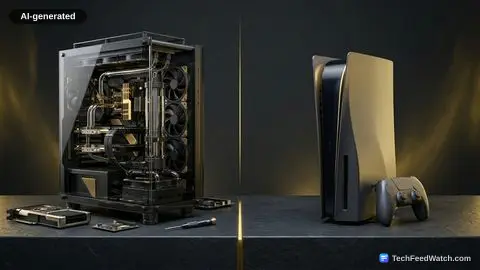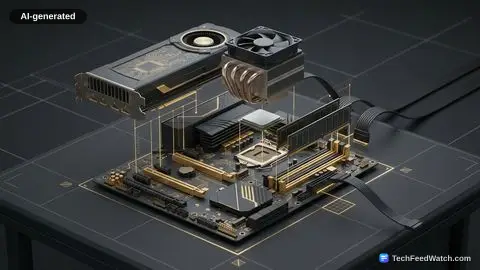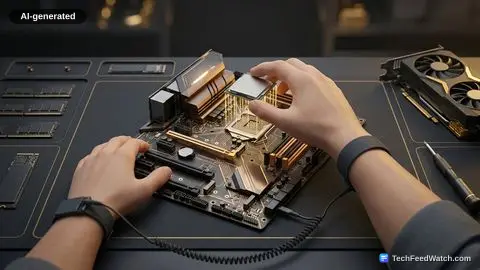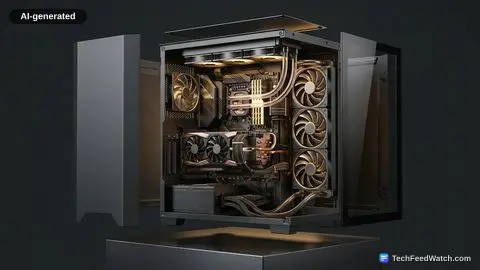
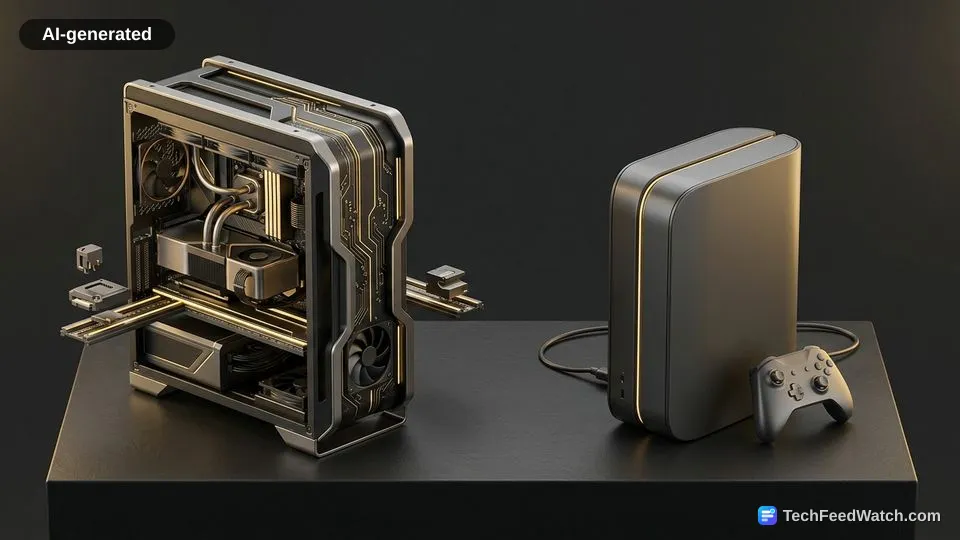
Is PC gaming cheaper than buying a console?
Consoles carry a much lower upfront purchase price, but personal computers frequently prove cheaper over a five-year ownership cycle due to platform fees and software pricing. A modern home console costs a fraction of an equivalent desktop gaming rig on day one.
Long-term ownership alters that initial cost calculation:
- Consoles require mandatory paid network passes to access peer-to-peer or server-hosted multiplayer matches.
- PC storefronts host aggressive seasonal sales, direct publisher competition, and third-party key distribution.
- Hardware failures in consoles typically require professional board repair or total system replacement, whereas desktop components swap out individually.
- PCs double as productivity workstations for school, creative applications, and remote office work.
A gaming PC requires a steeper initial outlay for the tower, monitor, keyboard, and mouse. Yet, the absence of network subscription fees and cheaper game software reduce the lifetime cost of ownership for active players.
Consoles lock multiplayer behind subscriptions while PC access remains free
PC gamers do not pay access fees to play games online, whereas console owners face recurring subscription charges to open up basic multiplayer functionality. Steam, Epic Games Store, and publisher launchers operate on open internet infrastructure, allowing players to connect without platform tax.
According to Sony Interactive Entertainment’s store documentation, online multiplayer functionality on PlayStation consoles requires a recurring paid PlayStation Plus subscription. Microsoft enforces similar paid service requirements for non-free-to-play multiplayer titles on Xbox hardware. Over an entire console cycle, these subscriptions add hundreds of dollars to the base price of the machine.
According to Sony Interactive Entertainment, the PlayStation 5 provides backward compatibility for the overwhelming majority of more than 4,000 PlayStation 4 titles, utilizing boosted frequencies for smoother frame rates. Microsoft Corporation confirms the Xbox Series X natively supports backward compatibility spanning four console generations, adding features like Quick Resume and automated HDR enhancement without developer patches.
Despite these console achievements, PCs maintain an open legacy library spanning four decades without requiring generational permission layers or repurchase schemes. When monitoring component thermals across legacy or modern workloads, understanding the difference between GPU temp and hotspot helps maintain long-term desktop stability.
Do gaming PCs require more maintenance than consoles?
Gaming PCs demand ongoing software management, operating system maintenance, and driver updates that consoles manage entirely behind the scenes. Consoles offer an appliance experience: you press the power button on the controller, download an automated update, and launch the game.
PC players manage their own software environment:
- Display driver updates from GPU manufacturers must be installed regularly to ensure game-specific stability.
- Background background tasks, antivirus utilities, and operating system processes compete for system resources.
- Graphical settings menus require manual adjustment of shadow quality, anti-aliasing, and resolution scaling to match target frame rates.
- Shader compilation can cause initial launch delays or transient micro-stutter during early gameplay sequences.
Consoles hide these variables behind universal presets tailored by the developer. If a game crashes on a console, the fault lies with the studio’s patch. If a game crashes on a PC, the user must diagnose potential driver conflicts, memory instability, or software corruption themselves.
Arinze Clifford tests an RTX 5060 Ti PC versus PS5 Pro
Content creator Arinze Clifford compared a mid-range desktop PC against Sony’s upgraded console hardware to evaluate real-world performance value. Specifically, Clifford tested his own PC build, powered by an AMD Ryzen 7 5700X CPU alongside an RTX 5060 Ti video card, directly against an $899 PS5 Pro.
Clifford found that performance parity swings based on engine design and resolution targets. In Forza Horizon 5, the desktop RTX 5060 Ti ran neck and neck with the console’s performance mode, matching or slightly edging it out.
In other titles, Clifford reported his PC gained a lead of 15% to 20%. When testing Cyberpunk 2077 with ray tracing enabled, the dedicated ray tracing architecture of the PS5 Pro pulled ahead, establishing a small, consistent edge over the desktop card.
Hardware bottlenecks quickly exposed the vulnerabilities of lower-tier PC configurations. Clifford noted that his RTX 5060 Ti card contained only 8 GB of video memory, which caused visible frame hitching during high-resolution asset streaming in dense game scenes.
Clifford pointed out that purchasing the 16 GB variant of the same GPU largely avoids these capacity constraints. System memory limits showed a similar pattern: while Clifford’s system ran 16 GB of system RAM, modern open-world gaming increasingly pushes 32 gigs as the standard for background multitasking.
Sony confirmed major upcoming single-player titles like Marvel’s Wolverine and Ghost of Yōtei will remain hardware exclusives rather than moving to PC. Rockstar Games scheduled GTA VI for launch on November 19th, 2026, while skipping the PC platform entirely at launch.
Clifford concluded that while a prebuilt desktop PC running between $900 to $1,200 offers modularity and free online play, the console eliminates memory configuration headaches and guarantees launch-day access to major tentpole releases.
Which gaming platform should you buy?
Select a gaming console if you want a straightforward living-room machine that prioritizes television play, exclusive first-party titles, and zero technical maintenance. Consoles deliver predictable performance across standard displays without requiring graphics driver updates, setting configurations, or hardware troubleshooting.
Choose a gaming PC if you prioritize higher frame rates, support for varied input devices like mouse and keyboard, and open access to modding communities. A desktop computer demands a higher upfront budget and routine software upkeep, but it eliminates multiplayer fees and handles productivity workloads beyond entertainment.