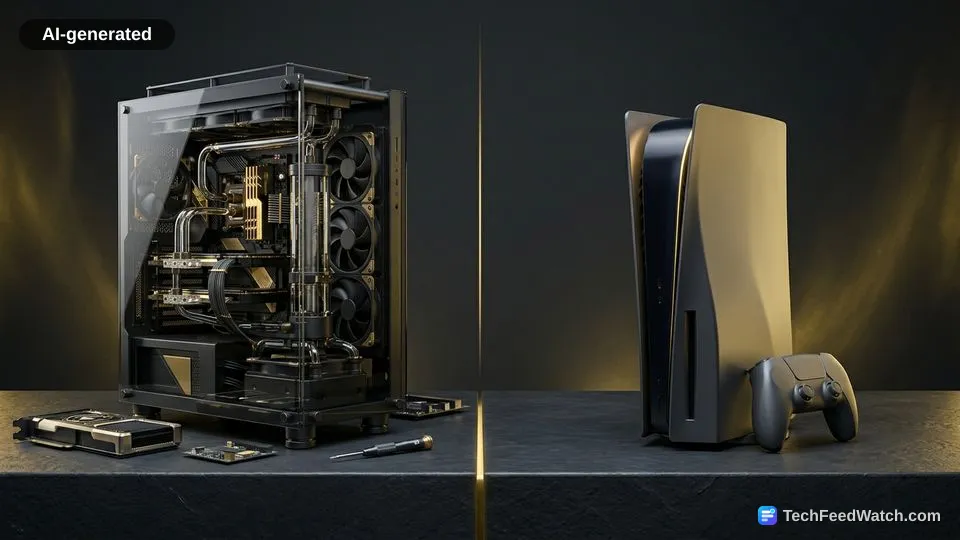
Matching PS5 performance requires spending nearly double on PC
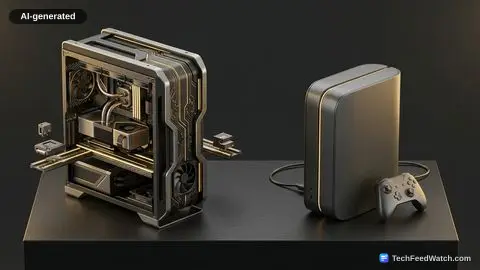
Building a desktop computer with identical gaming power costs far more than buying the retail console.
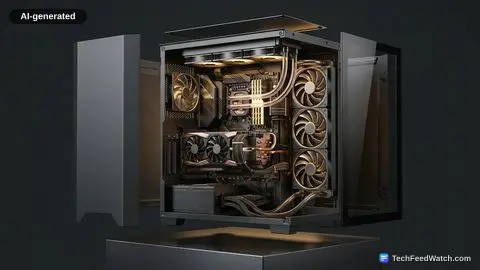
According to CNET, the base PlayStation 5 sells at retail starting around $449 to $499. Meanwhile, CNET reports that building or buying an equivalent desktop PC costs at least $800.
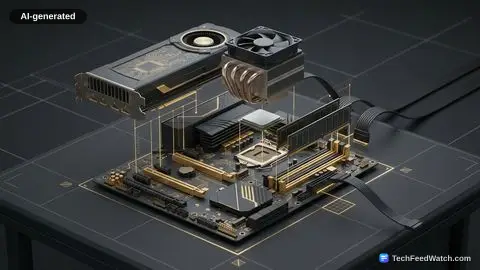
Upgraded hardware increases this pricing divide. According to PC Gamer, matching the PlayStation 5 Pro requires an AMD Radeon RX 7800 XT graphics card.
That card alone retailed for roughly $475. Adding a processor, power supply, memory, storage, and case pushes that PC total much higher.
The following hardware comparison uses figures published by Sony Interactive Entertainment, CNET, and Digital Foundry:
| Platform | Starting Retail Price | Target Graphics Baseline | Memory Configuration |
|---|---|---|---|
| PlayStation 5 | $449 to $499 (CNET) | 10.28 teraflops (Sony Interactive Entertainment) | 16 GB unified GDDR6 (Sony Interactive Entertainment) |
Putting together custom hardware is not something I have personal experience with, but the price difference is substantial. Spending twice as much only makes sense if you genuinely intend to put that extra computing power to use. Looking closely at the verified numbers helps you make a level-headed choice rather than making a rushed purchase.
What are the hidden long-term costs of console gaming?
Consoles cost less up front. However, ongoing network fees and closed digital stores create substantial long-term ownership expenses.
Online access represents the largest recurring expense on consoles. According to Sony Interactive Entertainment, PS5 multiplayer requires a PlayStation Plus Essential membership.
That membership is priced at $79.99 per year in the United States. Over five years, that requirement adds substantially to the console’s total expense.
According to Tom’s Guide, PC platforms like Steam and the Epic Games Store charge no multiplayer fees. PC owners also benefit from competing digital storefronts. These competing stores drive frequent price cuts on digital titles.
Long-term cost differences center on several factors:
- Online multiplayer subscriptions that add recurring yearly fees on consoles
- Competing digital storefronts on PC that lower software prices
- Physical disc purchases on console that preserve secondary resale value
- Modular part swaps on PC that prevent whole-system replacements
Consoles offer hassle-free gaming while PCs provide total flexibility
Consoles provide an easy living-room experience. Personal computers grant complete freedom, but they sometimes require technical troubleshooting.
Hardware consistency protects console gamers from software headaches. According to Digital Foundry, multiplatform PC games often suffer launch-day shader compilation stutter.
This stutter happens when a computer delays rendering while translating graphic code. Digital Foundry notes that consoles avoid this problem through fixed-target hardware optimization.
According to CNET, a PC provides modular upgradability. It also offers multipurpose utility for daily office tasks and creative work. Sony Interactive Entertainment has also released previous console exclusives on PC.
These games include God of War, Horizon Zero Dawn, Marvel’s Spider-Man, and Ghost of Tsushima. Understanding the difference between a gaming PC and console depends on your personal priorities.
Why this matters: if you only want to sit down and play games, a console saves setup time. If you need a desktop for homework or remote work, a gaming computer replaces two separate machines.
Video games are not part of my own daily routine, but having equipment that supports real productivity carries enormous value. A dedicated console is ideal if straightforward relaxation is all you want. When you also need a machine to research, build projects, and learn new skills, dealing with occasional computer maintenance feels well worth the effort.
Gabriel Pilo compares PS5 Pro upscaling and performance against PC
He found that software optimization often matters as much as raw hardware specifications.
In his testing, Gabriel Pilo demonstrated that the PS5 Pro targets 4K 60 frames per second. It reaches this target using Sony’s PSSR upscaling technology.
PSSR is an AI feature that sharpens lower-resolution images to fit higher-resolution screens. Pilo showed that games like Astro Bot achieve a solid 4K 60 output. Meanwhile, competitive shooters reach 120 frames per second.
However, he noted that open-world titles like Rise of the Ronin run differently.
Gabriel Pilo explained that he paid $650 for his PS5 Pro and $1400 for his personal computer. He calculated that rebuilding his custom PC today would cost $2,600.
Pilo noted that an entry-level console costs $600 while the PS5 Pro costs $900. Both prices land below a capable gaming rig at over $1,000.
He tested Bazzite, a gaming-focused Linux operating system. It boots directly into Steam Big Picture mode to mimic a console interface.
While convenient, Pilo explained that one software update broke his HDMI television connection entirely. For software savings, Pilo highlighted that console discs can be resold after completion.
In contrast, PC purchases remain locked to digital libraries. Pilo concluded: “If I was starting from scratch today, I definitely would be looking at getting a base PS5 Slim, not the Pro, and then using the savings of not going with a gaming PC to get an OLED TV, a disc drive for the PS5 Slim, and going through the used market to buy some games.”
How to choose between a gaming PC and PS5
Choose a PS5 if you have a strict budget under the $600 figure cited by Gabriel Pilo. It is ideal if you prefer simple couch gaming on a television.
Choose a gaming PC if you have more than the $800 baseline cited by CNET to spend. A PC works well if you want an open machine for productivity, modding, and uncapped frame rates. Check your existing display and your friend group’s chosen platform before buying hardware.