Essential Hardware, Infrastructure, and Administrative Setup for Classrooms
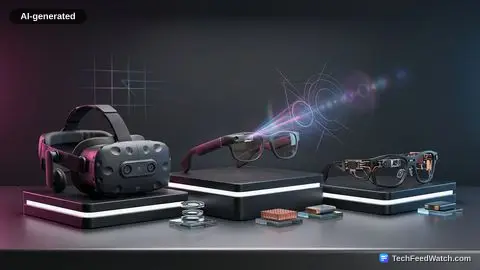
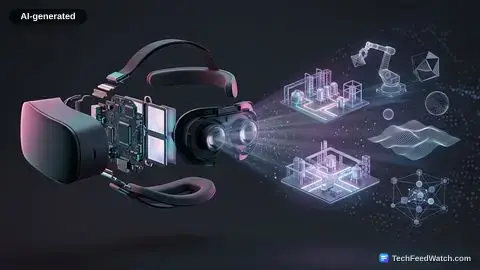
Deploying VR across a school district requires structured administrative planning and reliable hardware selection. Administrators must evaluate whether standalone mobile units or tethered PC headsets suit their physical spaces. Knowing whether virtual reality headsets balance visual clarity and bulk helps technology coordinators select manageable hardware for students.
IT departments must install high-throughput enterprise Wi-Fi networks capable of handling simultaneous multi-device streaming. Schools also need centralized mobile device management (MDM) software to push software updates, manage privacy settings, and lock down unauthorized app installations.
Teachers must designate clear guardian boundaries to prevent physical collisions when students interact with virtual spaces. Sanitation stations with ultraviolet cleaning cabinets or medical-grade wipes are mandatory between class periods.
VR Effectiveness in Student Retention and Academic Learning Gains
While spatial immersion can boost conceptual understanding, research published in Behavioral Sciences in 2025 indicates that cognitive load reductions hold only during declarative learning tasks rather than procedural ones.
According to a comparative study published in Behavioral Sciences in 2025 evaluating 64 college students, high-immersion VR headsets (HTC Vive Pro) produced large effect sizes in declarative and procedural knowledge gains over desktop monitor setups. That study noted extraneous cognitive load dropped significantly during declarative learning tasks.
However, immersive technology does not automatically outshine traditional teaching in every learning category. According to a meta-analysis published in the Journal of Medical Internet Research in September 2020 assessing 12 studies and 821 nursing students, VR yielded a statistically significant improvement in knowledge acquisition over control methods (standardized mean difference [SMD] = 0.58).
Yet that same meta-analysis demonstrated no significant advantage over traditional instruction in skill acquisition (SMD = 0.01), confidence, satisfaction, or performance time. Immersive tools assist memory and factual recall, but physical psychomotor fluency still demands real-world manual practice.
Managing Cybersickness, Cognitive Load, and Equipment Procurement Costs
Physiological side effects present a clear operational barrier for classroom teachers. Primary school students using Meta Quest 3 headsets over multiple weeks frequently experienced disorientation and blurred vision. Despite those symptoms, their overall intention to use VR for future academic learning remained high.
Disparities in physical comfort also affect student demographics differently. According to an Iowa State University study supported by the National Science Foundation in May 2023, female students experience VR-induced cybersickness—including dizziness, nausea, and headaches—at significantly higher rates than male students due to visual-motion mismatches and headset hardware fit disparities.
In engineering classrooms, tolerance rates vary. According to a study published in Human Behavior and Emerging Technologies in October 2026 assessing engineering students, participants reported symptoms of cybersickness during classroom VR sessions, yet the vast majority maintained a positive intention to continue using VR technologies for learning.
Hardware selection mitigates some of this physical strain. According to a study published in Simulation in Healthcare in July 2024 evaluating 34 participants using Meta Quest 2 and Meta Quest Pro headsets, cybersickness scores decreased on the Pro hardware due to improved display optics and precise interpupillary distance (IPD) adjustment mechanisms.
Assessing the best virtual reality goggles and why weight matters most is critical when buying sets for young learners.
Financial viability depends entirely on scale. The Heliyon September 2025 review confirmed that high hardware procurement costs and lack of teacher training remain the primary barriers to adoption.
According to a 2020 PwC study, VR training achieved cost parity with classroom training at 375 learners and with electronic e-learning at 1,950 learners, reducing costs by 52% compared to classroom training once scaled to 3,000 learners. Smaller schools face steep upfront unit costs before realizing those organizational efficiencies.
BioTech Whisperer Demonstrates VR in Medical Simulations and Training
BioTech Whisperer highlights how VR functions as a practical bridge between academic textbook theory and real-world clinical application. The creator notes that VR allows users to interact with “3D worlds using special equipment like headsets and gloves,” enabling direct engagement with digital simulations.
BioTech Whisperer presents clinical scenarios where trainees enter digital operating rooms to manipulate surgical instruments on virtual patients before operating on real individuals. The creator states: “This hands-on experience helps build confidence and competence before ever touching a real patient, ultimately improving patient safety and surgical outcomes.”
The presentation outlines diverse applied use cases across the healthcare curriculum:
- Emergency team drills simulating cardiac arrest, mass casualty scenarios, and trauma triage under pressure.
- Patient anatomy visualization tools that help individuals understand upcoming surgical interventions.
- Motor skill rehabilitation exercises using interactive gaming routines for post-stroke recovery.
- Virtual exposure therapy frameworks for phobia treatments and psychological stress management.
- Non-pharmacological distraction therapy for burn victims undergoing wound cleaning procedures.
BioTech Whisperer points out that remote platforms allow students in rural communities to access specialist training without extensive travel. However, the creator cautions that high hardware expenses, technical malfunctions, and motion sickness still hinder wide deployment.
Practical Guidelines for Launching a School VR Pilot
School administrators should avoid purchasing headsets in bulk without initial testing. A successful pilot begins with a single academic department, such as biology or mechanical engineering, where spatial 3D visualization solves an existing curricular challenge. Understanding the VR headsets difference between virtual reality and XR glasses ensures schools invest in hardware matching their specific interactive goals.
Institutions should establish short immersion sessions, limiting student headset exposure to 15-minute intervals to prevent visual fatigue and disorientation. Teachers need dedicated professional development sessions to master software controls before guiding students. By treating virtual reality as a targeted pedagogical supplement rather than a complete replacement for human instruction, schools maximize academic engagement while minimizing technical disruptions.