
Why Quantum Computing Is Important: Applications and Cryptographic Threats
The real-world importance of quantum hardware stems from its ability to solve specialized equations that overwhelm traditional supercomputers. In 2019, Google’s Sycamore quantum processor demonstrated this capability by executing a complex target calculation in just 200 seconds.
Benchmark estimates indicated that the world’s most powerful classical supercomputer would require approximately 10,000 years to finish the identical task. That dramatic speed gap highlights why research institutions and tech firms are heavily prioritizing quantum architecture.
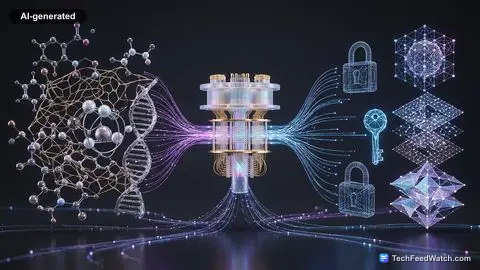
The practical applications span fields where molecular and mathematical systems are too complex for binary modeling. Because nature operates on subatomic principles, quantum processors serve as ideal tools for simulating physics and chemistry.
Researchers can use them to execute molecular modeling with high accuracy to
- Design life-saving drugs
- Engineer novel materials for super-efficient batteries
- Optimize complex financial systems
- Accelerate artificial intelligence development
For specific tasks like searching massive databases, algorithms like Grover’s provide quadratic speedups, while Shor’s algorithm redefines how systems factor large composite numbers.
However, that mathematical capability introduces severe security consequences for digital infrastructure. Modern encryption standards rely heavily on the extreme computational difficulty of factoring huge prime numbers. Using Shor’s algorithm, a sufficiently powerful quantum machine can solve these core equations in minutes, bypassing the primary defense protecting global banking networks, private messaging, and sensitive government archives.
This exposure has created an immediate security challenge known as the “harvest now, decrypt later” strategy. Adversaries can record and store massive volumes of encrypted traffic today, waiting for the day functional quantum hardware becomes available to open up the data.
As research from IT consulting and software development company SaM Solutions notes, the window to deploy quantum-resistant cryptographic standards is shrinking, driving international defense organizations to establish mandatory migration timelines. To understand the broader systemic risks to secure networks, explore Quantum Computing Threats Accelerate Encryption Breakdown.
The Reality of Scale: Noise, Decoherence, and the NISQ Era
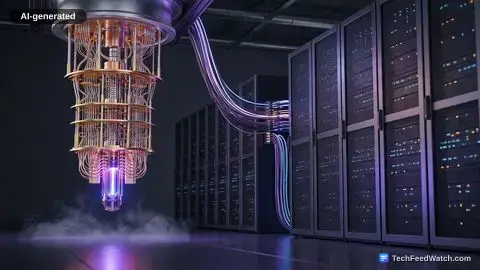
Despite dramatic performance benchmarks, building production-ready quantum computers remains one of the single hardest engineering challenges today. The central bottleneck stems from extreme physical fragility. Qubits require near-absolute-zero operating environments and complete isolation from external interference.
The slightest physical vibration, a tiny change in temperature, or a stray bit of noise breaks the delicate quantum state—a failure known as decoherence. When decoherence occurs, the stored quantum information dissolves into useless static.
To combat high error rates caused by noise, engineers must combine thousands of physical qubits to create a single fault-tolerant logical qubit. The scale required to crack modern public-key encryption illustrates this engineering gap clearly.
Breaking standard encryption requires an estimated 20 million noisy, imperfect qubits running in sync. Today’s leading quantum processors operate with only a few hundred to a couple thousand physical qubits, placing widespread code-breaking capabilities far in the future.
Industry experts define the current technical phase as the NISQ era, which stands for noisy intermediate-scale quantum. NISQ-era processors yield valuable experimental data but remain far too error-prone for unassisted, large-scale deployment.
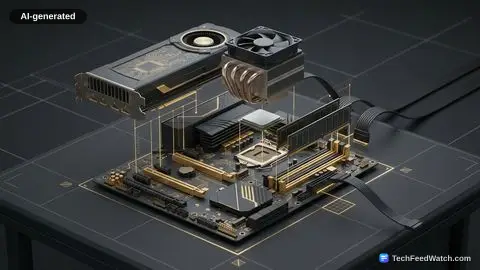
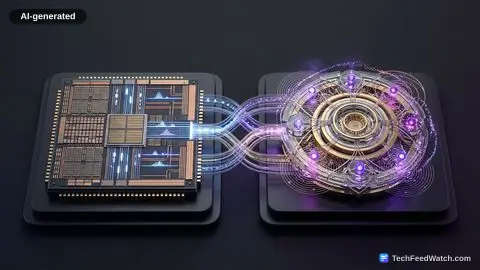
As detailed in What Are Current Limitations of Quantum Computing?, enterprise adoption currently relies on hybrid computing models. In these configurations, traditional supercomputers handle general logic processing and error correction while offloading specific subroutines to quantum co-processors.
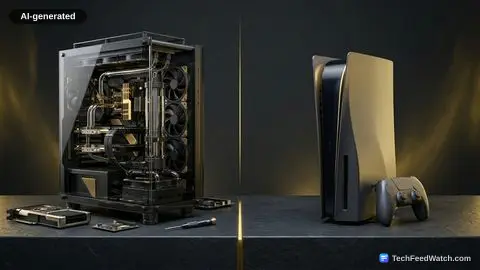
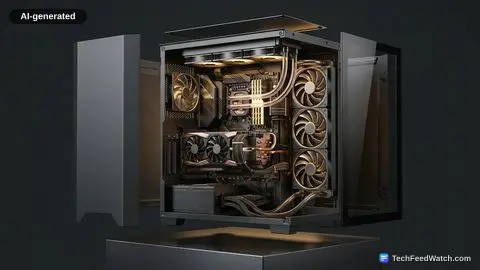
This technical constraint disproves another prevalent misconception: quantum systems will eventually replace consumer hardware. A quantum chip will not replace standard laptops, smartphones, or everyday desktop machines. Instead, quantum processors will remain specialized co-processors housed in centralized data centers or accessed through cloud infrastructure, reserved strictly for high-dimensional processing.
Why quantum computing will complement classical computers
Quantum computing is neither a universal replacement for everyday computers nor a distant theoretical experiment; it is a specialized architectural shift with immediate strategic consequences. The assumption that quantum hardware will render classical processors obsolete misinterprets how computing architectures evolve.
Standard binary chips will continue to run operating systems, consumer applications, and web infrastructure far more efficiently and cheaply than any cryogenic quantum array ever could.
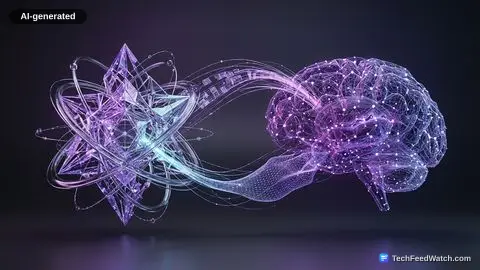
The true value of quantum computing lies in hybrid integration. By pairing traditional supercomputing infrastructure with NISQ-era co-processors, enterprises can address previously unsolvable problems in chemistry, logistics, and machine learning without waiting decades for fully fault-tolerant hardware.
At the same time, organizations that ignore the threat to current public-key encryption risk exposure to long-term data interception. The practical path forward requires auditing digital security architecture for post-quantum readiness today, while preparing data workflows to leverage hybrid quantum co-processors tomorrow.