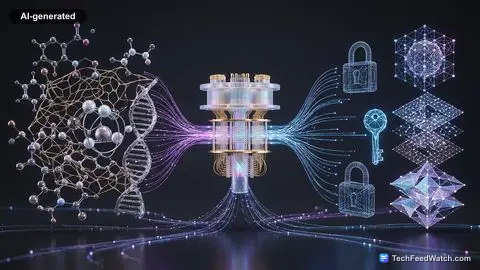

The Hardware Friction Behind Quantum Scaling
Turning linear equations into real-world machines has triggered a fierce race across physical sciences. There are currently nine major types of physical systems being aggressively developed across the tech sector.
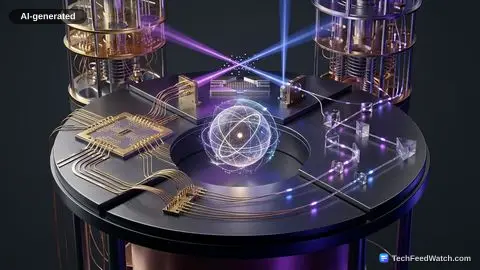
Research groups are building superconducting circuits, trapped ions, photonic processors, topological lattices, neutral atom arrays, silicon spin targets, quantum dots, diamond nitrogen-vacancy centers, and nuclear magnetic resonance substrates. Each medium represents a distinct bet on how to protect quantum data from environmental corruption.
Two approaches dominate commercial investment today: superconducting circuits and trapped ions. Industry heavyweights IBM and Google pour vast resources into superconducting architectures, prioritizing microsecond gate operations and lithographic scalability.
Meanwhile, trapped-ion specialists like IonQ and Honeywell pursue long coherence times and superior fidelity by suspending charged atomic ions in vacuum chambers using radiofrequency electromagnetic fields. Trapped ions achieve pristine isolation, but their slower gate operations and difficult optical interconnects challenge hardware designers.
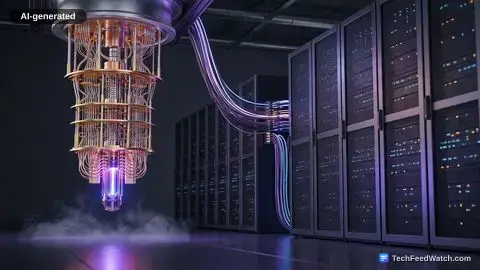
Superconducting platforms expose the severe physical price of quantum calculation. To suppress thermal energy that would knock circuits out of superposition, engineers cool superconducting loops made of niobium or aluminum inside massive dilution refrigerators down to minus 273 degrees Celsius.
At this temperature, near absolute zero, electrical resistance drops to zero, allowing macroscopic electrical circuits to act like artificial atoms. Yet even when isolated inside multi-stage cryostats, building a quantum computer is, at its core, a brutal battle against the fundamental laws of nature.
The primary adversary is decoherence, the uncontrolled decay of a quantum state caused by environmental interference. The universe continuously tries to observe the qubit. Stray photons, microscopic board vibrations, electromagnetic hums, and trace air particles all cause superposition to collapse prematurely.
Empirical research reveals the sheer speed of this degradation. As Quantum SystemHub points out, an academic investigation at Chalmers University of Technology underscores the extreme fragility of modern hardware. The Chalmers team conducted an exhaustive 65-hour study benchmarking superconducting transmon qubits under continuous laboratory operation.
Their findings highlight why hardware scaling remains fraught. The researchers recorded a mean energy relaxation time, designated as T1, of just 49 microseconds. That leaves a processing window of 49 millionths of a second before the artificial atom dumps its excitation energy into the cold substrate.
The study tracked erratic fluctuations in this metric throughout the 65-hour observation window, identifying near-resonant defects known as two-level systems within the chip materials. These microscopic material flaws switch back and forth spontaneously, generating low-frequency noise that pulls the transmon out of resonance and imposes a strict 0.8-millisecond limit on pure dephasing.
Because these material defects fluctuate unpredictably, systems require near-continuous recalibration just to execute basic gate sequences. You can’t just brute-force a quantum computer by cramming more qubits onto a chip without conquering this defect density. Understanding the mechanical friction documented in The Engineering Roadblocks to Scalable Qubits explains why raw qubit counts tell only a fraction of the commercial story.
Why Quantum Computing Needs Material Science Breakthroughs
Qubits are useful not as replacements for silicon microchips, but as specialized computational engines designed for problems that choke standard binary math.
The ability of a single qubit to capture the phase and amplitude of two complex numbers gives developers an entirely new toolkit for high-dimensional optimization, molecular discovery, and cryptographic research. The mathematical advantage is undeniable, mathematically proven, and demonstrable in controlled lab environments.
However, the industry must shed its habit of conflating mathematical potential with operational readiness. Transmon qubits that lose their phase within 49 microseconds cannot run production-grade quantum error correction without thousands of physical overhead qubits shielding each logical unit.
The current commercial push relies too heavily on announcing higher qubit headcounts while dodging the stubborn material science of two-level system defects and thermal phase noise.
Until semiconductor foundries and materials engineers solve the atomic defects that drive decoherence, quantum processors will remain high-maintenance laboratory curiosities rather than enterprise workhorses. The real breakthroughs over the next decade will not happen on whiteboards or in venture-funded software suites.
They will happen in cryostats and material fabrication labs, where physicists fight microsecond by microsecond to force fragile physical matter to obey the mathematics of the quantum world.