Virtual reality offers profound immersion, but interacting with these digital spaces has traditionally relied on physical controllers. Hand tracking technology provides a more natural and intuitive alternative. It aims to translate real-world hand movements directly into virtual actions, enhancing the sense of presence.
The Shift to Natural Interaction
The core promise of virtual reality lies in creating believable, interactive digital worlds. These worlds can serve many purposes. They include training doctors for surgery or preparing pilots for flight scenarios. To fully realize this potential, users need to interact with virtual environments naturally. This interaction should feel as natural as possible. Traditional VR systems often use handheld controllers. While these devices work, they introduce an artificial barrier between the user and the digital experience. Users must learn specific button layouts, joystick movements, or gesture commands. This learning curve can be a significant hurdle for new users. It can also break the sense of immersion for experienced ones.
The desire is to move beyond these physical intermediaries. People want to use their own hands directly within VR. This approach mirrors how humans interact with the physical world every day. It allows for more intuitive actions. This reduces cognitive load. It also makes the virtual experience feel more immediate. By removing the need for controllers, hand tracking aims to make virtual reality more accessible. It also makes it more engaging for a wider range of applications and users. This shift is seen as a key step in accelerating VR’s expansion into mainstream use.
How Camera-Based Hand Tracking Works
At the heart of modern hand tracking is a sophisticated learning-based algorithm. This algorithm works in conjunction with a head-mounted camera, typically integrated into the VR headset itself. The camera continuously captures images of the user’s hands as they move within its field of view. The learning algorithm then processes this visual data in real-time. It has been trained on vast datasets of hand movements and poses. This training allows it to recognize the complex structure of the human hand. It can then accurately determine the orientation, position, and individual finger movements.
The algorithm essentially builds a digital model of the user’s hand within the virtual environment. It tracks specific “keypoints” on the hand, such as knuckles and fingertips. This allows it to reconstruct the hand’s pose with high fidelity. The system translates these real-world physical gestures into corresponding actions in the virtual world. This process is complex. It involves understanding depth, recognizing shapes, and predicting movement. The goal is to create a virtual representation that precisely mimics the user’s actual hand movements.
Essential Qualities of Effective Hand Tracking
For hand tracking to be truly effective and immersive, it must meet three important technical requirements. First, minimal latency is paramount. Latency refers to the delay between a user’s physical action and its appearance in the virtual world. Even a small delay can cause disorientation and motion sickness. Users expect their virtual hands to move instantly with their real ones. Any lag breaks the illusion of presence.
Second, low jitter is essential for a stable and believable experience. Jitter manifests as small, unwanted, and erratic movements of the virtual hand. It can make the virtual hand appear shaky or unstable. This instability makes precise interactions difficult and frustrating. Previous hand tracking methods often struggled with significant jitter. Newer techniques, however, have achieved much smoother tracking. This ensures that the reconstructed hand remains stable and accurate from one moment to the next. This smoothness is vital for fine motor tasks and maintaining immersion.
Third, effective hand tracking needs to work reliably in all kinds of lighting conditions. The system must be able to accurately reconstruct hand movements whether the environment is brightly lit, dimly lit, or has challenging shadows. This versatility is critical for widespread adoption. It ensures consistent performance across diverse user settings. For example, it can reconstruct objects like ducks, a “pokemonster,” or scissors just as well in poor lighting. This adaptability makes the technology practical for everyday use.
Beyond these three core requirements, advanced hand tracking systems also address difficult occlusion situations. Occlusion occurs when parts of the hand are hidden from the camera’s view. This happens frequently, for example, when fingers overlap or when one hand partially covers the other. Older tracking methods might lose track of obscured parts. Modern systems handle this by remembering the history of the hand’s movement. If a finger, such as the pinky, becomes temporarily hidden, the system can infer its likely position and movement. It uses information about what the hand was doing a moment ago. This predictive capability allows for continuous and accurate tracking, even when the camera has an incomplete view.
Practical Applications and Future Potential
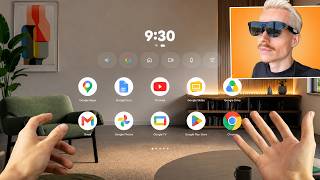
The advent of accurate and responsive hand tracking opens up a wide array of new possibilities for virtual reality. One immediate application is typing on a virtual keyboard. Users can interact with digital text directly, without needing a physical keyboard or controller. This capability is important for productivity and communication within VR environments. Hand tracking also enables the implementation of various virtual user interfaces. These interfaces can be manipulated intuitively with natural hand gestures. Users can point, grab, and push virtual buttons or sliders.
Beyond basic interaction, hand tracking allows for more complex and engaging activities. Users can organize imaginary boxes in a virtual workspace, simulating real-world tasks. They can also engage in physics simulations, directly manipulating virtual objects and observing their realistic reactions. This level of direct interaction greatly enhances training scenarios, where precise hand movements are critical. It also enriches creative applications, allowing artists to sculpt or design with their hands. For social VR, it enables more expressive and natural communication through gestures. This technology promises to make virtual environments more intuitive, accessible, and deeply immersive.
Current Limitations and Ongoing Development
While hand tracking technology has made significant strides, it is still an evolving field. Not every type of hand interaction works perfectly yet. A notable challenge lies in accurately tracking complex hand-hand interactions. For example, simulating actions like washing one’s hands, where fingers and palms frequently obscure each other, does not always track well. The intricate self-occlusion and complex joint movements involved make these scenarios particularly difficult for current algorithms.
This means that virtual reality applications requiring precise inter-hand movements might not yet offer a fully satisfying or reliable experience. These limitations highlight areas for continued research and development. Engineers and researchers are actively working to refine algorithms and improve camera capabilities. The technology is progressing step by step. Future iterations are expected to address these challenges, making hand tracking even more versatile and reliable. This will allow for a wider range of virtual activities and further blur the lines between digital and physical interaction.