
How Do Display Specs And Spatial Optics Compare Across Modern Headsets?
Visual sharpness directly dictates whether an adult can comfortably read small text documents or watch high-bitrate films without eye strain. In spatial hardware, panel resolution matters less than angular density, measured as pixels per degree (PPD). Lower-end standalone displays offer roughly 25 PPD, which works well for stylized games but introduces screen-door artifacts when rendering desktop interfaces or fine subtitles.
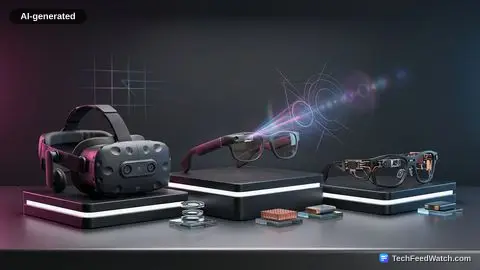
To match professional standards, next-generation spatial computing hardware is adopting 5K micro-OLED panels targeting roughly 37-pixel-per-degree resolution. This level of sharpness matches high-end hardware like the Apple Vision Pro and the Samsung Galaxy XR, meeting the fidelity required for IMAX Enhanced streaming. High PPD eliminates the fuzziness that historically plagued virtual monitors.
Display pipelines have also transformed media consumption through expanded video passthrough and spatial post-processing. Rather than viewing flat floating rectangles, adult users can stream 3D films via services like Disney Plus natively inside high-resolution passthrough environments.
Modern graphic engines can even project contextual reactive lighting into the room around the display, operating like an advanced Philips Ambilight setup. In demonstrations using Avengers: Endgame, the virtual space placed viewers inside the forge alongside Thor forging Stormbreaker, matching real-time ambient lighting to onscreen lightning strikes.
For working professionals, software integrations allow laptops to spawn up to three virtual monitors side-by-side in real space. Advanced computer vision also scans flat surfaces—such as an airline tray table or a desk—and presents a projected surface keyboard and trackpad.
Evaluating how the best mixed reality headset changes spatial work shows that high-resolution passthrough is now the primary metric separating productive business tools from basic toys.
Which Hardware Ecosystem Matches Your Daily Software Needs?
Hardware performance is meaningless without an operating system built around adult workflows. Mature software libraries must balance professional spatial applications with accessible recreational content.
The gaming sector is pivoting toward hands-free and controller-free inputs, where cameras track finger gestures instead of requiring plastic wands. Meta has committed to having 75 games ready at launch with a hands-first approach, including reworked staples like Beat Saber Flux, which replaces virtual lightsabers with physical palm strikes and kinetic energy fields.
Yet productivity remains the defining metric for mature users. Tethering to enterprise hardware demands low latency, flexible window placement, and reliable input recognition. Understanding the spatial systems and what mixed reality means for interaction is essential when assessing whether a headset can truly replace a multi-monitor physical workstation.
Cost also plays an unavoidable role in the hardware selection process. High-end devices often command prohibitive price tags:
- Apple Vision Pro: Premium entry point geared largely toward developers.
- Samsung Galaxy XR: High-end enterprise pricing targeting commercial mixed reality.
- Xreal Aura: Approaching higher price brackets for consumer wearable displays.
- Meta VR Glasses: Slated for release in spring 2027 at a targeted price of $1,299.
- Meta Quest 3: Budget-accessible standalone tier.
Outside of full VR enclosures, manufacturers are addressing everyday wearability through smart audio frames. Products like the Ray-Ban Meta Audio specs drop cameras completely to eliminate privacy friction, using open-ear sound and voice assistance alongside collaborative consumer styling, such as limited runs featuring Blackpink star Lisa with collectible blind-box charms (including 12 variations).
Which Headset to Buy Based on Your Priorities
If you need a headset immediately for mixed gaming and personal leisure, purchase the Meta Quest 3. It provides the most comprehensive software ecosystem, excellent tracking, and adequate visual clarity for its entry price. Pair it with a third-party rigid head strap with a rear battery counterbalance to correct front-heavy facial pressure.
If you are an enterprise professional wanting an active spatial workstation today, evaluate tethered display glasses like the Xreal Air line or invest in the Apple Vision Pro, provided your workflow lives entirely inside the Apple ecosystem. Review our How to Use a Virtual Reality Headset With Android if your digital workspace relies on mobile casting rather than native desktop operating systems.
If your priority is all-day ergonomic comfort, high-resolution cinema, and multi-monitor productivity without carrying a heavy plastic brick on your forehead, consider waiting. The shift toward pocket-puck computing, 37-pixel-per-degree micro-OLED panels, and frames weighing around 100 grams arriving over the next hardware generation will resolve the ergonomic bottlenecks currently holding back adult VR adoption.